The Complete Guide to Event Sponsorship (2026)


Most event organizers start their sponsorship search the same way: open a laptop, write a generic email, blast it to 200 companies, and wait.
Then they hear back from maybe two or three.
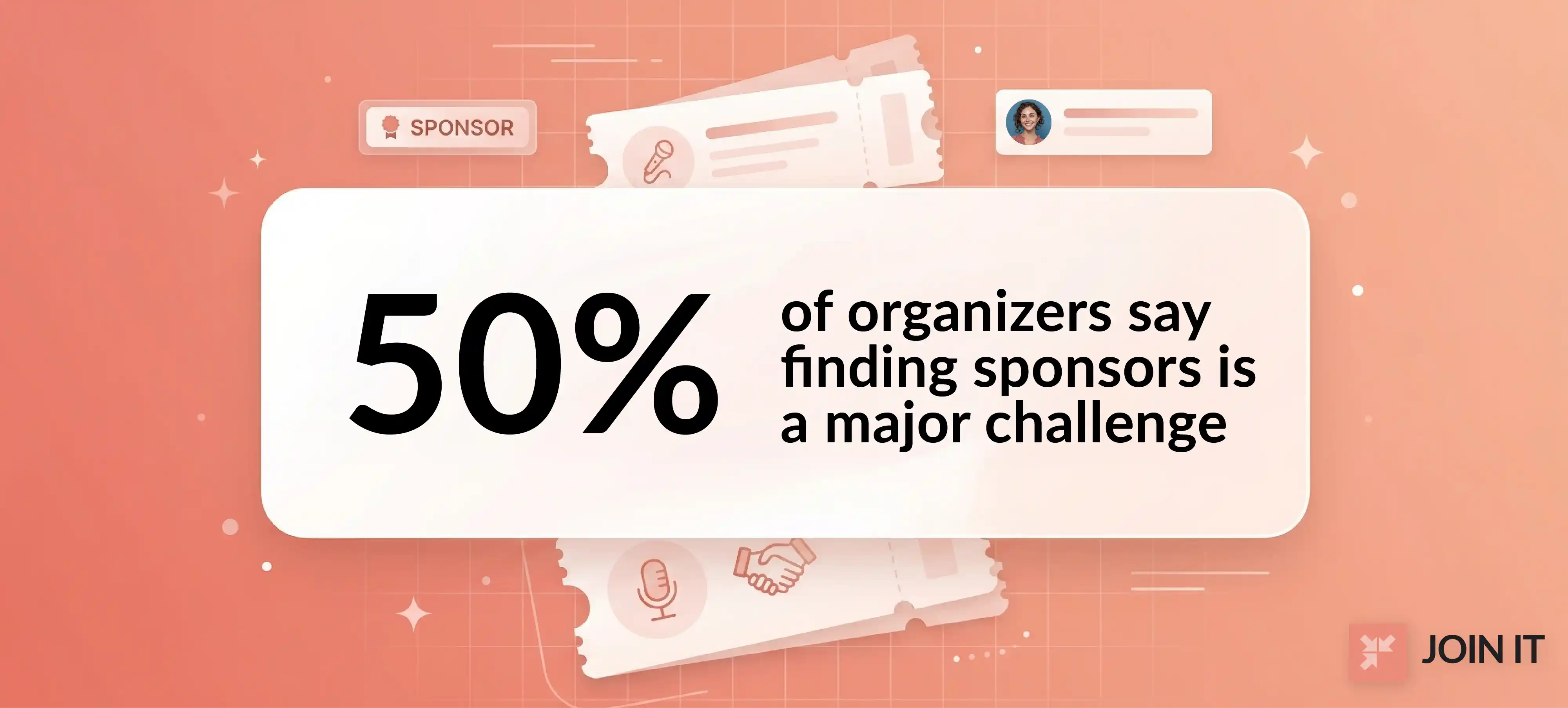
Sound familiar? You are not alone. In a survey by EventMB (Skift Meetings), 50% of organizers said finding sponsors is their single biggest challenge after budget constraints. One student running hackathons shared on a tech forum that they sent hundreds of emails and heard back from just two or three.
Event sponsorship guide cover with sponsored ticket graphic and tips for getting sponsors.
The problem is not that sponsors do not exist. The problem is that most outreach skips strategy entirely.
This guide fixes that. Whether you run an association conference, a nonprofit gala, a chamber mixer, or a community 5K, you will learn how event sponsorship actually works, how to find sponsors who fit, how to build packages that sell, and how to prove enough value that sponsors come back year after year.
Because event sponsorship is not just logo placement. It is a strategic marketing partnership built around audience fit and measurable value. And when you treat it that way, everything changes.
Key Takeaways
- Event sponsorship is a value exchange, not a donation. Sponsors invest because they want access to your audience, not because they want to do you a favor.
- Strategy comes first. Define your event goals, audience profile, and differentiators before you contact a single prospect.
- Audience fit matters more than attendance size. Sponsors care about who is in the room, not just how many people are there.
- Flexible packages outperform rigid tiers. Custom sponsorship packages built around sponsor goals close more deals than generic Gold, Silver, and Bronze levels alone.
- ROI and reporting are non-negotiable. Sponsors expect post-event data, and organizers who deliver it retain more partners.
This guide uses primary-source research only for statistics and survey data cited throughout.
What Is Event Sponsorship?
Event Sponsorship Definition
Event sponsorship is a partnership where a company provides financial support, products, or services to an event in exchange for marketing exposure, audience access, and brand visibility.
The event organizer gets resources to improve the event. The sponsor gets a platform to reach a targeted audience. Both sides benefit when the arrangement is built around clear goals and measurable deliverables.
That last part is important. Event sponsorship is not the same as writing a check and hoping for the best. It is a structured agreement where each side gives something specific and gets something specific in return.
Why Event Sponsorship Matters
For organizers, sponsorship is often the difference between a bare-bones event and one that actually grows. Nearly half of event organizers say sponsorships are a top revenue source, second only to ticket sales. For many associations and nonprofits, it is also a critical stream of non-dues revenue that funds programming without raising member fees.
For sponsors, events offer something digital ads cannot: real human interaction. A speaking slot, a networking lounge, a product demo in front of the exact audience a brand wants to reach. That is why 53% of organizations spend more money sponsoring and attending others' events than on hosting their own, according to Forrester research.
When the audience is right, companies will invest.
Event Sponsorship vs Donations, Ads, and Partnerships
This distinction matters, especially for nonprofits and associations that sometimes blur the line between sponsorship and charitable giving.
A sponsor is not a donor. Sponsors expect a return. Understanding that shifts how you build packages, write proposals, and communicate results.
Why Brands Invest in Event Sponsorship
Brand Visibility, Audience Access, and Lead Generation
Sponsors invest in events because they want access to a specific audience in a setting that builds trust.
The main goals behind most event sponsorship decisions include brand exposure, target audience alignment, lead generation, thought leadership through speaking opportunities, and relationship building with key prospects.
Many companies now allocate 20 to 25 percent of their marketing budgets to events, including sponsoring industry conferences. The credibility boost of being seen alongside respected industry leaders is a real draw.
On Reddit's r/marketing, one user put it simply: a highly targeted event where you can attend, speak, and access the attendee list can be a "great spend". In B2B, landing just one new client from a sponsored event can deliver strong ROI.
What Sponsors Look for in an Event
Before they say yes, sponsors want to know who attends. Not just how many people, but what industries they represent, what they care about, how engaged they are, and whether those attendees match the sponsor's ideal customer.
This is where community engagement strategies matter. An event with 300 highly engaged members in a niche industry can be more valuable to the right sponsor than a general conference with 5,000 attendees.
As one Stack Exchange contributor explained, "the amount of money an organization will spend to sponsor an event is directly tied to the event's audience and the likelihood of increased sales to that audience."
Event Sponsorship Benefits for Organizers and Sponsors
Types of Event Sponsorship
Financial Sponsorship
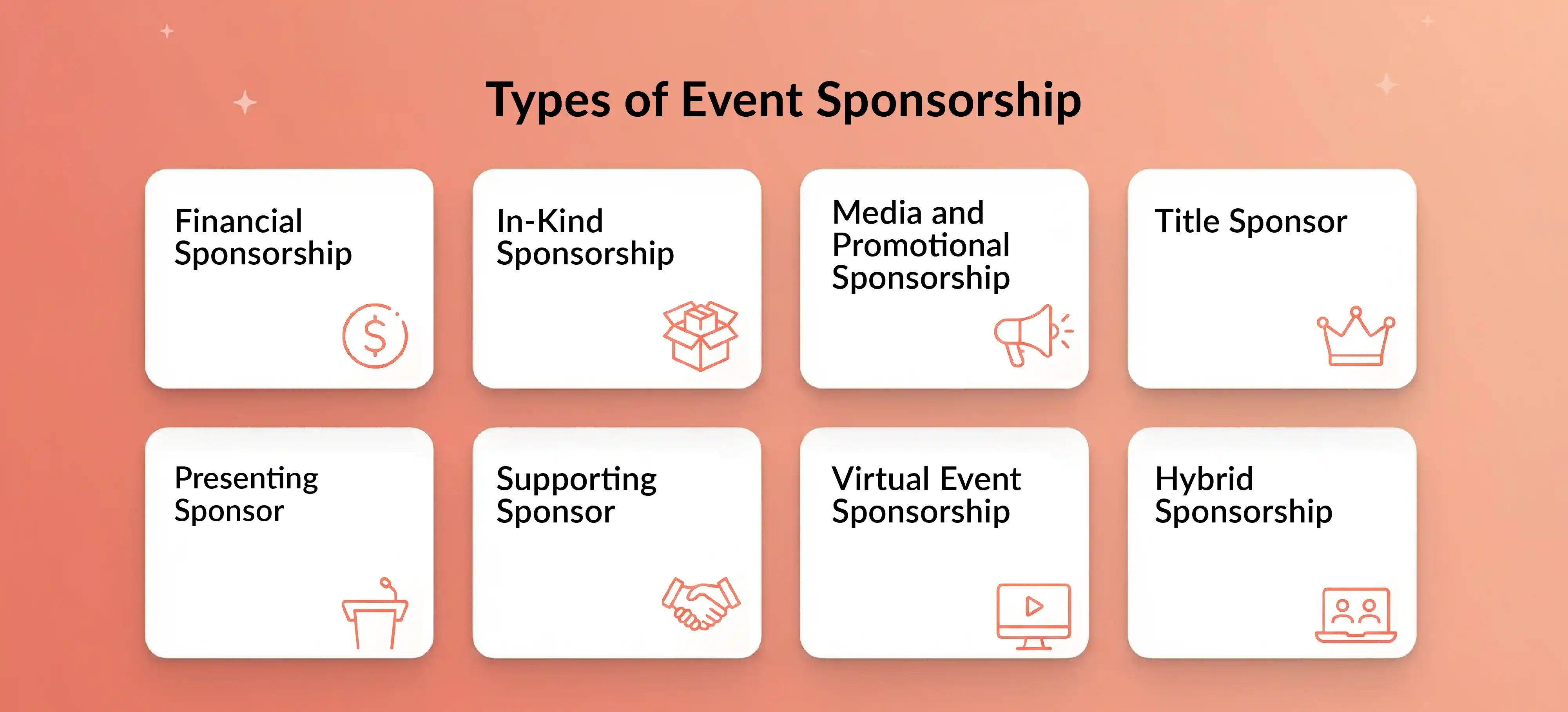
Financial sponsorship is the most straightforward type. A company provides direct cash support in exchange for defined benefits like logo placement, booth space, or a speaking slot. This is the best fit when an event needs funding for programming, a venue, catering, or headline support.
In-Kind Sponsorship
In-kind sponsorship covers non-cash contributions like products, services, technology, or venue space. This type is especially important for nonprofits, clubs, schools, and community events where budgets are tight but needs are real.
If you are exploring how in-kind donations work in practice, the key is to value them accurately. A media sponsor providing $10,000 in advertising is just as significant as a $10,000 check.
Media and Promotional Sponsorship
Media sponsors provide promotional support, including advertising, press coverage, social media exposure, or email distribution. This type of event sponsorship helps with reach and event visibility without requiring a direct financial outlay from the sponsor.
Title Sponsor, Presenting Sponsor, and Supporting Sponsor
Most events use a hierarchy of event sponsorship levels. The title sponsor gets top billing and the largest benefits package. The presenting sponsor sits just below. Supporting sponsors fill out the lower tiers, often with smaller investments and more focused deliverables.
These sponsorship tiers help organizers structure pricing and help sponsors choose the level of involvement that matches their budget and goals.
Virtual Event Sponsorship and Hybrid Sponsorship
Virtual and hybrid events have expanded sponsorship opportunities significantly. 87% of large trade shows now use platforms that support virtual sponsor booths, and digital formats give sponsors something physical events often cannot: precise tracking data and extended visibility beyond event day.
How Event Sponsorship Works: From Strategy to Renewal
Start With Strategy, Not Outreach
This is the single most important best practice in event sponsorship. Before you contact anyone, define your event goals, your audience, your differentiators, and the specific value a sponsor would receive.
Too many organizers skip this step and jump straight to sending emails. That is why response rates are so low. A clear strategy built around your audience and your membership organizations gives every conversation that follows a solid foundation.
Build a Sponsor Strategy Around Audience Fit
Map your audience to the types of companies that would want to reach them. Think about demographics, job titles, buying power, psychographics, and community relevance.
An association with 5,000 members who are C-level executives in healthcare is sitting on gold. A chamber with deep ties to local business owners has a compelling pitch for regional sponsors. Know your audience, and the right sponsors become obvious.
Move From First Contact to Signed Sponsor
The lifecycle looks like this:
- Strategy – define goals, audience, and sponsor value
- Targeting – build a list of well-matched prospects
- Outreach – warm introductions and personalized contact
- Proposal – audience-led, value-led document
- Agreement – clear deliverables, pricing, and terms
- Activation – execute sponsor benefits during the event
- Reporting – post-event metrics and outcomes
- Renewal – follow-up, appreciation, and next-year planning
Deliver, Report, and Renew
Sponsorship does not end when the event starts. Fulfillment, reporting, and follow-up are where long-term sponsor partnerships are built. The organizers who send a detailed post-event report with real metrics are the ones who retain sponsors. The ones who go silent after the event are the ones who start from scratch every year.
How to Find the Right Sponsors for an Event
Build an Ideal Sponsor Profile
Before you reach out, define what a good sponsor looks like. Consider industry relevance, audience match, local or regional fit, brand values, and realistic sponsorship budget potential.
Think of it like building a buyer persona, except the buyer is a company investing in your event.
Where to Find Event Sponsors
The most realistic sourcing paths include existing members or community businesses, board introductions, past sponsors, current vendors, sponsors of similar events in your area, and local or regional companies.
On a gymnastics community forum, one experienced organizer advised targeting "companies that are regional but not nationwide" because they have local marketing budgets and fewer layers of decision-making.
That same thread shared that even big brands like Chobani and local McDonald's franchises will sponsor youth events if the fit makes sense and someone simply asks.
How Nonprofits and Associations Should Prioritize Warm Intros
On Reddit's r/nonprofit, one fundraiser explained that "most sponsorships are via relationships… people trust people more than they trust an organization."
This is especially true for local, nonprofit, and chamber events. Board members, volunteers, longtime members, and community connections are your best door-openers. A warm introduction from a trusted contact outperforms a cold email almost every time.
What to Avoid When Building a Sponsor List
Do not pitch too broadly. Poor-fit sponsors waste everyone's time and hurt your close rate. A targeted list of 20 well-matched companies will outperform a mass email to 200 random ones.
What Sponsors Look for in an Event Before They Say Yes
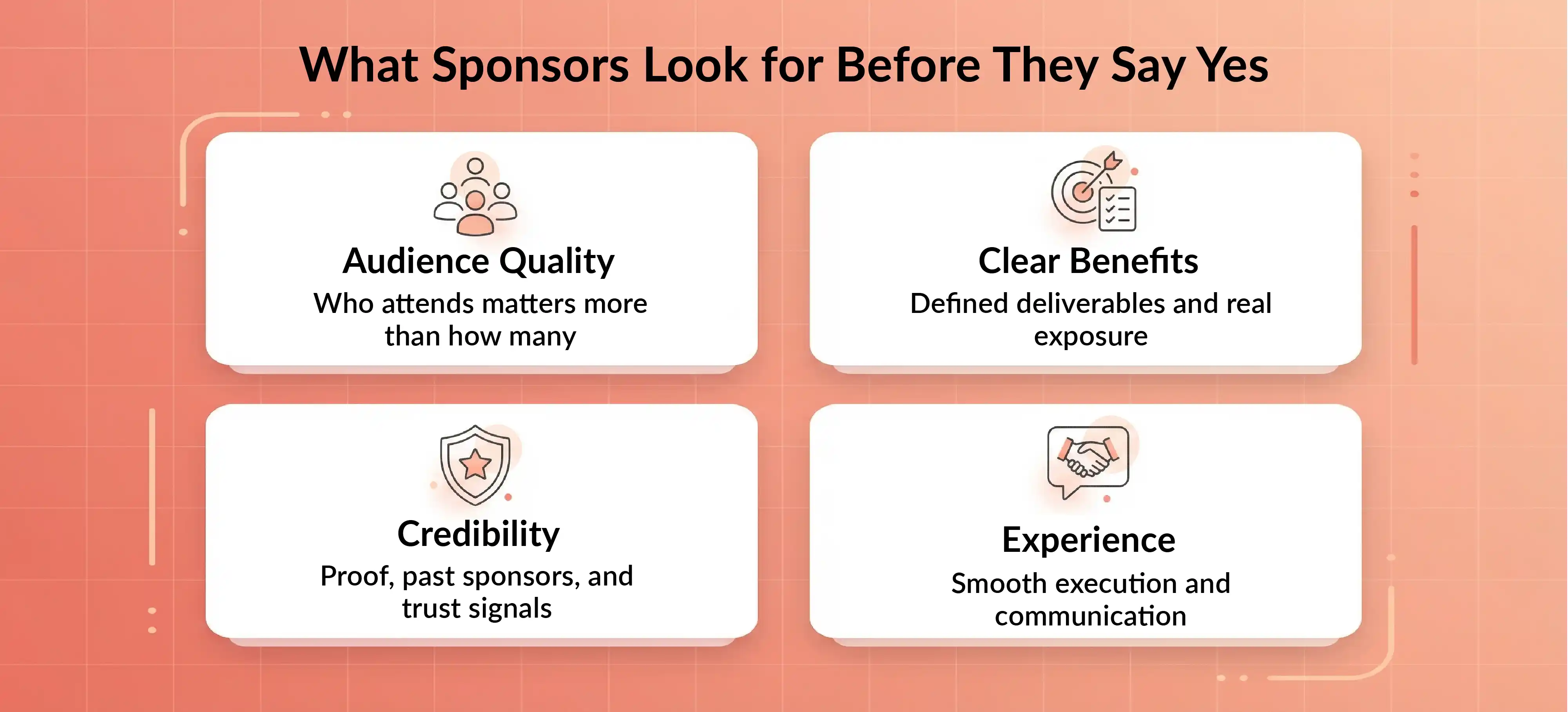
Audience Quality Over Raw Attendance Numbers
Sponsor decisions are tied to audience quality and the likely business value of being in front of those people, not just crowd size.
If you can answer who attends, what they care about, and why they are commercially relevant, you have a pitch. If you cannot, you have a brochure.
Clear Benefits, Deliverables, and Activation Opportunities
Sponsors want to see real exposure, interaction points, speaking opportunities, content placement, lead capture options, and clear event sponsorship deliverables. Vague promises like "great visibility" are not enough.
Credibility, Social Proof, and Event Readiness
Past sponsors, attendee numbers, testimonials, photos, and event history reduce risk for new sponsors. Even smaller events can use proof of community trust. A forum moderator advising a hackathon organizer suggested adding a "Sponsors" page on previous event websites so companies can see legitimacy and growth.
A Good Sponsor Experience, Not Just a Good Sales Pitch
Sponsors care about communication, execution, and fulfillment. If you deliver on what you promise and keep communication open, sponsors notice. If emails go unanswered or logos get printed wrong, they notice that too.
How to Create Event Sponsorship Packages That Actually Sell
What an Event Sponsorship Package Should Include
Every package should clearly define the package name, price, benefits, deliverables, availability limits, and what reporting the sponsor will receive after the event. Keep it practical. Sponsors want to see exactly what they are getting.
Tools like event registration platforms can help you manage the operational side of sponsor-funded events and track attendee flow tied to specific sponsor benefits.
Event Sponsorship Levels vs Custom Sponsorship Packages
Standard tiers still make sense as a starting framework. But rigid Gold, Silver, and Bronze structures are often not enough on their own.
The trend is moving toward custom packages built around specific sponsor goals. As Skift Meetings noted, outdated tiered models do not work as well as custom activations that align with the sponsor's actual objectives, whether that is awareness, lead generation, or thought leadership.
Offering member-only event benefits as part of a premium tier can also create sponsor exclusivity that justifies higher pricing.
How to Value Sponsorship Assets
Pricing sponsorships is both an art and a science. Logo placement, booth space, speaking slots, email mentions, content integration, and attendee engagement assets all need to be valued in a way that feels justified to both sides.
Sponsorship Package Examples for Different Event Types
The way you build conference sponsorship packages will differ from nonprofit gala sponsorship packages or community event sponsorship. Virtual event sponsorship packages may lean heavily on digital assets like sponsored sessions, branded content hubs, and analytics dashboards.
The principle stays the same: match the package to the sponsor's goals and the event's actual capabilities.
Common Package Design Mistakes
Avoid too many tiers, unclear deliverables, overpricing or underpricing, vague benefits, and benefits that do not match what the sponsor actually wants. If the package does not connect to the sponsor's goals, it will not sell regardless of the price.
How to Write an Event Sponsorship Proposal
What an Event Sponsorship Proposal Should Include
A strong event sponsorship proposal covers the event overview, audience information, sponsor fit, available sponsorship opportunities, package options, expected outcomes, a measurement plan, and proof of past event credibility.
Think of it as a business case, not a brochure.
How to Make the Proposal Audience-Led and Value-Led
Focus on sponsor outcomes, not your organization's needs. Frame everything around the audience, the sponsor's goals, and the expected results.
Instead of writing "we need $10,000 to cover our venue costs," try "your investment puts your brand in front of 500 decision-makers in the healthcare industry, with a dedicated speaking slot and post-event lead report."
How to Personalize Each Proposal
Reference the company directly. Connect your audience to their specific goals. Tailor the package to what makes sense for them, not what is easiest for you.
Sponsors can tell when they receive a copy-paste proposal, and most will ignore it.
Event Sponsorship Proposal Template
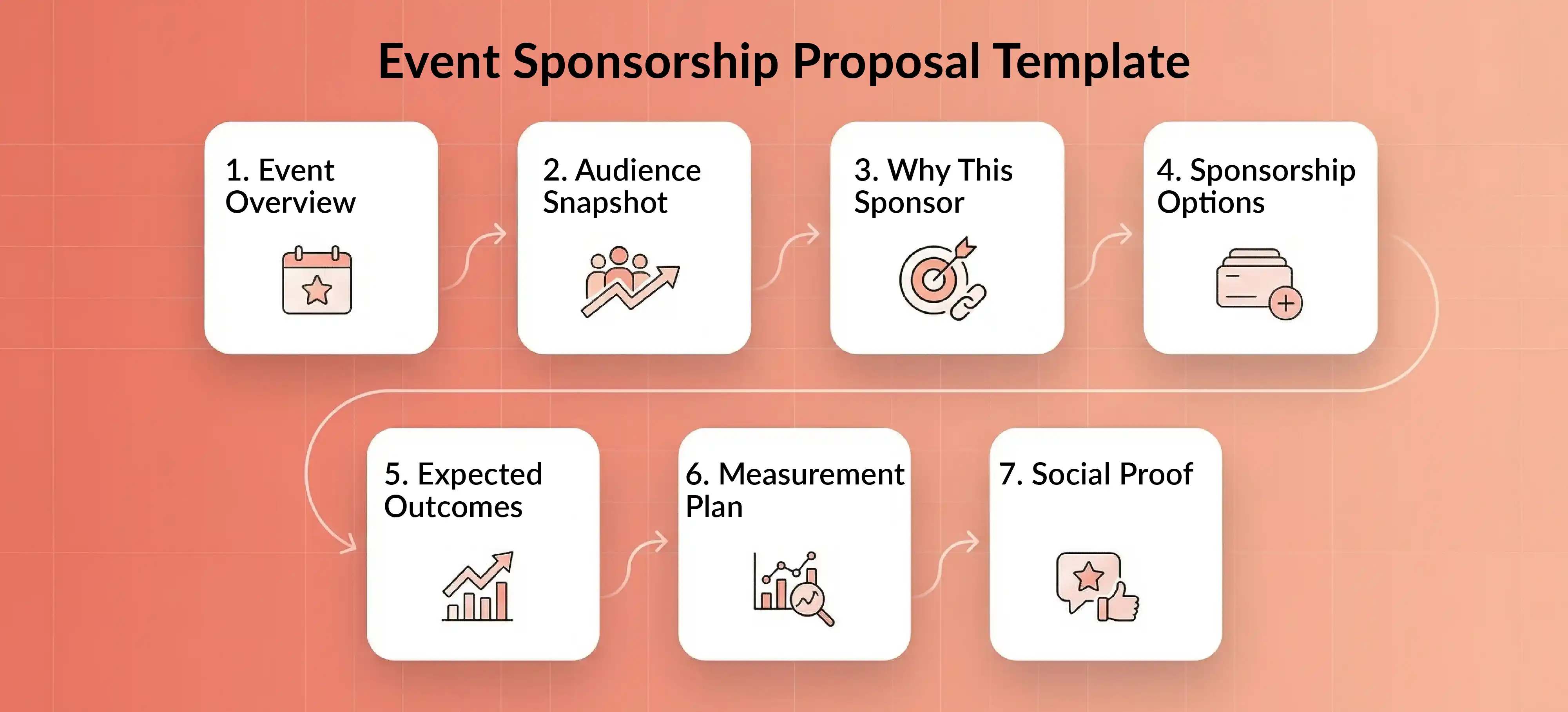
Here is a simple framework you can adapt:
- Event overview – what, when, where, and why it matters
- Audience snapshot – who attends, demographics, engagement data
- Why this sponsor – specific connection between their goals and your audience
- Sponsorship options – packages with clear deliverables and pricing
- Expected outcomes – what the sponsor can realistically expect
- Measurement plan – how you will track and report results
- Social proof – past sponsors, testimonials, attendee feedback, event photos
How to Ask for Sponsorship for an Event
Build a Sponsorship Outreach Strategy Before You Send Emails
First contact should not be random. Research your prospects, find the right contact person, warm up the relationship through LinkedIn or mutual connections, and time your outreach to align with their budgeting cycle.
As one Reddit user on r/Entrepreneur pointed out, "the bigger the company, the more red tape. Smaller businesses have fewer decision-makers," so adjust your approach based on company size.
How to Write a Sponsorship Request Letter or Email
Keep the initial ask short and focused. Include a quick intro, why the event is relevant, who attends, how the sponsor benefits, and a clear next step like scheduling a call.
Do not attach a full proposal in the first email. The goal is to start a conversation, not close a deal.
How to Talk on Discovery Calls
The discovery call is where you learn what the sponsor actually wants. Ask about their goals, their metrics for success, their timeline, and their budget range. Listen more than you pitch.
How to Follow Up Without Sounding Pushy
Follow up at least two or three times. Space it out. Add value with each touchpoint, like sharing a relevant attendee stat or a new event update.
One nonprofit professional on Reddit recommended keeping potential sponsors updated year-round, including knowing their budgeting cycles and meeting with them even when you are not asking for money.
How Outreach Changes for Local Businesses vs Larger Brands
Local sponsors often move faster with fewer approvals. Larger companies involve more red tape, longer planning cycles, and formal procurement processes. Plan your timeline accordingly and start earlier for bigger targets.
Event Sponsorship Activation Ideas That Add Real Value
Event Sponsorship Activation vs Passive Branding
Sponsor activation means creating interactive, engaging experiences, not just placing a logo on a banner.
Passive sponsorships are losing their appeal. Sponsors increasingly want participation, not just presence. And the research backs this up. As Skift Meetings put it, "passive sponsorships are dead."
Creative Event Sponsorship Ideas and Non-Booth Ideas
Think beyond the booth. Networking lounges, charging stations, sponsored Wi-Fi, content tracks, attendee tools, and community-impact activations all add real value.
A member check-in system at the door, for example, captures participation data that doubles as sponsor reporting material while also improving the attendee experience.
Virtual Event Sponsorship Ideas
For virtual and hybrid events, consider sponsored webinar sessions, branded resource hubs, chat-based engagement features, replay sponsorship, and ongoing content partnerships that extend well beyond event day.
Put the Attendee Experience First
This might be the most important activation principle. When sponsorship activations come off as pushy, self-serving, or random, people tune them out, or worse, get annoyed. The best activations improve the experience for attendees while delivering value for sponsors.
How to Measure Event Sponsorship ROI
Set Sponsor Goals Before the Event Starts
ROI measurement starts with the sponsor's actual objective. Whether it is awareness, leads, engagement, or content reach, the goal needs to be defined before the event, not after.
Event Sponsorship ROI Metrics That Matter
Meaningful metrics include foot traffic to sponsor areas, form fills and lead captures, meeting bookings, coupon or code redemptions, social media engagement, attendee survey data, and sponsor recall.
About 69% of organizers now share event performance data with sponsors to prove ROI and build trust. If you are not doing this, you are falling behind.
Understanding your fundraising metrics in a broader context helps you frame sponsor ROI alongside other event revenue outcomes.
How to Build a Post-Event Sponsor Report
Structure your report around goals delivered, assets fulfilled, key metrics, screenshots or examples, attendee insights, and next-step opportunities.
Use tools that help you track event attendance so you can provide concrete numbers, not estimates.
How to Prove Value When the Event Is Small
Smaller events can still deliver meaningful ROI. A niche event with 200 highly relevant attendees can generate better leads than a generic event with 2,000. Focus on relevance, audience quality, and relationship outcomes.
On Reddit, one marketer noted that in B2B, landing just one new client from a sponsored event can yield great ROI. It is not always about volume.
Common Event Sponsorship Mistakes, Complaints, and Challenges
The Biggest Event Sponsorship Challenges
The recurring problems include finding sponsors, low response rates, weak sponsor-event fit, difficulty pricing packages, proving ROI, fulfilling deliverables on time, and retaining sponsors year over year.
Common Sponsor Complaints
Sponsors get frustrated by poor communication, weak results, vague reporting, low attendee interaction, and sloppy execution. A logo on a banner with no engagement opportunity is not worth the investment.
Common Organizer Complaints
Organizers often deal with unrealistic sponsor demands, late material submissions, low responsiveness, and sponsors who expect benefits that were never part of the agreement.
Common Attendee Complaints
Attendees dislike overly promotional, irrelevant, or intrusive sponsor messaging. If the event feels like one long advertisement, everyone loses.
How to Avoid These Problems Early
Most of these issues come back to the same root causes. Stronger audience fit, clearer packages, documented agreements, consistent communication, attendee-first activation design, and thorough sponsor reporting prevent the majority of complaints before they start.
Event Sponsorship for Nonprofits, Associations, Clubs, and Chambers
Nonprofit Event Sponsorship
Nonprofit event sponsorship often blends mission alignment, community-centric fundraising, and community goodwill. The key is to keep sponsorship and donations separate. Sponsors still expect marketing value even when they support a cause.
If your organization needs to accept and track donations alongside sponsorship revenue, having the right systems in place keeps both streams clean and accountable.
For nonprofits looking for a platform to manage members and sponsor-backed events, membership software for nonprofits can centralize the operational side.
Association Event Sponsorship
Associations have a unique advantage: member data. A niche, engaged audience with documented demographics is exactly what sponsors want to reach. Associations should also think beyond a single event and offer year-round sponsorship opportunities like webinars, newsletters, and co-branded research.
This is where platforms built for professional associations help tie sponsorship, events, and member engagement together.
Chamber Event Sponsorship
Chambers thrive on local business relationships and regional relevance. Chamber event sponsorship works well when it leans into community connection, local visibility, and direct relationships between sponsors and attendees.
If your chamber needs tools to streamline event and member operations, chamber management software is worth exploring.
Club and Community Event Sponsorship
Clubs and community groups typically work with smaller budgets, tighter communities, and more straightforward sponsor asks. Local businesses are the natural fit, and personal relationships usually drive the conversation.
For clubs looking to combine sponsorship with other revenue tactics like raffles, ticket sales, or member dues, exploring fundraising ideas for clubs can round out your approach.
How to Use Event Sponsorship Alongside Fundraising, Membership, and Community Growth
Sponsorship works best as one part of a broader event revenue and community growth strategy. Pair it with ticket sales, membership drives, and donor campaigns. When these systems work together, each one reinforces the others.
Event Sponsorship Trends to Watch
From Logos to Experiences
Passive branding is fading. Sponsors want experiential marketing, interactive activations, and meaningful participation in the event itself. By 2026, sponsorship is less about presence and more about participation.
Data, Accountability, and Sponsor ROI Pressure
Sponsors are under more internal pressure to justify every dollar. Organizers who provide detailed post-event reports with real metrics will keep sponsors. Those who rely on vague impressions numbers will lose them.
Values-Based Sponsorship and Brand Fit
Brands are paying closer attention to what an event represents. Sponsorship decisions are no longer just about reach. A mismatch in values can quietly kill a potential deal.
Digital-First, Hybrid, and Year-Round Sponsorship Opportunities
Digital sponsorship options often perform well because they are easier to measure and extend sponsor visibility beyond event day. Expect sponsors to seek packages that include both on-site presence and ongoing digital exposure.
Long-Term Sponsor Partnerships Over One-Off Deals
More sponsors are moving away from one-off activations and toward ongoing presence. In fact, 74% of brands reduced the number of sponsorships in 2024 to concentrate resources on fewer, deeper relationships with higher ROI.
Event Sponsorship Templates, Checklists, and Practical Tools
Event Sponsorship Package Template
A simple package format to reuse: package name, investment level, included benefits, deliverables with deadlines, exclusivity or availability limits, and post-event reporting commitments.
Event Sponsorship Proposal Template
Covered earlier in this guide. Use the seven-part framework: event overview, audience snapshot, sponsor fit, options, expected outcomes, measurement plan, and social proof.
Sponsorship Request Letter for Event Template
Keep it to one page or one screen. Open with a personal connection or shared relevance, state what the event is and who attends, explain what the sponsor gets, and close with a clear next step.
Event Sponsorship Agreement Checklist
Your agreement should cover deliverables, payment terms and schedule, deadlines for materials and assets, cancellation terms, branding approval process, reporting commitments, and primary contact on each side.
Event Sponsorship Checklist for Organizers 📋
Pre-event: Define strategy, build sponsor list, create packages, send proposals, sign agreements, collect sponsor assets, confirm deliverables.
During event: Execute all promised benefits, assign a point person for each sponsor, capture photos and data, facilitate attendee-sponsor engagement.
Post-event: Send thank-you notes, compile sponsor report with metrics, schedule renewal conversations, gather sponsor feedback.
If you want to book a demo of a platform that helps manage registrations, sponsors, and event workflows, that is a practical next step.
Frequently Asked Questions About Event Sponsorship
What is event sponsorship?
Event sponsorship is a marketing partnership where a company provides money, products, or services to an event in exchange for brand exposure, audience access, and measurable business outcomes.
What are the types of event sponsorship?
The main types include financial sponsorship, in-kind sponsorship, media sponsorship, and promotional sponsorship. Events also use tiered levels like title sponsor, presenting sponsor, and supporting sponsor.
Why is event sponsorship important?
It provides critical revenue for organizers and gives sponsors direct access to a targeted audience. About 37% of organizers say 40 to 60 percent of their event revenue comes from sponsorships.
How do you get sponsors for an event?
Start with strategy. Define your audience, build an ideal sponsor profile, prioritize warm introductions, and send personalized proposals that focus on the sponsor's goals.
How do you ask for sponsorship for an event?
Write a short, focused outreach email or sponsorship request letter. Lead with audience relevance, not your budget needs. Include a clear next step like a call or meeting.
What should an event sponsorship proposal include?
An event overview, audience data, why the sponsor is a fit, package options with pricing, expected outcomes, a measurement plan, and proof from past events.
How do event sponsorship packages work?
Packages define what a sponsor gets at each investment level. The best packages are flexible, goal-oriented, and include clear deliverables with reporting.
How do you measure event sponsorship ROI?
Track metrics tied to the sponsor's goals: leads captured, booth traffic, social engagement, attendee survey responses, and post-event conversions.
How do nonprofits find event sponsors?
Leverage board connections, member networks, past donors, and community relationships. Warm introductions consistently outperform cold outreach for nonprofit organizations.
How do you retain event sponsors?
Deliver on your promises, report results transparently, say thank you meaningfully, and start the renewal conversation early with fresh ideas for next year.
Final Thoughts on Event Sponsorship
Strong event sponsorship starts with strategy, not a mass email blast.
The right sponsors are built on audience fit. Packages should be flexible and value-led. Activation should improve the attendee experience, not interrupt it. Sponsor ROI and follow-up are what turn a one-time deal into a long-term partnership.
And long-term partnerships beat one-off logo deals every single time. Global sponsorship spending reached an estimated $97.5 billion in 2024, and it is growing because the model works when both sides commit to making it work.
If you are organizing events for an association, nonprofit, club, or chamber, the opportunity is real. Your audience is your greatest asset. Treat it that way, and sponsors will want to be part of what you are building.
Looking for a platform to help manage event registration, member check-in, donations, and attendee tracking in one place? Join It makes the operational side simpler so you can focus on building sponsor relationships that last. You can start a free trial and see how it fits your workflow.
References
- Webex Blog. EventMB Survey on Sponsorship Challenges
- Physics Forums. How to Get Hackathon Sponsors
- RingCentral Blog. Expert's Guide to Event Sponsorship
- Cvent Blog. Event Statistics Shaping the Industry
- LinkedIn. Matt Kleinrock on Event Program Budgets
- Reddit r/marketing. Event Sponsorships – Are They Worth It?
- Chess Stack Exchange. Why Is Chess Failing to Attract Big Name Sponsors?
- ChalkBucket Forum. Meet Sponsorship Ideas
- Reddit r/nonprofit. Tips on Obtaining Sponsors
- Skift Meetings. Event Sponsorship Guide
- Reddit r/Entrepreneur. Event Sponsorship Tactics
- Amra and Elma. Event Platform Marketing Statistics
- Remo. Event Sponsorship Guide for 2026
- Lumency. Global Sponsorship Trends Report 2025

Guides from the Experts
Through our work with 4,000+ organizations - we’ve put together helpful guides to assist; regardless of where you are on your journey.
.webp)

A Complete Guide to Membership Organizations
Everything you need to know to manage and grow your membership business
.webp)
Maximize Membership Retention: 10 Proven Strategies
Tried and true strategies that not only win membership, but keep them

Build a Membership Website: A Step-by-Step Guide
Your one-stop resource for knowing all the features your modern membership website needs
Ready to start your free trial?
Our membership software is intuitive to use and even easier to test for yourself.