
Chapter 2: How To Master Your Membership Management
If you're running a membership program right now, you already know the feeling.
Renewal notices piling up. Member emails going unanswered. Inconsistent communication making everyone confused.
It's chaos.
But here's the thing: membership management doesn't have to feel like you're constantly putting out fires.
Membership management is the ongoing work of running a membership program, including member records, payments, renewals, communications, support, and basic reporting.
Well-defined routines and documented procedures can transform operations "from chaotic to consistent."
And the stakes are real. Recent surveys show that only 47% of associations grew membership, while membership declines have been on the rise.[1]
The difference between membership programs that thrive and those that struggle? Simple, consistent routines.
This guide is for teams already running membership programs (not launching from scratch). You'll walk away with practical routines that reduce chaos, increase renewals, and keep members engaged. No fluff, no theory. Just straightforward systems that work.
Key takeaways
What Good Membership Management Looks Like
Before we dive in, here's a quick checklist. A well-run membership program:
- Sends renewal reminders on schedule (not scrambled at the last minute)
- Uses consistent terms and timing in all member communications
- Routes support inquiries to a single owner or team
- Completes a monthly KPI review and implements improvements
- Documents key processes so anyone can step in without reinventing the wheel
If you're checking most of these boxes, you're on the right track. If not, that's exactly what we're going to fix.
What Membership Management Means in Practice
Let's start with a clear definition.
Membership management is the ongoing cycle of tasks that keep a membership program running. This includes maintaining your member database, processing applications and payments, handling renewals, sending communications, responding to member inquiries, and compiling basic reports.
According to professional job descriptions, these are your day-to-day essentials:
- Keeping contact information current
- Tracking renewal dates and issuing invoices
- Recording payments and updating member status
- Sending updates and newsletters
- Answering questions and handling concerns
- Running reports on membership numbers and trends
These tasks might seem straightforward, but when they slip through the cracks, problems compound fast. That pressure increases in federated groups, where multi-chapter membership management helps keep member status, reporting, and accountability consistent across locations.
Where Things Break Down
The most common pain points?
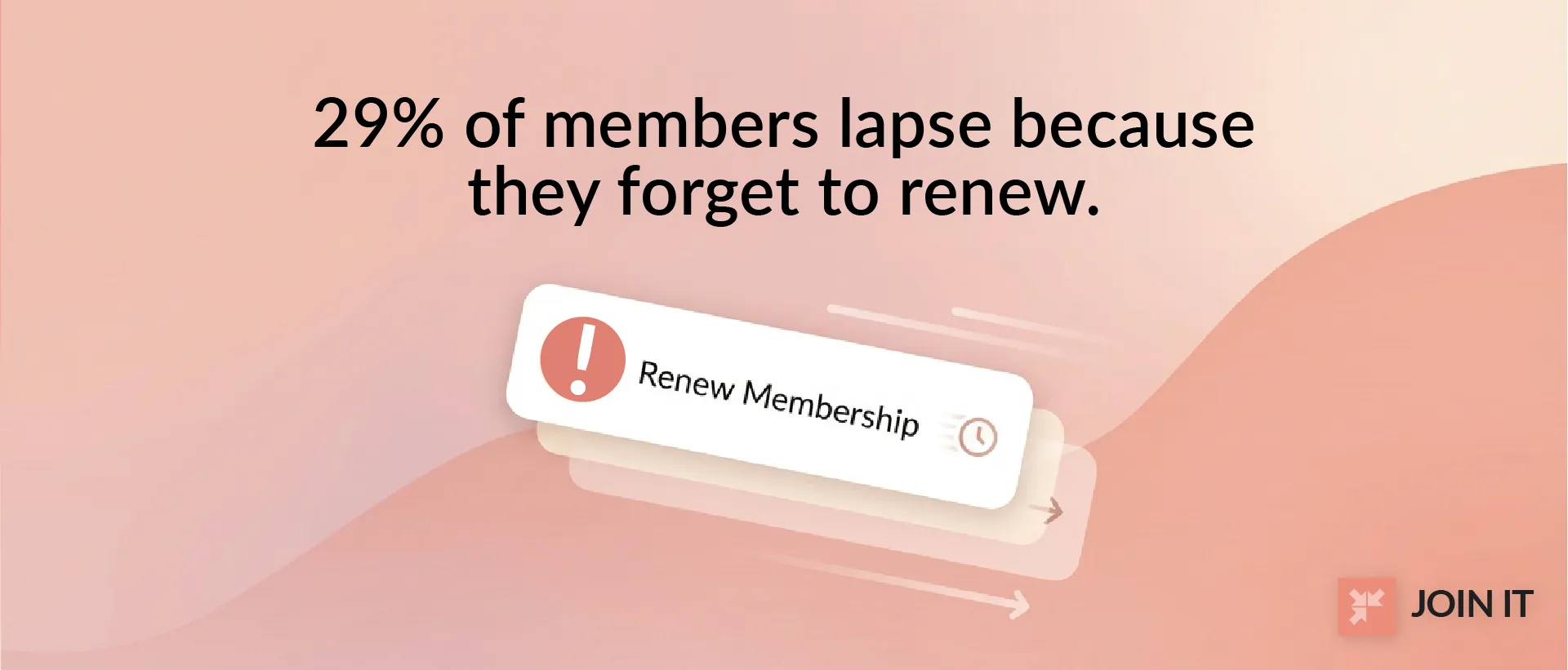
Missed renewals. Here's a stat that might surprise you: 29% of members lapse simply because they forgot to renew. Not because they were unhappy. They just forgot.[2]
A timely reminder would have saved them.
Inconsistent messaging. When renewal notices use different wording each cycle, or when benefit descriptions vary between emails, members get confused. Confusion leads to questions. Questions create work. And when communication becomes a fire drill every time, it's usually because there's no template or standard process.
The messy inbox. Without clear ownership, member support requests fall into a black hole. One association discovered members were sending renewal questions to multiple email addresses, creating duplicate work and delayed responses.[3] They fixed it by designating one renewals@ address. Simple, but effective.
The good news? These breakdowns are fixable with clear routines. Let's talk about who owns those routines.
The Membership Manager's Role

What does a membership manager do day to day?
A membership manager oversees all daily membership operations. In short: keep members informed and engaged, track renewals, handle questions, and maintain accurate records.
But let's be clear about what they own and what they don't.
What does a membership manager own vs not own?
What They Own
- Communication cadence: Regular newsletters, renewal reminders, policy updates. They decide the schedule and make sure it happens.
- Renewal routine: Tracking who's due, sending invoices, following up on payments, and updating member status.
- Member support and updates: Answering questions, processing contact changes, handling tier upgrades, and maintaining the database.
What They Don't Own
- Pricing and business model decisions: Membership fees, tier structures, and major benefit changes come from leadership or the board.
- Governance and legal matters: Bylaws, voting procedures, and policy decisions stay with leadership.
The membership manager implements what leadership decides. They may provide input, but they don't set strategy.
The Weekly and Monthly Cadence
Here's a simple routine that works:
Weekly: Check the renewal queue. Follow up on missed payments. Clear the member inbox. Even 15 minutes prevents small issues from becoming big problems.
Monthly: Review key numbers (new members, renewals, current total). Identify any process snags. Pick one thing to improve.
That's it. No deep workflows, no complicated templates. Just consistent check-ins that catch problems early.
The 4 Core Areas of Membership Management
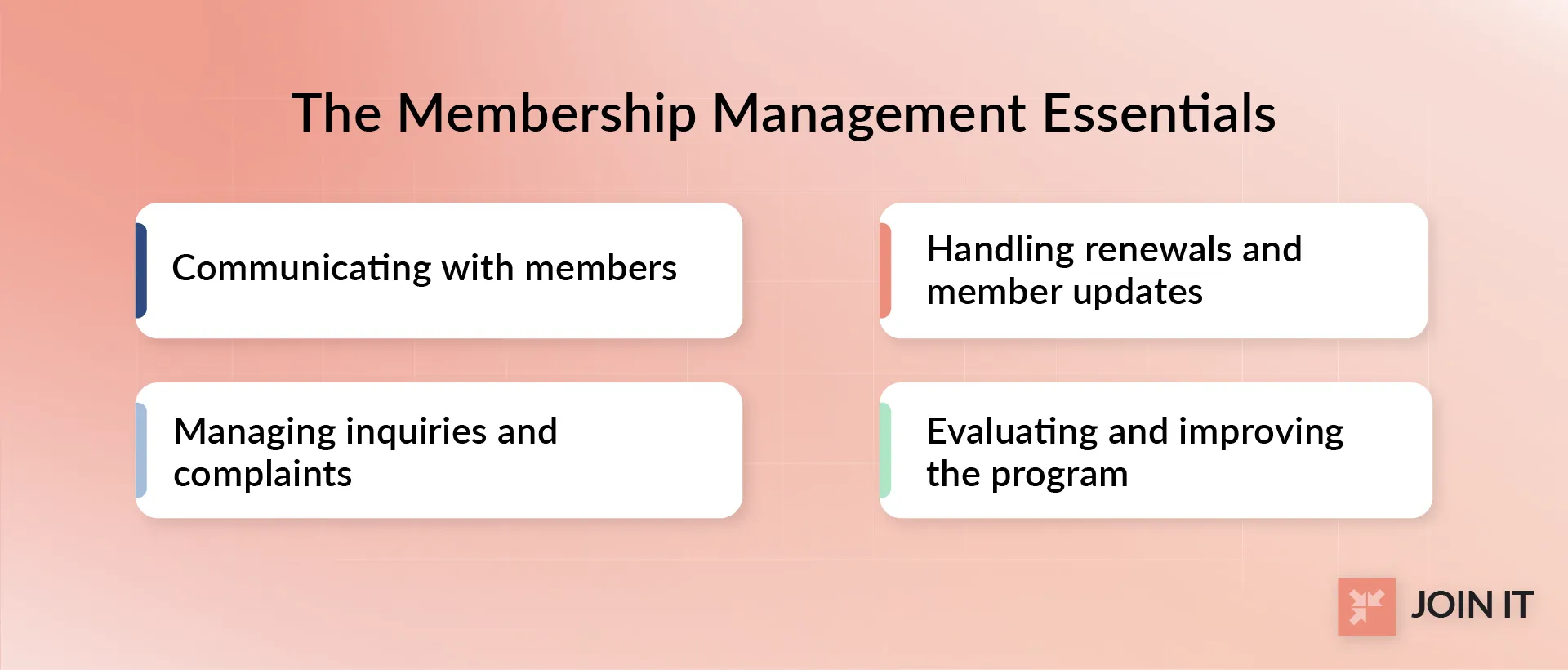
Membership management breaks down into four main areas:
- Communicating with members
- Handling renewals and member updates
- Managing inquiries and complaints
- Evaluating and improving the program
Each area overlaps with the others. Good communication boosts renewals. Handling complaints well improves satisfaction and retention.
Let's break down each one.
1. Communicating With Members
Member communication is the backbone of engagement. Without it, even the best programs feel disconnected.
Create a Consistent Communication Plan
First, pick a cadence you can actually maintain.
According to nonprofit benchmarks, 86% of nonprofits use email marketing, and nearly half send newsletters monthly. [4] For associations, the data shows they average about 4 emails per week to engaged members.[5]
Does that mean you should email four times a week? Not necessarily.
Start with what works for your resources: monthly newsletter, quarterly updates, annual report. Then stick to it.
Consistency builds trust. When members know to expect your newsletter on the first Tuesday of each month, they pay attention. Sporadic communication gets ignored.
Assign a message owner. One person (or team) should coordinate all outgoing communications. This prevents the "too many cooks" problem where members get conflicting messages from different staff.
As one association manager on Reddit noted, their highly engaged members received emails regularly with a 37% open rate and virtually no unsubscribes.[6] The key? Relevant content and clear expectations set up front.
Be Clear and Consistent
Use the same terminology in all member communications.
If you call your tiers "Basic, Pro, Premium" one month and "Silver, Gold, Platinum" the next, members will wonder if something changed. Spoiler: they'll email to ask. Clear, consistent membership level names prevent the “did something change?” confusion in the first place.
Same goes for renewal notices. Pick your wording ("Membership expires on...", "Your renewal is due...") and stick with it. Make renewal timing predictable too. If dues are always due January 1, say so every time.
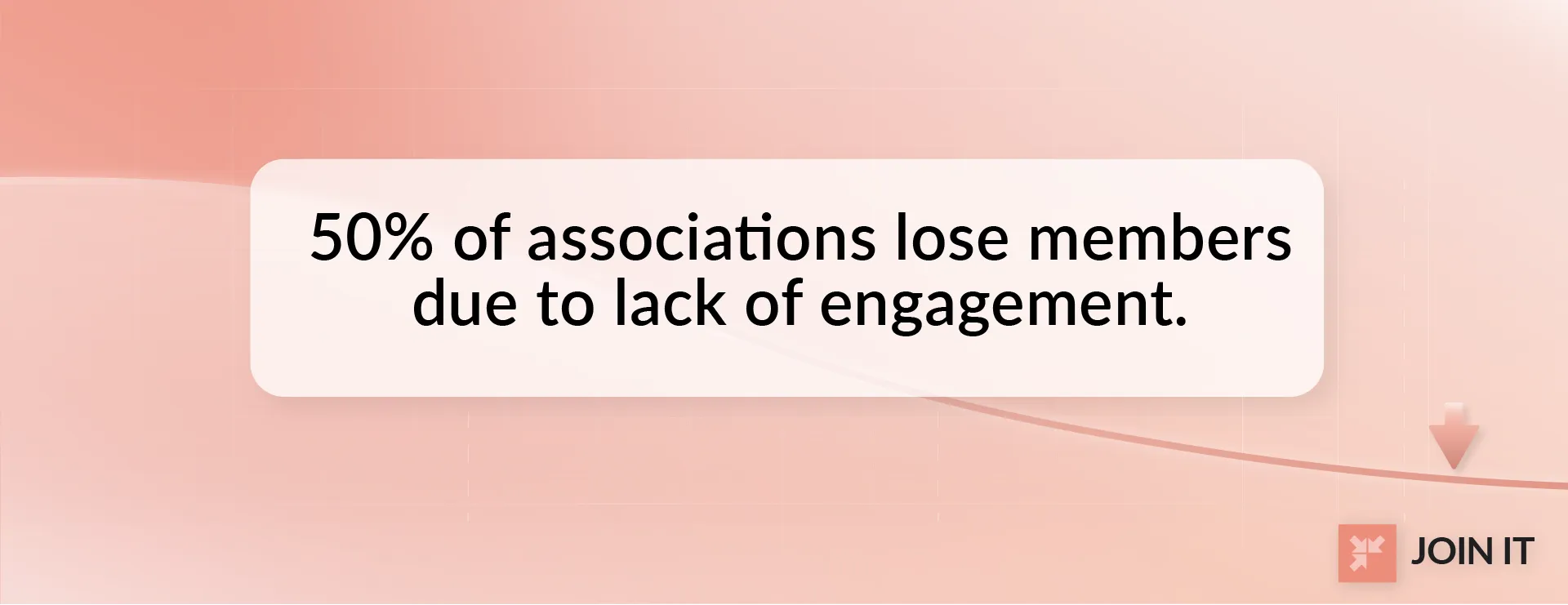
This sounds basic, but 50% of associations cite lack of engagement as the top reason members don't renew. Inconsistent communication is a major culprit.
Personalize Without Overcomplicating
You don't need fancy AI to personalize messages. Simple segmentation works wonders.
Break your list into basic groups:
- New members: Welcome email highlighting how to get started
- Active members: Regular updates on benefits and events
- Renewal due soon: Reminder with value recap
- Lapsed members: Re-engagement message or survey
Tailor the tone slightly. A welcome email for new members can be more enthusiastic. A renewal reminder should emphasize value received.
For deeper personalization, check out strategies for building micro communities within your larger membership base.
Use Channels Intentionally
Email remains your primary channel.
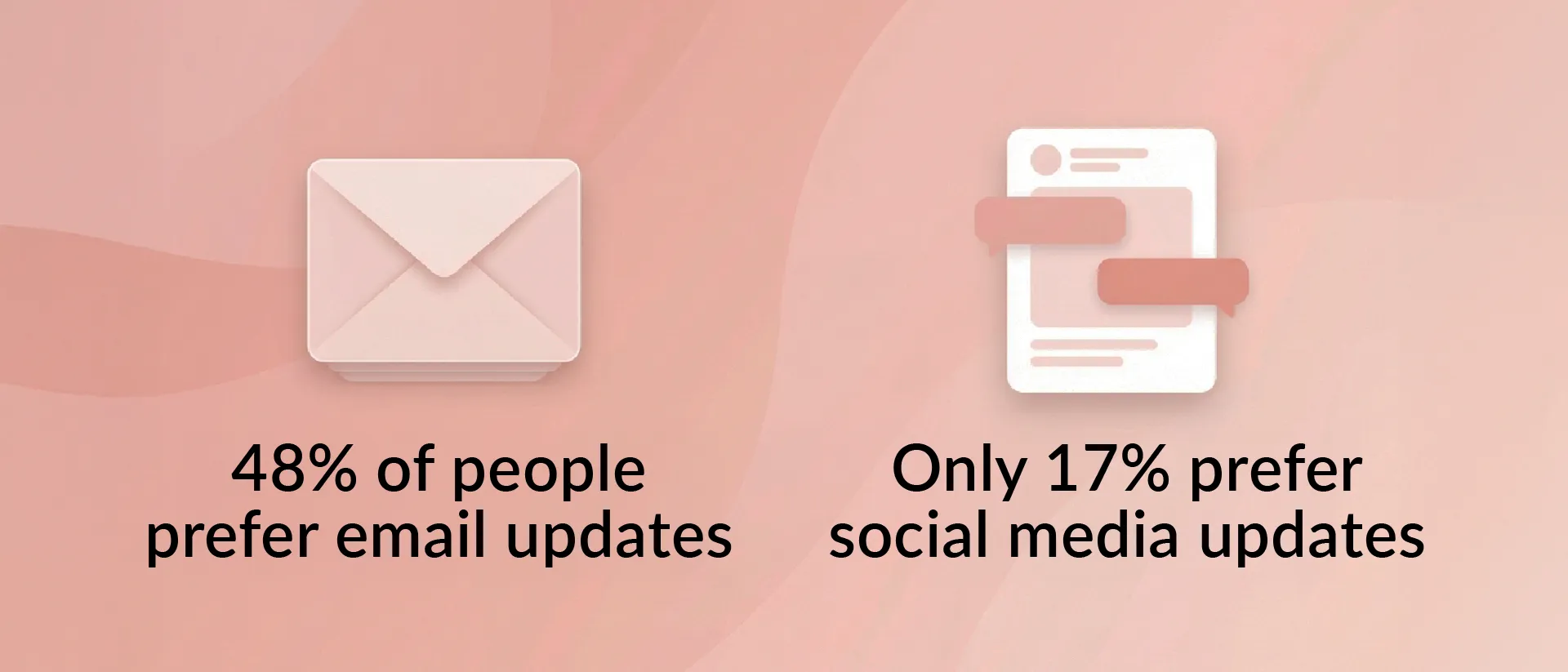
The numbers back this up: 48% of donors prefer email updates versus only 17% for social media. Email is where people expect important information like renewal notices, policy changes, and account updates.
Social media works differently. Use it for:
- Highlighting events and announcements
- Sharing member stories and wins
- Building community and engagement
- Reaching potential new members
But don't send renewal reminders via social media. That's what email (or direct mail for those who prefer it) is for.
For more on maintaining engagement across channels, see our guide on building and sustaining a thriving community.
2. Handling Renewals and Member Updates
Renewals are your lifeblood. Miss them and your program shrinks.
The good news? Most renewal problems have simple fixes.
Communicate Membership Value at Renewal Moments
Don't just send an invoice. Remind members why they joined in the first place.
According to membership surveys, 67% join for networking and 42% for education. Your renewal message should tap into these motivations.
Here's a simple approach:
- Summarize what they used (events attended, resources downloaded, connections made)
- Highlight upcoming benefits (new programs, exclusive access, community features)
- Include a testimonial or success story from another member
Then make it easy to renew. Which brings us to...
Make Renewal Simple
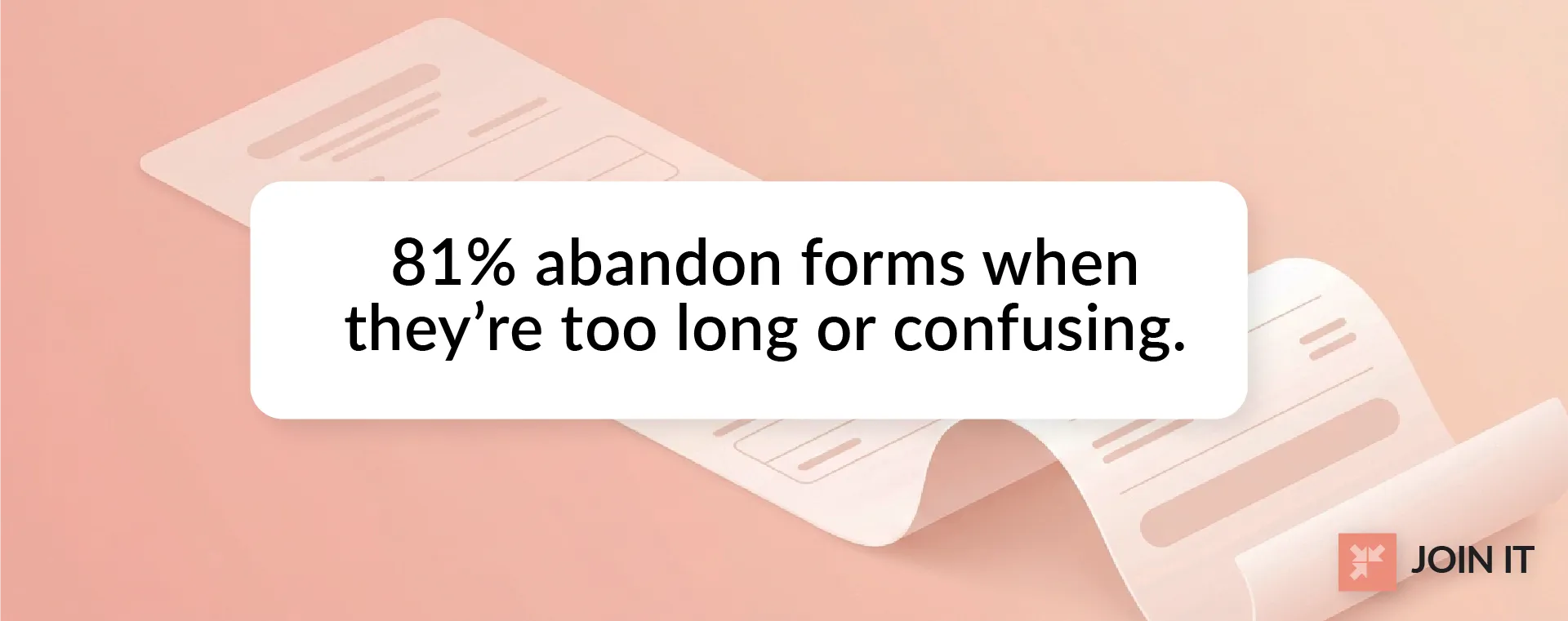
Here's a sobering stat: 81% of users abandon forms that are too long or confusing.[7]
Your renewal process should be dead simple:
- Provide a direct payment link
- Pre-fill member information
- Offer multiple payment options (credit card, ACH, check)
- Skip unnecessary fields
- Give clear instructions
Think: "Click the button, confirm your details, pay. Done."
One nonprofit on Reddit shared that nearly all their members still mailed checks despite offering credit cards.[8] The lesson? Always offer multiple payment methods and clear instructions for each.
For organizations managing complex renewal cycles, see this case study on membership and dues management.
Use a Basic Reminder Timeline
What renewal reminder schedule works best?
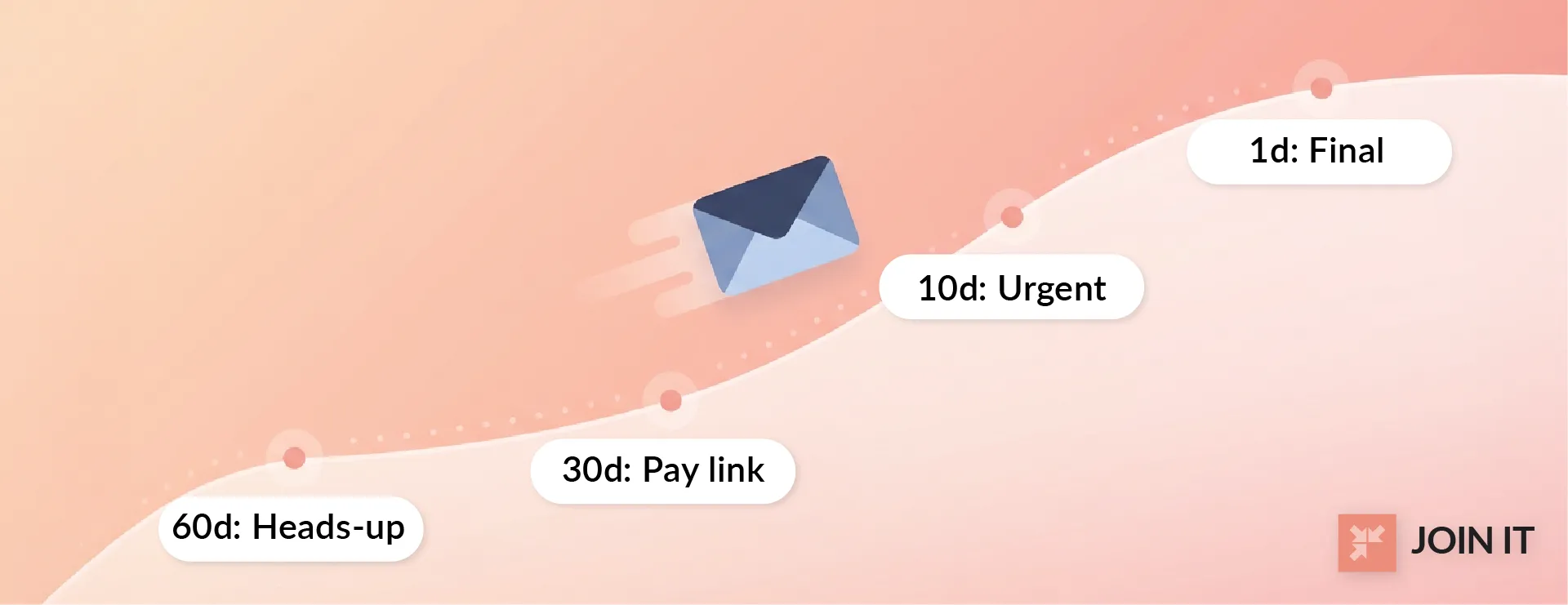
What renewal reminder schedule works best?One reminder isn't enough. A four-touch renewal sequence can dramatically improve renewal rates.
Here's a simple pattern:
- 60 days out: Friendly heads-up with value recap
- 30 days out: Reminder with payment link
- 10 days out: Urgency message ("Only 10 days left")
- 1 day out: Final notice
Each message should be polite and include the deadline. Early notices can be conversational. Later ones should emphasize urgency without being pushy.
Remember, 29% of members simply forget. Your job is to help them remember.
Handle the Most Common Renewal Blockers
What stops renewals, and how do you fix it quickly?
Even with good systems, some renewals hit snags. Here are the most common and how to fix them:
"I forgot." Your reminder timeline handles this. If someone still misses the deadline, send one more gentle follow-up within a week.
"I need an invoice." Keep an invoice template ready. When someone asks, send it immediately. Don't make them wait. (Many businesses and government bodies require official invoices to process payment.)
"Payment failed." Card declines happen. When you get a failed payment notification, email the member right away with a link to update their payment method. One fitness club turned potential losses into renewals by proactively reaching out whenever cards failed.
"Budget timing." Some members need to renew on their fiscal year, not yours. If your bylaws allow, consider offering a short extension or multi-year option. Or simply explain when they can renew when their budget allows.
Member Updates You'll See Every Week
Beyond renewals, members will regularly request updates:
- Contact changes: Confirm in writing, update the database
- Tier changes: Log carefully so billing adjusts on next cycle
- Cancellations: Process immediately, note if voluntary or involuntary
- Reinstatements: Allow quick return for lapsed members
The key is having clear rules. For example: "Members can pause gym membership for up to 2 months" or "Tier upgrades take effect on next billing cycle." Write these down so anyone can handle them consistently.
3. Managing Inquiries and Complaints
Member questions and complaints are inevitable. How you handle them determines whether members stay or leave.
Reduce Repeat Questions
Track the questions that come in. After a month, you'll notice patterns.
"How do I update my address?" "What are my membership benefits?" "When does my renewal expire?"
Document these in a FAQ or knowledge base. Then create canned replies for common queries.
One cultural center had recurring questions about guest policies. They added a bullet to their FAQ and created a one-sentence email template: "Yes, members may bring one guest to exhibits. Just mention your name at the desk!" Questions on that topic dropped sharply.
The goal isn't to avoid helping members. It's to give them instant answers so they don't have to wait.
Set Clear Support Channels
Make it obvious how members should contact you.
Designate specific channels:
- A dedicated email (support@ or info@)
- A phone line with clear hours
- A web form for specific request types
Publish these on your website and in every communication. Clarify what's appropriate for each channel ("Send program suggestions to this address; send account issues here").
When everyone knows where to send questions, nothing falls through the cracks.
Response Standards
Set a target for first response: 24 to 48 hours for email inquiries.
Even if you can't solve the problem immediately, acknowledge the inquiry: "Your question has been received. We'll get back to you by [time]."
If resolution takes longer (coordinating with finance, consulting with leadership), loop the member in. Let them know you've escalated it and when to expect an update.
Have an escalation plan: if you can't solve something in X days, involve a supervisor. Document this so everyone knows the rule.
Resolve and Close the Loop
Once you fix an issue, confirm with the member: "Glad we could assist. Let us know if there's anything else."
Then document the resolution internally. Add it to your FAQ if it's a common issue.
If the issue was a complaint (policy confusion, staff error), note it. Maybe you need to update your process or clarify a policy. Use complaints as improvement signals, not just problems to solve.
4. Evaluating and Improving the Membership Program
You can't improve what you don't measure. But you also don't need to track dozens of metrics.
Track a Small KPI Set
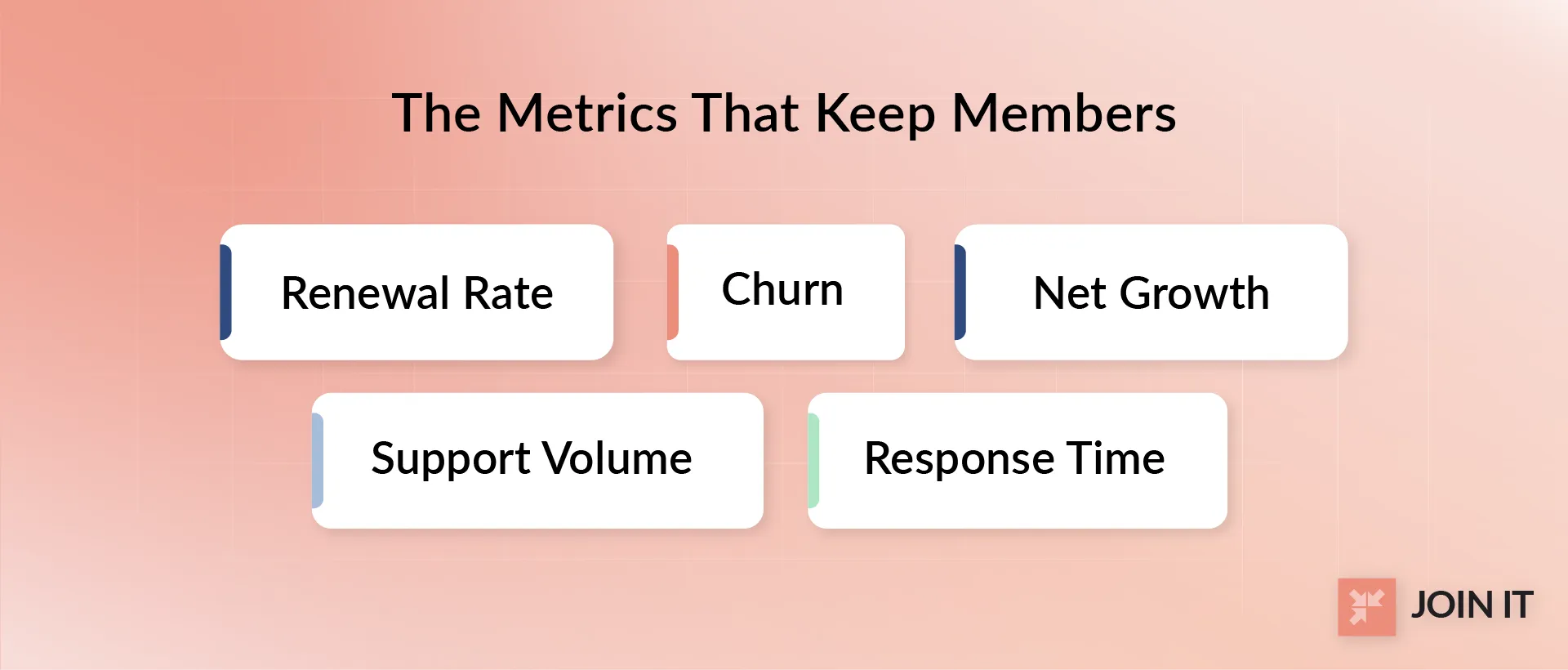
Focus on these key indicators:
- Renewal rate: Percentage of expiring members who renew (industry median is about 85%)[9]
- Churn rate: Percentage of members who leave
- Net member change: New members minus losses
- Support volume: Number of inquiries received
- Response time: Average time to first reply
According to membership consultants, retention and churn are fundamental metrics. Everything else is secondary.[10]
Keep it to a handful. Tracking too much data without acting on it wastes effort.
Run a Lightweight Monthly Review
Once a month, look at your numbers:
- What changed? ("Renewal rate dropped 5% this month")
- Why did it change? ("We missed sending the 30-day reminder")
- What will you adjust? ("Add reminder to calendar, create backup system")
Document this in short notes or a simple dashboard. The goal is learning, not creating big reports.
One association noted their renewal rate dropped and discovered they'd changed renewal wording. They reverted to the original, and renewals stabilized. Quick review, simple fix.
Collect Feedback Without Making It a Project
Don't wait for annual surveys. Use always-on feedback channels:
- A simple survey link in emails
- A suggestion box on your member portal
- A quick "How did we do?" after events
Assign one person to review feedback monthly. Even if it's brief, identify glaring issues. Then incorporate fixes into your regular review cycle.
As Reddit users advise, poll your audience on preferences (daily, weekly, monthly updates) and segment accordingly. Let members choose what they receive.
Test Small Changes
When you identify an improvement, test it small first.
Change the subject line of one reminder email. Offer a perk to a subgroup. Tweak your renewal wording.
Check if it moves the needle. If yes, roll it out. If no, try something else.
Change one thing at a time so you know what works. Big changes destabilize everything and make it hard to measure impact.
Membership Management Tips by Organization Type
Different organizations face different operational realities. Here's what changes by type:
Professional Associations
Complex structures with chapters, committees, and formal renewal cycles.
What's different: Member directories with roles and titles matter. Renewals often align with fiscal or calendar year. Paid staff or volunteers handle operations. Employer-funded memberships mean coordinating with HR or budget cycles.
Key tip: Clear policies and timelines are crucial. Corporate members process invoices slower than individuals, so send reminders earlier.
For a deeper look at governance and operational structure, see our comprehensive guide to association management. And if your organization spans regions, multi-chapter membership management strategies can help you coordinate effectively across locations.
For comprehensive guidance, see our guide to association management. And for multi-location groups, multi-chapter membership management offers specific strategies.
Community Groups
Volunteer-run with simple membership structures and informal communication.
What's different: Leadership turnover is frequent. Communication tends to be casual (email lists, social groups). Renewals might be annual at an event ("dues are due at our April picnic").
Key tip: Written SOPs prevent "lost knowledge" when officers change. Document everything so the next volunteer doesn't start from scratch.
Charities and Nonprofits
Often have both donors and members, creating confusion.
What's different: Be clear in communications what membership includes versus a donation. Staff may handle sensitive situations (declining ability to pay). Renewals might coincide with fundraising appeals.
Key tip: Separate member and donor communications. One museum keeps lapsed members on a "former members" list rather than mixing them into donor mailings.
For residential associations specifically, working with an HOA management company can help streamline governance, billing, and member communication at scale.
Arts, Theatres, and Museums
Membership often includes event benefits (free tickets, previews).
What's different: Expect inquiries about schedules and guest passes. Communication is event-heavy (monthly playbills, exhibition invites). Renewal timing might match show seasons. Recordkeeping must track visits or redemptions if part of benefits.
Key tip: Automate event reminders and guest policy explanations to reduce repeat questions.
For UK-based institutions, our resource on membership management for cultural organisations offers guidance tailored to arts and heritage groups.
Sports and Fitness Clubs
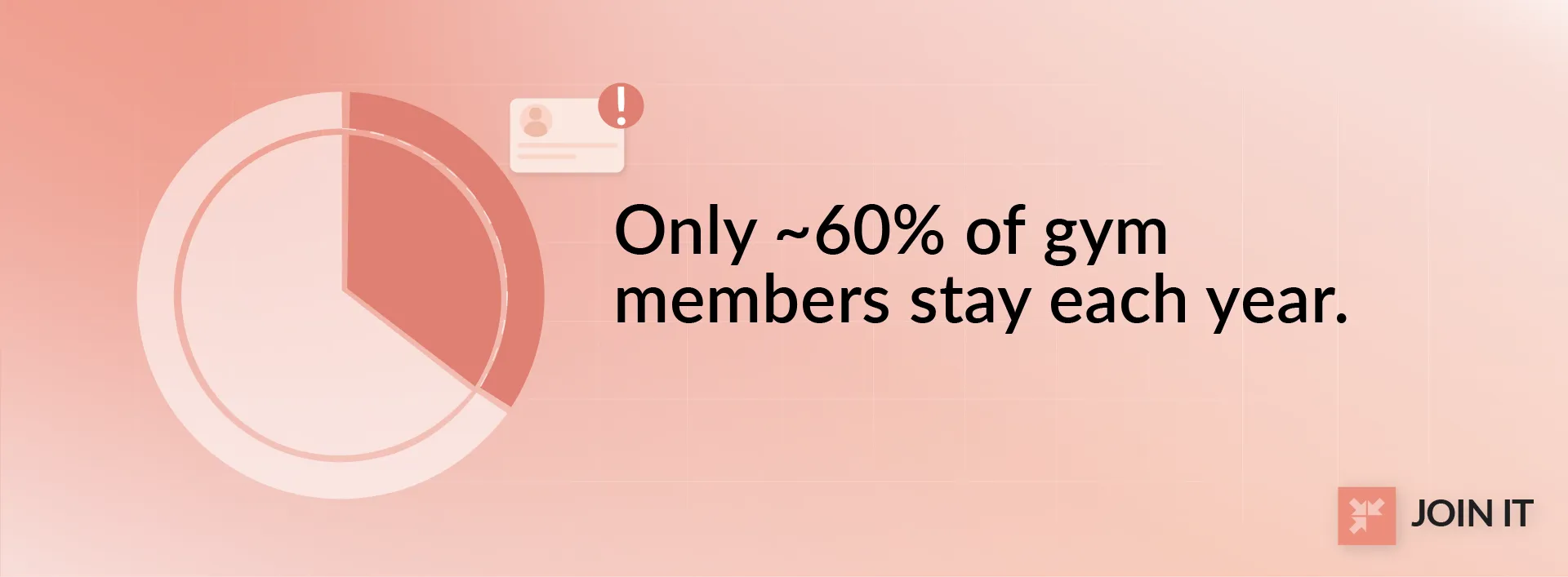
High churn is common (average gym retention is only about 60% per year).[11]
What's different: Many members pause for vacations or injuries. Communication includes freeze expiration reminders. Renewals may be automated (monthly subscription), but staff should handle failed payments quickly. Updates often involve adding family members or changing tiers.
Key tip: Policy for holds is essential. One yoga studio logs freeze requests and sends reminders before freezes end, reducing involuntary cancellations.
Hobby and Social Clubs
Often seasonal membership (hiking club dues from spring through fall).
What's different: Communication is casual (social media, club newsletter). Renewals may come at season start with a celebratory event. Expect lapses over off-season.
Key tip: Gentle reminders in late winter can boost renewals before the season starts. Don't treat off-season lapses as permanent losses.
Business and Services
Membership perks (discounts, networking referrals) are key.
What's different: Members often ask about using perks ("How do I get the discount?"). Staff turnover at member organizations causes frequent contact updates.
Key tip: Expect lots of address and representative changes. Make updating contact info easy.
For coworking environments in particular, our ultimate guide to coworking space management explores how to structure benefits, operations, and member communication effectively.
Common Membership Management Mistakes
Even experienced teams fall into these traps. Here's what to avoid:
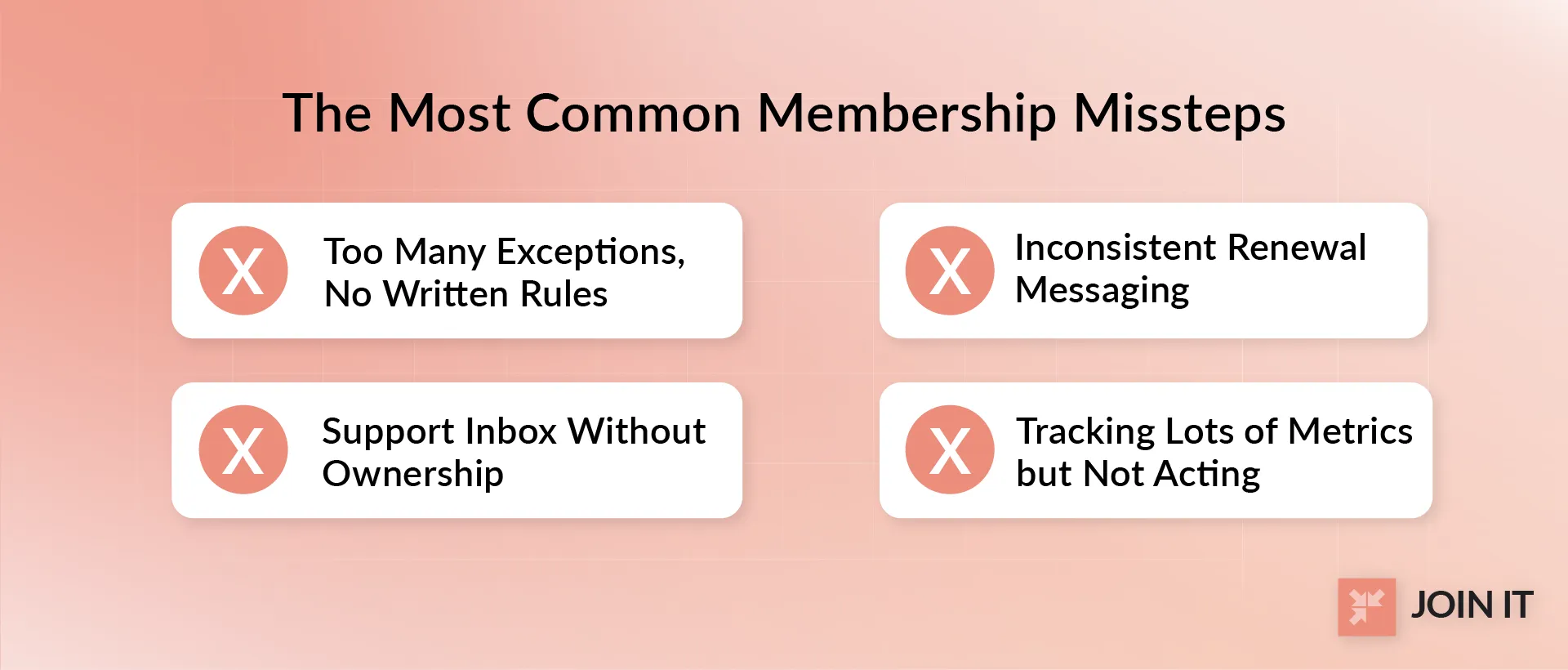
Too Many Exceptions, No Written Rules
Ad-hoc decisions create chaos.
ASAE research shows that documented procedures transform operations "from chaotic to consistent." Without SOPs, every task becomes a fire drill.
When board members manually override renewals or staff handle every situation as a unique case, it's impossible to predict workload. You end up scrambling constantly.
Fix: Document your high-impact processes. Dues collection, onboarding, renewals. Write down the steps so everyone handles them the same way.
Inconsistent Renewal Messaging
If renewal notices change wording or timing each cycle, members get confused.
Remember that 50% of associations cite poor engagement communication as a lapse cause. Inconsistent messaging is a major culprit.
Fix: Use the same terms and schedule every time. Pick your wording, lock it in a template, and stick with it.
Support Inbox Without Ownership
When member questions go to a generic mailbox that no one owns, things fall through.
Unanswered queries frustrate members more than a short delay with acknowledgment.
Fix: Assign one person (or rotating owners with overlap) to monitor all member support. Make it clear who's responsible.
Tracking Lots of Metrics but Not Acting
Data is only useful if you respond to it.
One association tracked 15 different email metrics but never changed content. Once they committed to acting on one (if unsubscribe rate exceeded 1%, change email style), they saw actual improvements.
Fix: Pick 3 to 5 key metrics. Monitor them. When something changes, investigate and adjust. Don't just plot charts.
Quick Start: What To Do This Week and This Month
Ready to implement what you've learned? Here's your action plan.

This Week
- Establish or review your communication cadence. Decide on your newsletter or email schedule (monthly, quarterly) and who's responsible. Write it down.
- Set up a renewal reminder timeline. Draft three simple notices (30 days, 7 days, 1 day before due) and schedule them. Include a clear payment link or instruction in each.
- Define support standards. Choose one support channel (email or phone) and set an expected response time (reply within 2 business days). Document this standard.
This Month
- Review core KPIs. Look at this month's renewal rate, new members, and churn. Compare to last month. Note any big changes.
- Identify top issues. Check support inquiries and complaints. Are the same questions coming up? Is anything unusually slow? Prioritize one issue to address.
- Implement one improvement. Based on the above, make one small change. Tweak email wording, resend a missed reminder, or update a FAQ entry. Keep it manageable.
These simple steps create momentum. You don't need to fix everything at once. Just start.
If you want to take this a step further, the right system makes these routines automatic. Learn more in our membership management software guide.
FAQs
What is membership management?
It's the ongoing activities that keep a membership program running: recruiting and onboarding members, managing renewals and payments, sending communications, handling support, and analyzing data. According to industry definitions, it's essentially the operational back office and service function of a membership organization.
What is the role of a membership manager?
A membership manager oversees daily operations: keeping records accurate, sending renewals on schedule, handling inquiries, and running reports. They ensure members stay engaged and the program meets targets. They implement what leadership sets but don't decide dues or policy changes on their own.
What is the difference between CRM and membership management?
A CRM (Customer Relationship Management system) is a general tool for managing contacts and interactions, often used for sales or donors. Membership management software is specialized for membership needs: it automates renewals, tracks benefits, handles event registrations, and manages payment cycles. Most membership systems include CRM functions but add features a generic CRM lacks.
What are the steps in membership management?
Key steps include: handling new member sign-ups (collecting data, issuing credentials), ongoing engagement (communicating value and benefits), processing payments and renewals, updating member status (upgrades, contact changes), and running periodic reports. According to professional resources, the typical cycle is: Onboard, Engage, Remind to Renew, Process Renewal, Repeat. Each step should follow a consistent process.
Wrapping Up
Membership management doesn't have to be overwhelming.
The secret? Simple routines applied consistently.
You've learned the four core areas:
- Communicating with members through consistent channels and schedules
- Handling renewals with value reminders and simple processes
- Managing inquiries with clear ownership and fast responses
- Evaluating and improving with focused metrics and small tests
Pick one area to fix first. Maybe it's setting up renewal reminders. Maybe it's documenting your FAQ. Maybe it's defining your weekly check-in routine.
Start there. Get one system working. Then move to the next.
And if you need a tool to make all of this easier, consider exploring membership management software that streamlines renewals, communications, and member tracking in one place.
Your membership program deserves better than chaos. And your members deserve consistency, clarity, and care.
If you’re ready to see how it works in practice, you can start a free trial or book a demo to explore the platform firsthand.
References
- Marketing General. Five Association Membership Growth Drivers
- Higher Logic. Membership Renewal Strategy
- Advantage CS. Membership Management Basics
- Nonprofit Tech for Good. Email Marketing Statistics for Nonprofits
- Access Development. 10+ Ways to Sabotage Membership Growth
- Reddit. Email Frequency Best Practices
- ISAE. Member Retention Challenges and Solutions
- Reddit. Nonprofit Association Dues Collection
- Membership Marketing Blog. 2024 Membership Marketing Benchmarking Report
- Raybourn Group. Essential Membership Metrics
- Smart Health Clubs. Gym Membership Retention Statistics


