
Chapter 3: Maximizing Your Membership Experience - Tips and Strategies
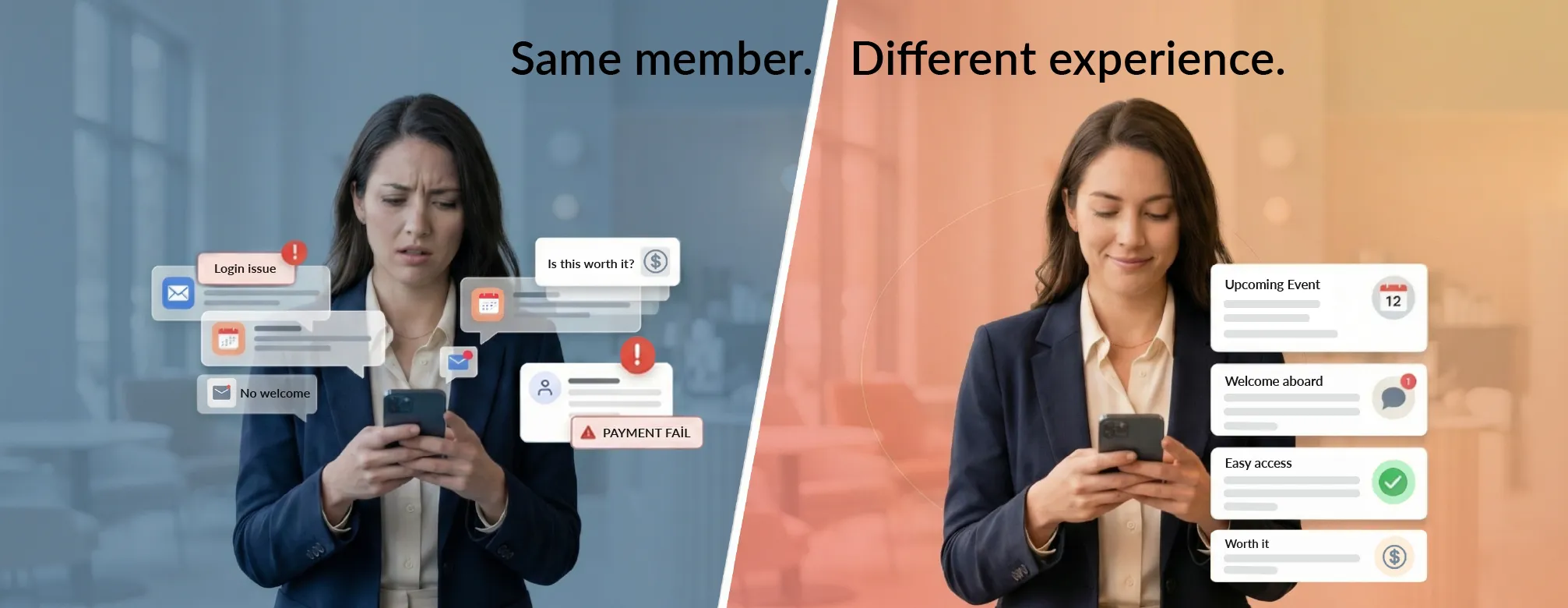
"You know that feeling when you join something exciting, only to feel lost a week later?
Maybe you signed up for a professional association, paid the dues, and then... crickets. Or you joined a community group, showed up once, and nobody said hello.
Here's the thing: 86% of people are willing to pay more for a great experience (according to PWC research).[1]
And the membership world is no exception.
The difference between a membership that thrives and one that quietly loses people isn't usually about the benefits offered. It's about the experience of being a member.
Membership experience is the full journey someone has with your organization, from joining to participating to renewing (or choosing not to). It includes practical moments (finding benefits, signing up for events, logging in) and emotional moments (feeling welcomed, valued, and connected).
In this guide, you'll discover exactly what makes a membership experience work, why it matters more than ever, and the proven steps to transform how members feel about their journey with your organization.
Key Takeaways
What "Membership Experience" Really Means
Membership experience is the complete journey someone has with your organization, from the moment they first hear about you through joining, participating, and eventually renewing (or not).
It's not a single event.
It's an ongoing relationship.
Think about it like this: membership experience includes all the touchpoints, interactions, and feelings a member has throughout their lifecycle with your organization.
A member's experience includes both practical aspects (like how easy it is to sign up or access benefits) and emotional ones (like feeling valued and included). According to research by AskNicely, a great membership experience needs to be smooth and roadblock-free and make members feel cared for.[2]
It's More Than Just Customer Service
Unlike a simple transaction, membership involves belonging to a group.
Your experience includes:
- How you participate in the community
- How you perceive the value you're getting
- How you interact with other members
- Whether you feel like you belong
In fact, ASAE research found that recurring member-to-member engagements are one of the most powerful drivers of retention. People stick around because of other people, not just perks.[3]
The Critical Lifecycle Stages
Your membership experience plays out across key stages:
Onboarding (just after joining): Those crucial first days and weeks set the tone.
Engagement (ongoing participation): How members interact with your organization and each other.
Renewal (the decision to continue): Whether they see enough value to stay.
Why do the first 90 days matter so much for membership experience?
Research shows that new members often make up their mind about membership value within the first 90 days. [4]
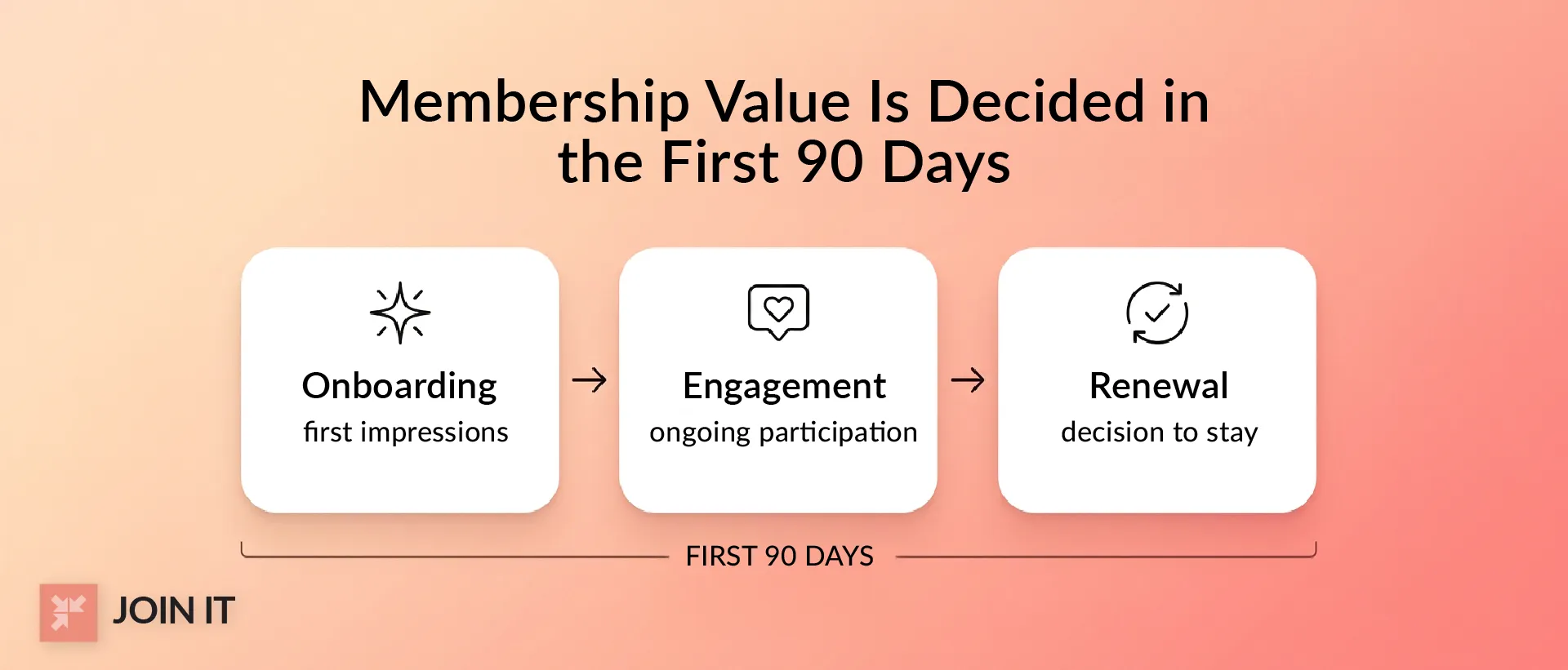
If the experience in that window is positive, they mentally commit. If it disappoints, interest fades fast.
Why Membership Experience Matters (More Than You Think)
Here's a sobering reality: members might quietly disengage or not renew without ever voicing complaints.
No news is not good news.
According to Marketing General's 2020 survey, the top reasons for membership lapses were lack of engagement (51% of associations) and perceived lack of value. Both stem from poor membership experience.[5]
How does membership experience affect retention?

Get this: if a new member engages in at least 3 meaningful activities, their renewal likelihood skyrockets, often approaching 100%.
And check out this pattern: a new member has only about a 50% chance of renewing after their first year. But if theydo renew once, their second renewal jumps to 80% likely.
That first-year experience is critical.
How does membership experience drive word of mouth?
When members love their experience, they become your best marketers.
Nielsen found that 92% of people trust recommendations from friends and family over any other marketing.[6]
If your membership experience is exceptional, members will tell their peers. If it's poor, they'll either stay silent or share negative stories.
Both have consequences.
What does a good membership experience look like in the real world?
Let me give you a concrete example from the research:
One medical society discovered that most members could only name one benefit despite offering dozens. The problem wasn't the benefits, it was that the value wasn't communicated clearly.
After they started explicitly showing members what they'd used throughout the year (papers downloaded, webinar credits earned, value totaled), renewal rates improved.
That's membership experience in action.
For more proven ways to keep members engaged, check out these member engagement ideas.
A Simple Framework: Clarity, Value, Belonging, Ease
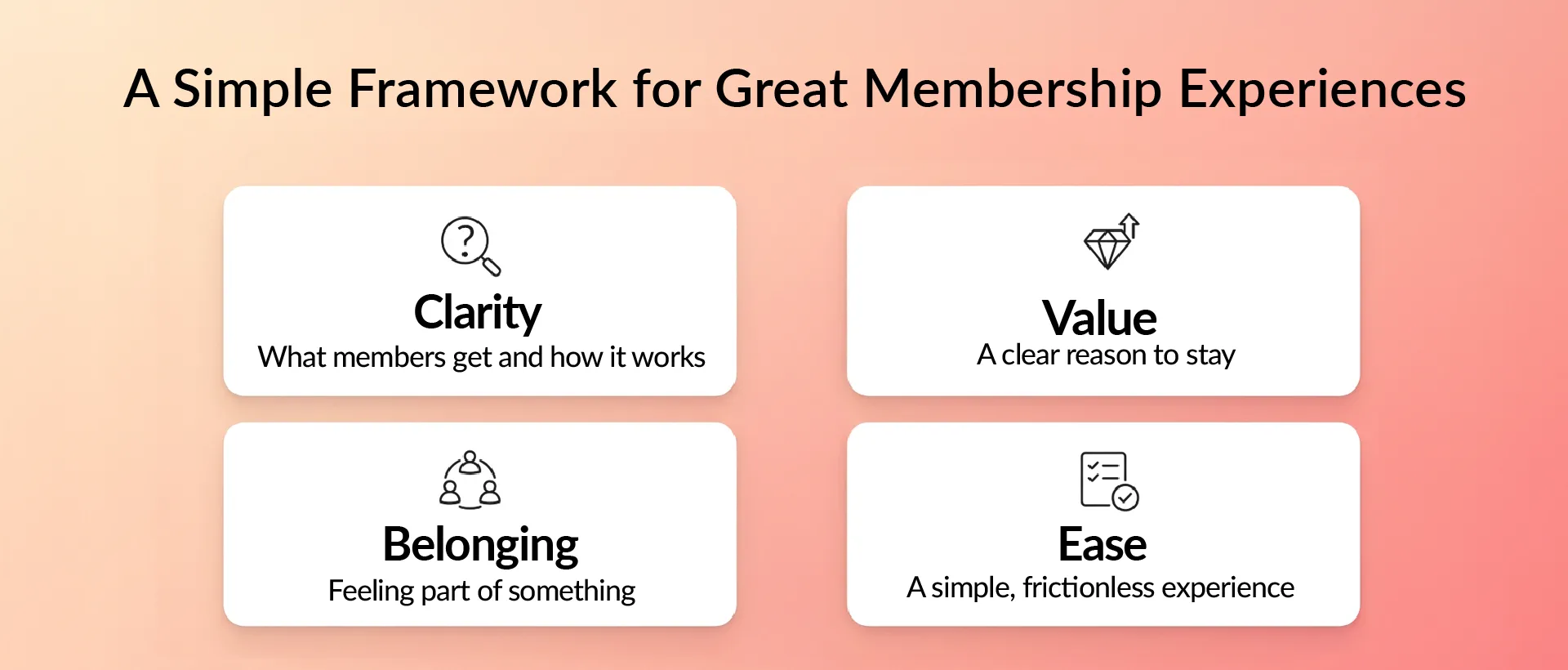
Before we dive into the tactical steps, here's a simple lens for thinking about membership experience.
The best organizations excel at four things:
Clarity
Members know what's available, what to do next, and what they can expect.
There's no confusion about how to get started, access benefits, or participate. Communications are clear and helpful, not jargon-filled or overwhelming. Even small details like your membership level names can improve clarity, because clear, catchy tier labels make value easier to understand at a glance.
When Colorado PERA surveyed members, they discovered people wanted simpler language and more personalized content. They delivered both, improving their experience significantly.[7]
Value
Members actually feel the benefits they're getting.
It's not enough to offer value. Members need to discover it easily, use it without friction, and see outcomes from it.
Community Brands research found that training, certifications, and career advancement have become increasingly important benefits, especially to younger members.
The organizations that thrive are the ones clearly tying membership to these tangible outcomes.
Belonging
People feel welcomed, connected, and part of something meaningful.
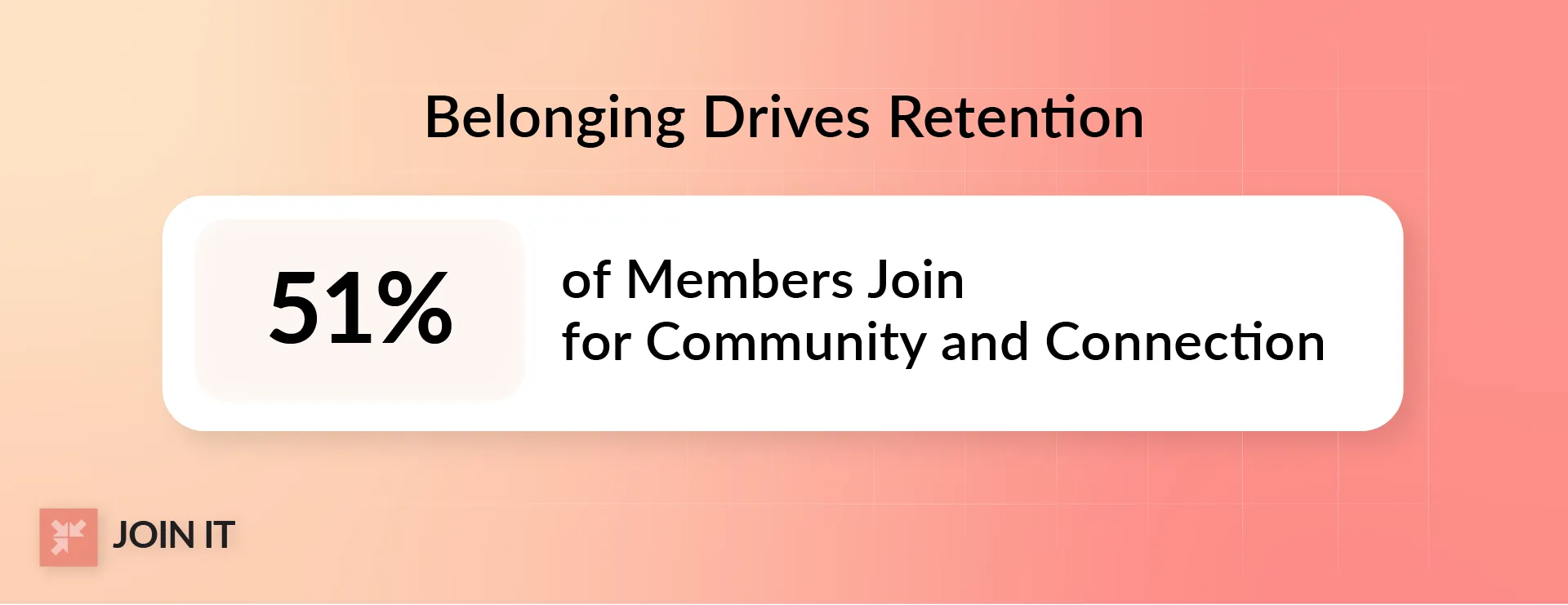
According to industry research, 51% of members rely on their association primarily for networking, collaboration, and community.
Those who actively use online community features report higher loyalty than those who don't.
Connection drives retention. For strategies on creating these connections, explore our guide to building a thriving community.
Ease
Every interaction is smooth, simple, and respectful of members' time.
From signing up to renewing, from finding events to updating profiles, friction is minimized.
Research shows that 78% of people won't complete a purchase if the experience is too complicated. The same principle applies to membership activities.[7]
How They Work Together
Think of these four as pillars holding up member satisfaction.
You might have great value and belonging, but if nothing is clear or easy, members get frustrated. Or you might have clarity and ease, but if there's no community or tangible value, members will find the experience hollow.
A balanced approach wins.
Quick Self-Check: How's Your Membership Experience?
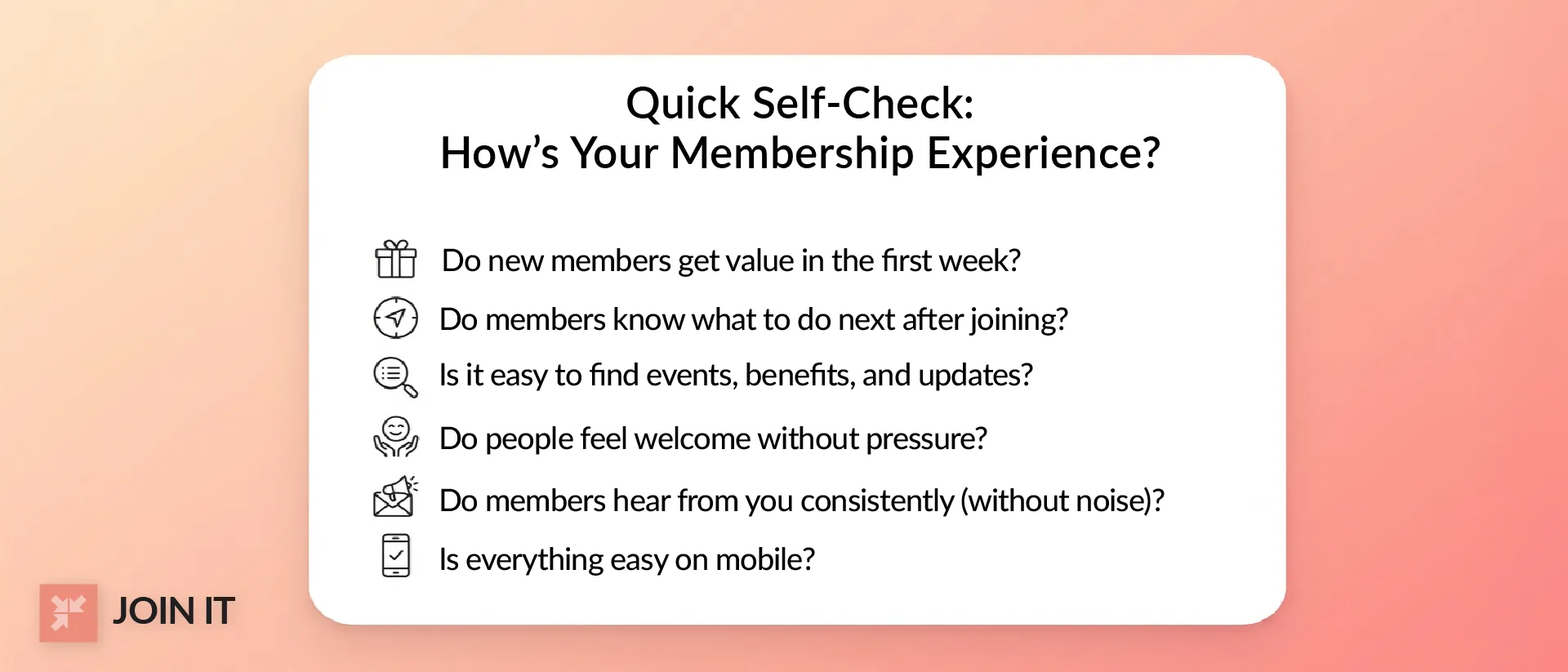
Before we get into the improvement steps, take a quick pulse on where you stand:
Can a new member get value in the first week? If someone joins today, will they experience something valuable within 7 days? Or do they have to wait weeks for their first event or benefit?
Do members know what to do next after joining? Is there a clear "start here" path, or are new members left to figure things out on their own?
Is it easy to find events, benefits, and updates? Can members quickly discover what's available to them? Features like member check-in make it simple for people to engage with events.
Do people feel welcomed without being forced into the spotlight? Are there low-pressure ways for new or introverted members to connect? Creating space for quieter introductions, small-group interactions, or optional orientation touchpoints can make a meaningful difference. Thoughtful approaches to welcoming new members often set the tone for long-term engagement.
Do members hear from you consistently (without noise)? Are your communications regular and relevant, or do members either hear nothing or get overwhelmed by emails?
Is everything easy on mobile? More than 60% of traffic comes from mobile devices. If your membership experience isn't mobile-friendly, you're creating friction for the majority of your members.
If you answered "no" or "not sure" to any of these, the following steps will help.
The 5 Steps to Improve the Membership Experience
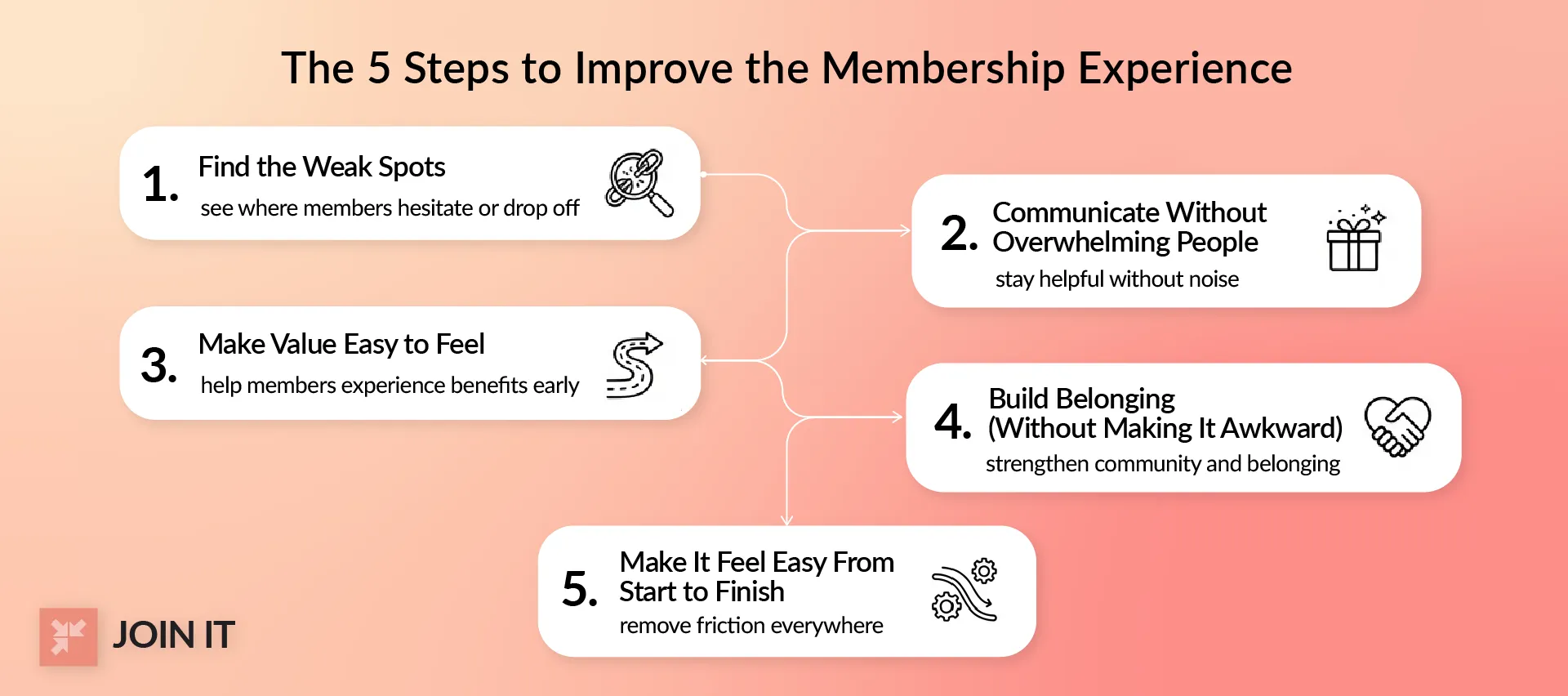
Ready to make real improvements? Here's the roadmap.
Step 1: Find the Weak Spots
You can't fix what you don't measure.
The first step is identifying where your membership experience breaks down.
Map the member journey (high-level)
Chart the course members take from first contact through renewal:
- Before joining (what do prospects experience?)
- First week (what happens immediately after signup?)
- First month (early engagement)
- Ongoing participation (regular touchpoints)
- Renewal moment (the decision to continue)
You don't need a complex diagram. A simple timeline noting key touchpoints works. If you’re planning a membership drive, this guide will help you shape the ‘before joining’ part of the journey so new members start with clear expectations.
Spot experience "signals"
Look for warning signs:
- Drop-off points (where do people disengage?)
- Low participation (which events or benefits go unused?)
- Confused questions (what do members repeatedly ask?)
- Silent members (who joined but never engaged?)
One Reddit user shared their frustration: "Paid to join troop, never heard back." That's a massive breakdown in the joining experience.[8]
Organizations that track engagement metrics catch these issues early.
One simple feedback method
You don't need elaborate surveys to start.
Try a 1-question pulse: "On a scale of 1-10, how valuable has your membership been this month?"
Follow up with anyone who scores below 7.
A survey guidance emphasizes this truth: "When members feel heard, they stay. When they feel ignored, they leave quietly."[9]
Regular check-ins prevent silent exits.
Step 2: Communicate Without Overwhelming People
Here's a paradox: lack of communication drives people away, but too much communication does the same thing.
The solution? Smarter communication.
Simple cohorts (keep it light)
Not everyone needs the same messages.
Segment members into basic groups:
- New (first 0-3 months)
- Active (regularly participating)
- Renewal-coming (approaching expiration)
- Lapsed (recently expired)
One association created targeted email tracks and saw welcome series open rates of 60%, far higher than their generic blasts.
Why? Because new members expected those emails and found them relevant.
Two-way communication
Give members an easy way to share input. This could be:
- Simple surveys
- Online forums
- Feedback forms
- Direct replies to emails
But here's the critical part: close the loop.
When members give feedback, acknowledge it. When you make changes based on input, tell them: "We heard you, here's what changed."
One nonprofit instituted a policy: any substantive feedback gets a public response within a month. They'd share: "We heard concerns about conference accessibility. In response, we'll alternate East/West coast locations each year."
Members felt heard. Even those who hadn't complained appreciated the transparency.
Avoid communication overload
Research from Informz found that associations sending fewer, more targeted emails had better open rates than those blasting frequently.[10]
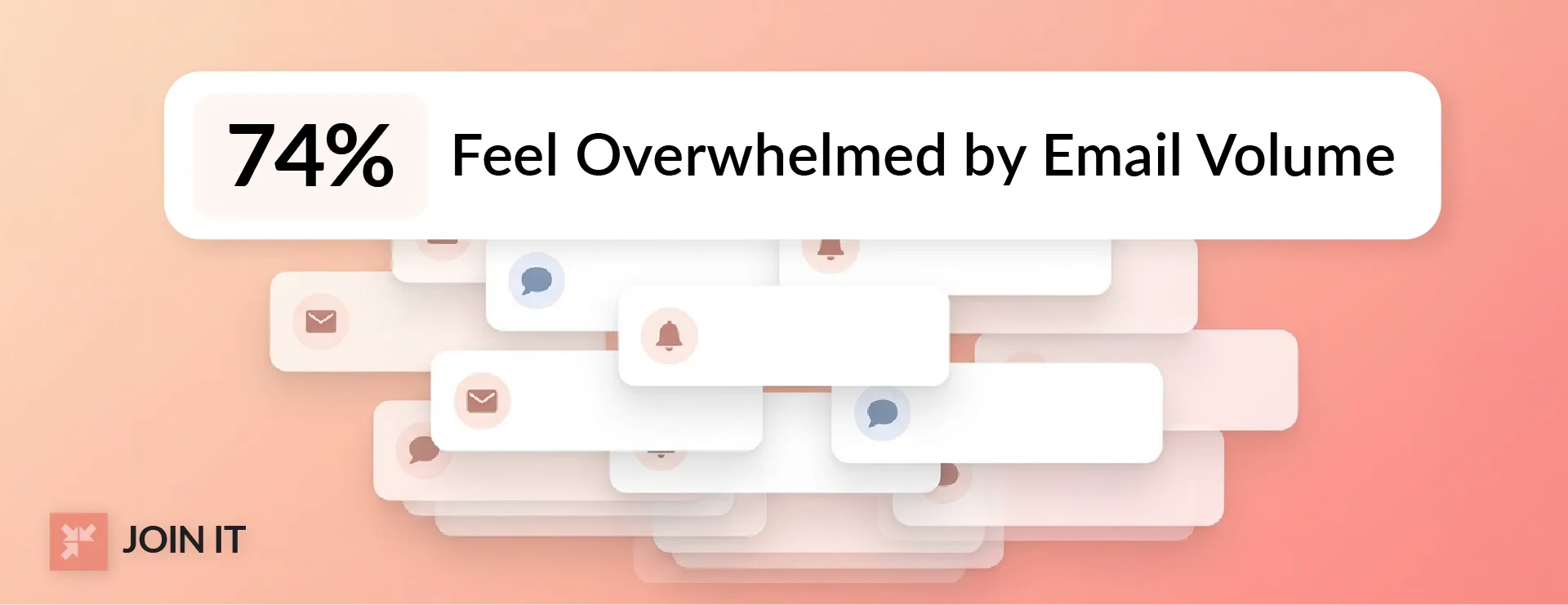
And Adobe's survey found 74% of people feel overwhelmed by email volume.[11]
Quality beats quantity. Every time.
Step 3: Make Value Easy to Feel
You probably offer more value than members realize.
The challenge is making it obvious and accessible.
Make benefits easy to discover
Don't bury your best stuff three clicks deep on your website.
Create a clear, scannable benefits page. Better yet, email new members a simple "here's what you get" summary.
Create a "start here" path
What are the top 3 things a new member should do first?
Make it crystal clear. One chamber of commerce created a one-page "New Member Roadmap" listing exactly three actions:
- Log in to the member portal
- Complete your profile
- Sign up for the New Member Coffee
New members stopped "disappearing" because they knew exactly how to get involved.
Write benefits as outcomes (not vague perk lists)
Instead of: "Access to our resource library"
Try: "Download templates and guides that save you 10+ hours per month"
Instead of: "Networking opportunities"
Try: "Connect with 500+ peers in your industry at monthly meetups"
One engineering association reframed their webinar series as "Learn X skill in 1 hour" and clearly marked the value ("$200 value, free for members"). Engagement skyrocketed.
Members-only access
Create exclusive experiences:
- Content (whitepapers, research, templates)
- Events (member-only networking, workshops)
- Learning (webinars, courses, certifications)
- Networking (private forums, mentorship programs)
The "members-only" framing creates inherent value.
Incentives (optional, use wisely)
Small perks and recognition work well:
- Anniversary acknowledgments
- "Member of the Month" features
- Early access to events
- Exclusive merchandise
But avoid making discounts your main value proposition. If people only join for discounts, they'll leave when the savings aren't worth it.
Step 4: Build Belonging (Without Making It Awkward)
Community is powerful, but forced networking is painful.
The key is creating low-pressure ways to connect.
Small formats work better than big mixers
Instead of throwing new members into a crowd of 100 at a big event, try:
- New member orientations (5-10 people)
- Interest-based roundtables (smaller, common ground)
- Volunteer opportunities (working side-by-side naturally breaks ice)
- Buddy or ambassador systems (one-on-one connection)
Contrast that with another account where new members weren't allowed to contribute ideas. Many "left the club because they weren't allowed to be a lion."[12]
The lesson? Make it easy to belong without forcing participation.
Recognize members
Acknowledgment strengthens belonging:
- Milestones: "Congrats to Maria on 10 years!"
- Contributions: "Thanks to John for organizing last week's meetup"
- Member stories: Monthly spotlight features
Offer both public and private recognition options. Some people love the attention; others prefer a personal thank-you note.
Keep it inclusive, avoid cliques
If your organization feels "cliquey," newcomers will struggle to break in.
Combat this by:
- Mixing groups (don't let the same people always sit together)
- Assigning greeters or ambassadors
- Creating interest-based subgroups (so cliques break up by topic)
- Using inclusive language ("we're all in this together")
One social club implemented a simple rule: at each event, board members should mingle and introduce any new faces. The atmosphere shifted dramatically.
Step 5: Make It Feel Easy From Start to Finish
Every bit of friction is an opportunity for members to give up.
Joining should feel simple
Modern members expect:
- Clear next steps after signup
- Fewer decisions upfront
- Mobile-friendly forms and payment
If your signup process is cumbersome, people will abandon it. One association found that streamlining their application (cutting a lengthy form to just essentials) improved conversion significantly.
Self-service basics
Members should easily be able to:
- Update their profile
- Access benefits and resources
- See and register for events
- Renew their membership
A well-designed member portal handles all of this.
Mobile matters
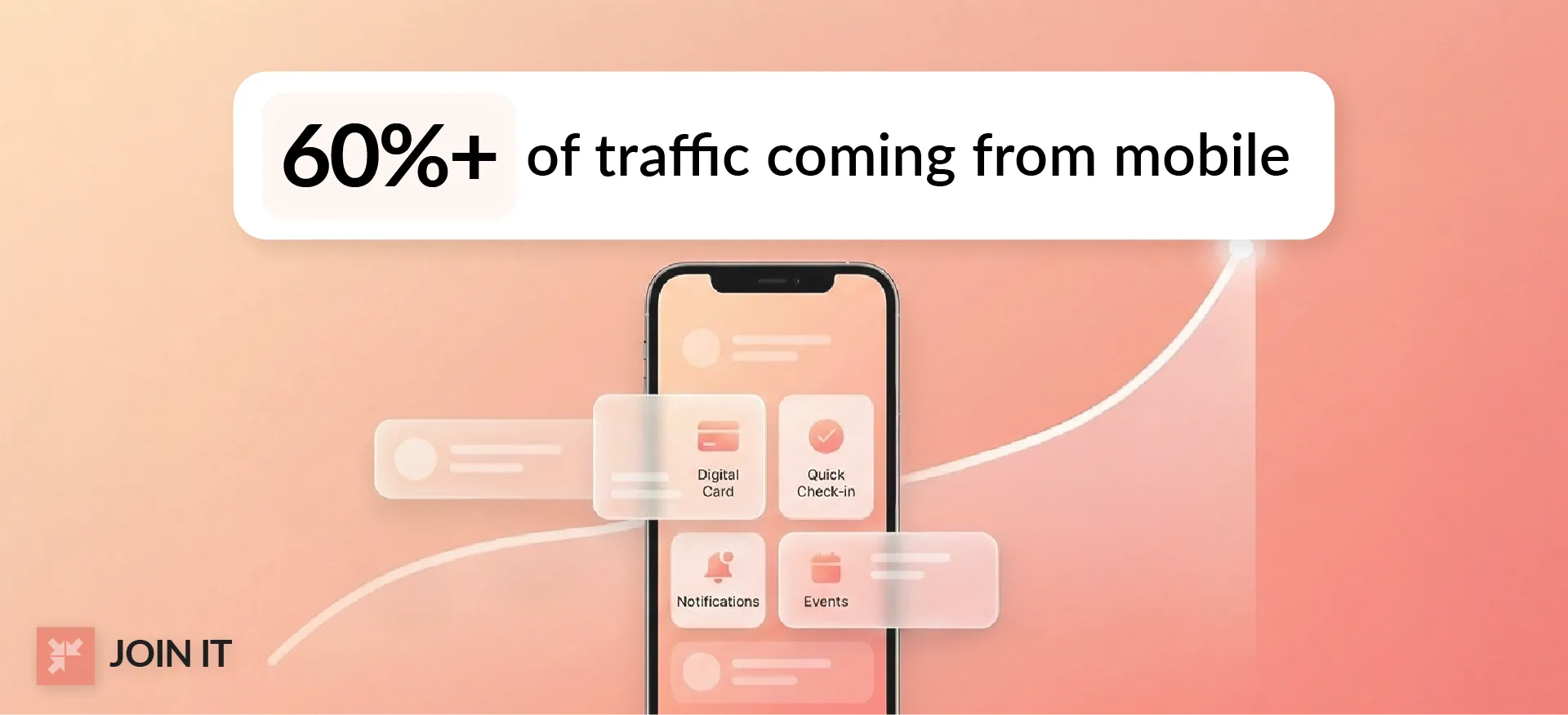
With 60%+ of traffic coming from mobile, mobile-friendliness isn't optional.
Test your entire membership experience on a phone. If anything is painful, fix it.
Digital Membership Cards: Small Detail, Big Impact
Here's a simple upgrade many organizations overlook: digital membership cards.
Instead of paper cards that get lost or forgotten, members store their membership in their phone's wallet (Apple Wallet, Google Wallet).
Why members love them:
- Always accessible
- Automatically updated (status, expiration)
- Quick proof of membership
- No fumbling for physical cards
Join It's digital membership card feature not only adds convenience but actually increases engagement, because members feel more connected when their membership is literally in their pocket.
It's a small touch that signals: "We respect your time and make things easy."
The "Moments That Matter"
Not all touchpoints are created equal.
Some moments have outsized impact on how members feel about their experience:
Right after someone joins
The first impression sets the tone. A warm welcome email, a clear next-step guide, or a personal call can make someone feel instantly valued.
Radio silence? That makes them wonder if anyone noticed they joined.
Their first "real win"
The first time a member uses a benefit, attends an event, or makes a connection, they experience tangible value.

This is why "time to first value" matters. Research shows that 75% of new users can disappear in the first week if they don't hit a first success.
Their first interaction with other members
Whether it's at an event, in a forum, or through a mentor, that first peer connection either builds belonging or leaves someone feeling like an outsider.
Make introductions easy.
The first time they feel lost or confused
This is a make-or-break moment. If someone can't find what they need and has no easy way to get help, frustration builds.
Clear navigation, responsive support, and proactive guidance prevent this.
The moment they consider renewing
By renewal time, members have already decided if it's worth continuing. The renewal notice is less important than the preceding 12 months of experience.
If they've felt consistent value and belonging, renewal is automatic. If not, no discount code will save it.
Membership Experience by Organization Type
While the fundamentals apply everywhere, different organizations have unique considerations:
Professional Associations
Members expect career value, credibility, and networking that feels worth the investment.
They want:
- Tangible professional development (certifications, training)
- Connections that lead to opportunities
- Resources that advance their careers
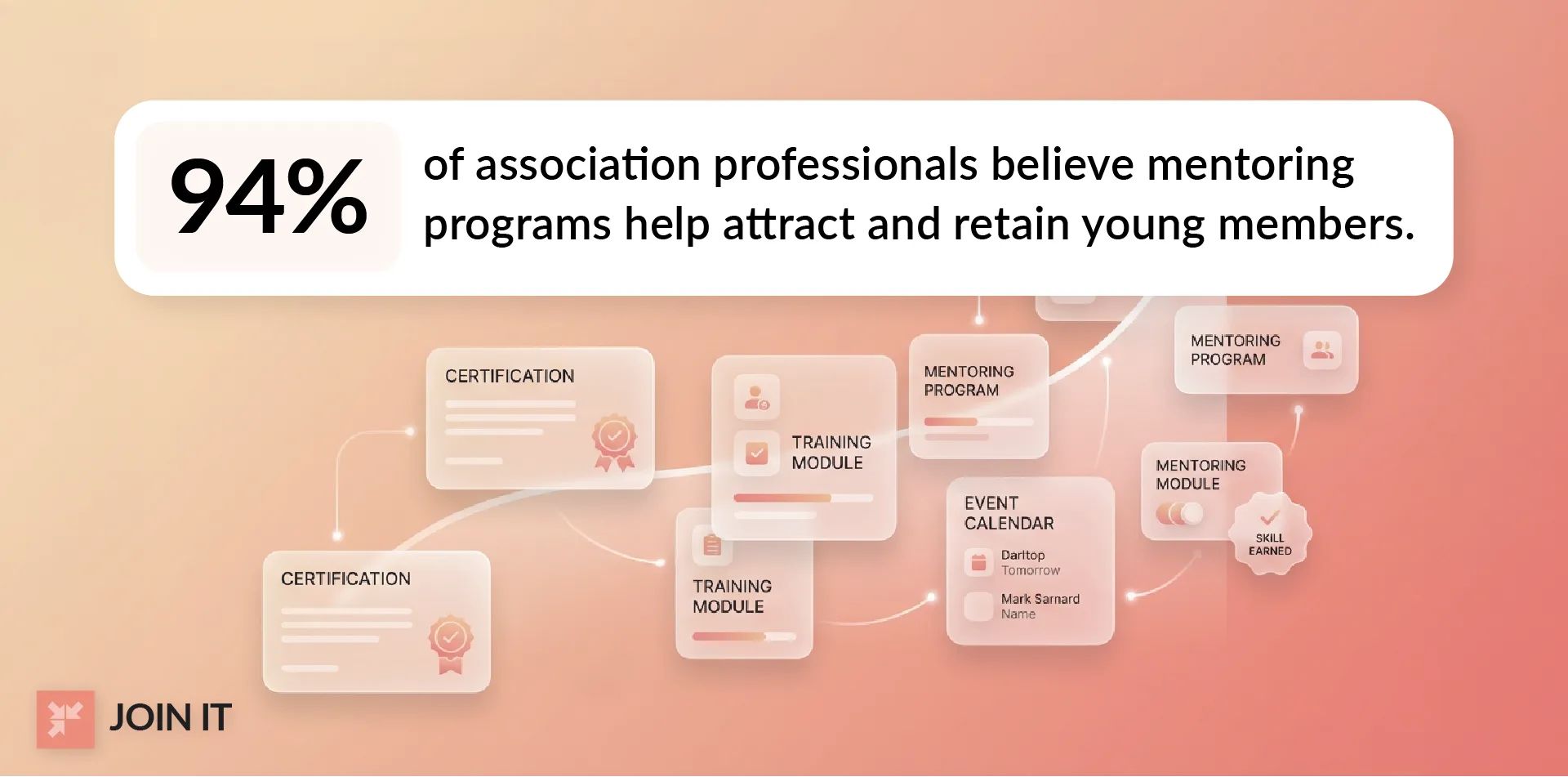
Research indicates that 94% of association professionals believe mentoring programs would help attract and retain young members.[13]
Community Groups
The focus here is warm welcomes and simple ways to join in.
Thoughtful, low pressure activities such as small events or shared projects can encourage involvement. Exploring different community service ideas can also inspire meaningful, purpose driven participation without overwhelming new members.
Charities and Nonprofits
Members want impact clarity, appreciation, and purpose-driven belonging.
They joined to make a difference. Show them the impact they're enabling. Celebrate their contributions publicly.
Fundraising moments become powerful member experiences when handled well. Resources like food fundraising ideas and youth group fundraiser ideas can help create these bonding moments.
Arts, Theatres, and Museums
The experience centers on access perks, event rhythm, and guest expectations.
Members want exclusive access (previews, special events), convenient benefits (easy reservations, member hours), and appreciation for their support.
Even creative fundraising, like t-shirt fundraiser ideas, can strengthen member connection to the institution.
Sports and Fitness Clubs
Key factors in sports and fitness memberships include consistency, progress tracking, and flexible participation.
Members want to see improvement, feel part of a supportive community, and have options that fit their schedules.
Clubs that strengthen connection through shared activities often see stronger engagement. Creative approaches such as sports fundraising ideas can also bring members together around a common goal while supporting the organization.
Hobby and Social Clubs
Success comes from seasonal energy, authentic friendships, and informal vibes done well.
These organizations often have natural rhythms (seasonal activities, annual traditions). The key is maintaining energy throughout the year and creating genuine social connections.
Shared experiences like fundraising ideas for clubs, college fundraising ideas, or class reunion ideas can be powerful bonding moments.
Business and Services
The priority is perk clarity and consistent experience even with staff turnover.
Business-oriented memberships (gyms, coworking spaces, subscription services) need clear value propositions and reliable service delivery.
Staff changes shouldn't disrupt the member experience.
Membership Retention Starts With Experience
Let's be direct: if your retention is struggling, look at the experience first.
What retention drivers can you control through membership experience?
It's rarely about the price.
Members leave because:
- Unclear value: "I'm not sure what I'm getting out of this"
- No connection: "I don't feel like I belong"
- Too much friction: "Everything is complicated"
- Forgotten: "I forgot I was even a member"
Notice a pattern? These are all experience issues.
What retention drivers can you control through membership experience?
Clarity: Members understand what's available and how to use it
Habit: Members regularly engage (events, content, community)
Belonging: Members feel connected to the organization and each other
Nail these three, and retention takes care of itself.
When these three elements are strong, retention tends to follow. Many of the same patterns appear in broader discussions around long term membership retention, where consistency and connection matter more than one time incentives.
Common Membership Experience Mistakes
Even well-intentioned organizations fall into these traps:
Benefits exist but are hard to find
You offer amazing resources, but they're buried in a menu or never mentioned in communications. Members don't use what they don't know about.
Too many messages, not enough relevance
You're emailing constantly, but most messages don't apply to most members. People start ignoring everything.
Joining is easy, participation is confusing
Signup is smooth, but after joining, new members have no idea what to do next. They drift away.
Community feels cliquey
Long-time members have tight bonds, but newcomers can't break in. No structured welcome or integration.
Members don't know what "success" looks like
What does an engaged member do? What outcomes should they expect? Without this clarity, members can't gauge if they're getting value.
Each of these is fixable once you recognize it.
If you want to reduce friction across onboarding, renewals, and support, explore our membership software guide.
FAQs
What is membership experience?
Membership experience is the complete journey someone has with your organization, from first contact through joining, participating, and renewing. It includes both practical elements (ease of signup, accessing benefits) and emotional ones (feeling valued, connected, and part of something meaningful).
What is a good member experience?
A good member experience is clear (members know what's available), valuable (they get tangible benefits), welcoming (they feel they belong), and easy (interactions are smooth). Members can quickly see value, make connections, and participate without friction.
How do you improve membership experience?
Start by mapping the member journey to find weak spots. Then focus on the four pillars: improve clarity through better communication, make value obvious and accessible, build belonging through community, and reduce friction at every touchpoint. Regular feedback helps you continuously refine.
How do you measure membership experience?
Track engagement metrics (event attendance, benefit usage, community participation), retention rates, survey feedback (like Net Promoter Score), and early warning signs (low participation, confused questions, silent members). A simple monthly pulse question can reveal a lot.
What helps new members feel welcome fast?
Personal welcome messages, clear "start here" guidance, small-group orientations, buddy or mentor pairings, and low-pressure ways to participate. The key is making people feel noticed and valued without forcing them into the spotlight.
How does member experience affect retention?
Experience is the primary retention driver. Members who feel clear value, strong belonging, and minimal friction renew at much higher rates. Research shows that new members engaging in at least 3 meaningful activities have near-100% renewal rates, while those with poor early experiences often don't make it past the first year.
Wrapping Up: Your Next Step
We've covered a lot of ground.
Here's the simple recap of the 5 steps:
Step 1: Find the Weak Spots - Map your member journey and spot the signals
Step 2: Communicate Without Overwhelming - Smart cohorts and two-way dialogue
Step 3: Make Value Easy to Feel - Clear benefits, outcome-focused messaging
Step 4: Build Belonging - Low-pressure connections and authentic recognition
Step 5: Make It Feel Easy - Smooth processes from start to finish
But here's the thing: you don't have to tackle everything at once.
Pick one weak spot and improve it this month.
Maybe that's:
- Creating a simple welcome email for new members
- Simplifying your signup process
- Starting a new-member orientation
- Surveying members about their experience
- Making your benefits page clearer
Small improvements compound.
As you enhance the membership experience, you'll notice members engaging more, staying longer, and telling others about what makes your organization special.
Because at the end of the day, membership isn't about transactions.
It's about belonging to something meaningful.
Make that experience count.
References
- PWC. 86% willing to pay more for great experience
- AskNicely. Smooth and roadblock-free experience
- ASAE. Member-to-member engagements drive retention
- ASAE. 90-day decision window
- MemberSuite. Top reasons for membership lapses
- Nielsen. 92% trust friend recommendations
- MemberDev. 78% abandon complex purchases
- Reddit. Paid to join, never heard back
- Glue Up. When members feel heard
- Associations Now Fewer targeted emails perform better
- Forbes. 74% overwhelmed by email
- Facebook Lions Club. Not allowed to contribute
- Naylor. 94% support mentoring programs


