
Membership Growth: The Complete Guide to Attracting New Members

46% of nonmembers have never heard of a relevant organization in their field.
Not heard of one and decided it wasn't worth it. Just never heard of one. That single finding reframes the entire membership growth challenge.
Before prospects can evaluate your offer, question your pricing, or find your join form, they have to know you exist.
That's the starting point. This chapter covers everything after it: how to reach the right prospects, communicate value that converts, and make joining easy enough that interested people actually follow through.
If you're newer to how membership organizations are structured, the complete membership organization guide is worth reading alongside this.
Key Takeaways
- Most membership organizations lose prospects before the join form. Discovery and value clarity fail long before pricing does.
- Net membership growth rate hides first-year churn. Segment it by cohort, channel, and tier to see what's actually happening.
- Staff consistently overvalue conferences and meetings. Members prioritize career advancement, mentoring, and credentials.
- A membership drive without source tracking teaches you nothing. Attribution is not optional.
- Referred members convert better and stay longer than members acquired through cold outreach.
- Pricing confusion is a silent conversion killer. Prospects who don't understand the tiers don't ask questions. They leave.
- The 48 hours after an event close faster than most organizations realize. Post-event follow-up is where membership conversion happens.
- Activation in the first 30 days determines renewal a year later. The join is not the finish line.
- Join It is rated Excellent on Trustpilot, one of the most affordable tools in this category, and gives you membership management, dues collection, automated renewals, and a member portal all in one place.
What Is Membership Growth?
Membership growth is a sustained increase in qualified new members who join because the value is clear, the offer fits, and the path to joining is easy.
The key word is "qualified." Raw member count can look healthy while first-year churn quietly erases every new signup. Real growth means understanding who joined, from where, at what cost, and whether they reached first value.
The growth journey for this chapter runs: Awareness → Consideration → Join → First Value → Referral.
Most growth problems happen in the first three stages. That's where this chapter lives. Membership growth and retention are connected: how you grow largely determines how much you keep.
Why Membership Growth Stalls Before the Join Form
If you've ever wondered why people are not joining despite strong programming and a genuine community, the answer is almost never "more marketing." It's usually one of these:
- Low awareness: 46% of nonmembers simply don't know a relevant organization exists
- Cost and unclear ROI: 33% cite cost as a barrier, 28% cite insufficient ROI, per Higher Logic's research. "Too expensive" almost always means "not clearly worth it"
- Weak value communication: Many organizations deliver strong value but fail to package it for prospects. MGI's benchmarking research shows only a small fraction of associations rate their value proposition as "very compelling," even while current members report strong satisfaction
- Administrative friction: Glue Up's public analysis points to slow approvals, mixed-intent forms, and manual follow-up as common conversion killers
Diagnose before you prescribe. The fix depends on which stage is failing.
Build a Membership Growth Strategy Around Clear Value
The most effective membership growth strategies share one thing: they lead with what members get, not what the organization offers.
"We offer professional development resources" is what the organization has. "You'll have the credentials to move into a senior role" is what the member gets. The second version answers the real question: what's in it for me?
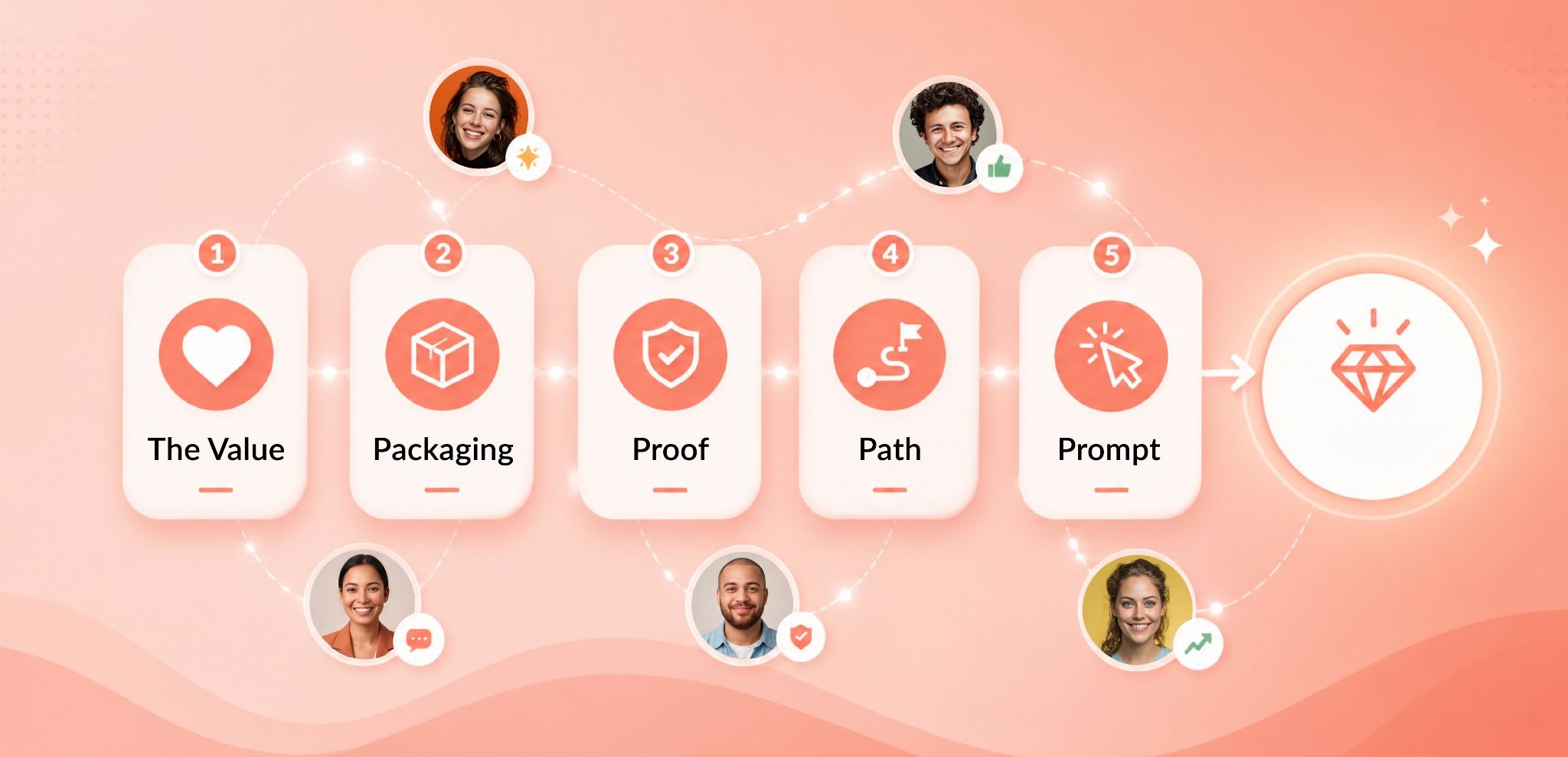
The Value → Packaging → Proof → Path → Prompt Framework
Use this as a diagnostic for your membership value proposition before choosing channels or launching campaigns:
- Value: What specific outcome does the member actually get?
- Packaging: Is the offer structured in a way that matches how people buy?
- Proof: Is there evidence the value is real, not just promised?
- Path: How easy is it to join?
- Prompt: What specific next action are you asking the prospect to take?
Most organizations have value. Most struggle with packaging, proof, and path.
Lead With the Reasons People Actually Join
MGI's association benchmark identified the top join reasons: networking, education and professional certification, specialized information, best practices, advocacy, discounts, and career advancement.
Most membership pages bury these beneath organization-first language instead of using them to communicate member value. The fix is straightforward: lead with the outcomes prospects already want.
Value proposition formula: Join because [specific audience] gets [specific outcome] through [specific benefit].
Prove Value With Specific Outcomes, Not Slogans
Prospects trust evidence more than aspiration. Effective proof formats include member stories, usage data, certifications earned, referral volume, and savings realized.
The Boston Bar Association sets the gold standard: its lawyer referral service makes nearly 9,000 referrals a year and generates an average of $1.5 million annually in attorney fees for members. That's a number a prospect can take seriously.
Staff tend to overvalue meetings and conferences. Members consistently rank job opportunities, career advancement, mentoring, and credentials higher, according to the Momentive Software 2024 Association Trends Study. That mismatch is where recruitment quietly fails.
Research and Segment the Right Prospects
Targeting everyone is targeting no one. The most reliable way to attract new members is to define exactly who you're targeting before choosing how to reach them.
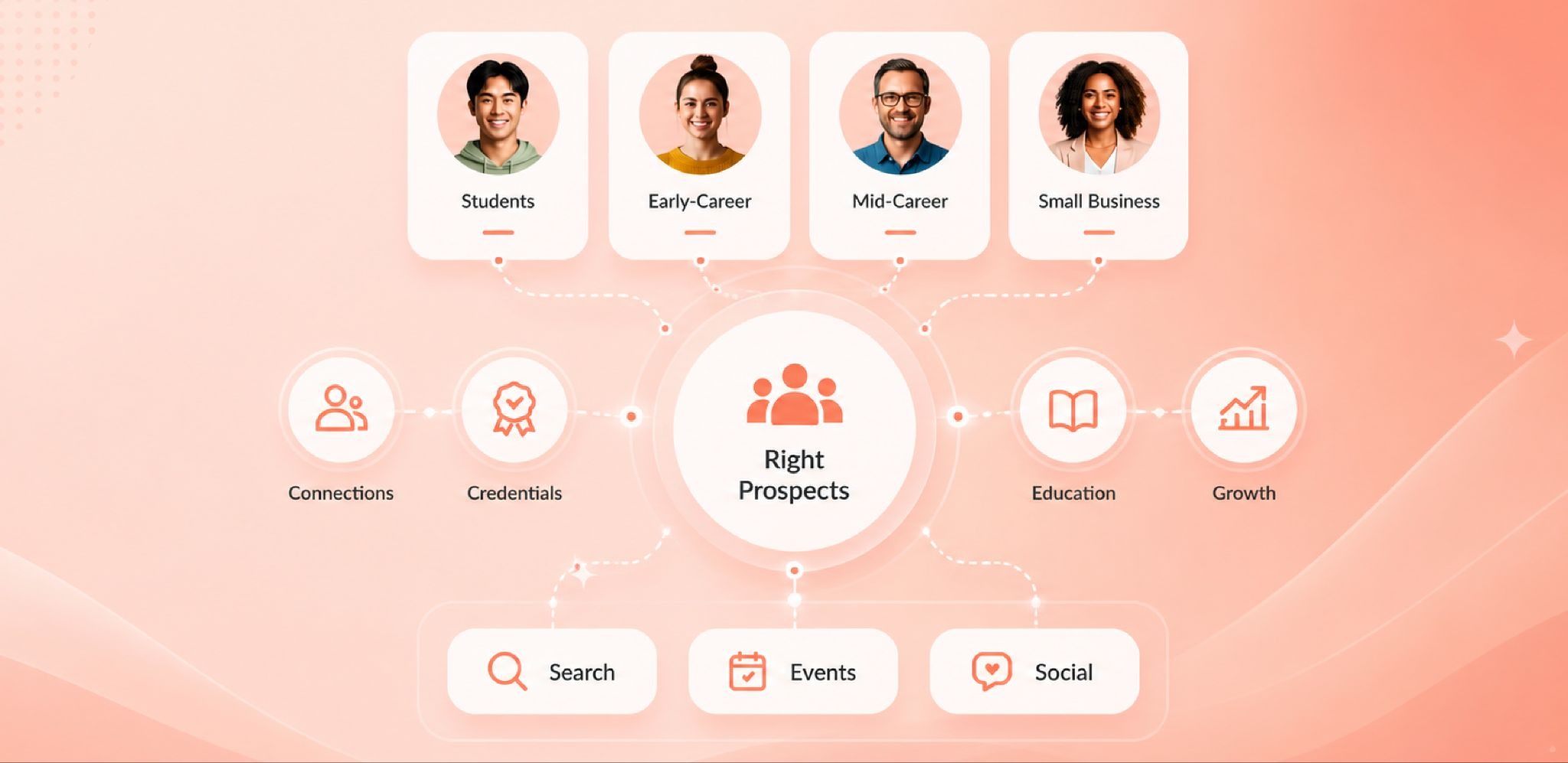
Segment prospects by life stage, motivation, and acquisition source. Each group needs a different message, a different entry offer, and sometimes a different channel.
By life stage:
- Students: credentials, career launch, peer community
- Early-career: mentoring, job boards, peer connection
- Mid-career: credibility, leadership, specialized information
- Small businesses: visibility, referrals, local connections
By motivation: connections, credentials, advocacy, belonging, education, savings, or business growth. Each motivation calls for a different lead message.
By acquisition source: Track where every member came from. Compare new-member acquisition costs and first-year renewal rates by channel. That comparison will tell you more about where to invest the next campaign dollar than almost any other analysis.
How to Attract Younger Members
Millennials now make up 25% of association memberships, up from 21% in 2020, according to MGI's 2025 benchmark. Baby Boomers fell to 27% over the same period.
Younger prospects respond to career momentum, identity, peer community, and mobile-first experiences. Career-stage landing pages, shorter entry paths, and visible peer communities convert better than legacy recruitment approaches with this segment.
Create a Marketing Plan for Membership Growth
Relevance beats volume. That's the principle behind every membership marketing plan.
Email Campaigns and Nurture Sequences
Email is the highest-converting digital channel when used correctly. The mistake most organizations make is treating it as a broadcast tool rather than a conversation.
Effective email marketing for membership programs uses behavioral triggers, not calendar dates. Clicks, event registrations, downloads, and form starts should all trigger the next step in your email drip campaign.
Higher Logic's 2026 email benchmark shows average association open rates of 33.54%. Lists under 500 contacts hit nearly 48% open rates and click rates above 8%. Smaller, more relevant sends consistently outperform large generic blasts.
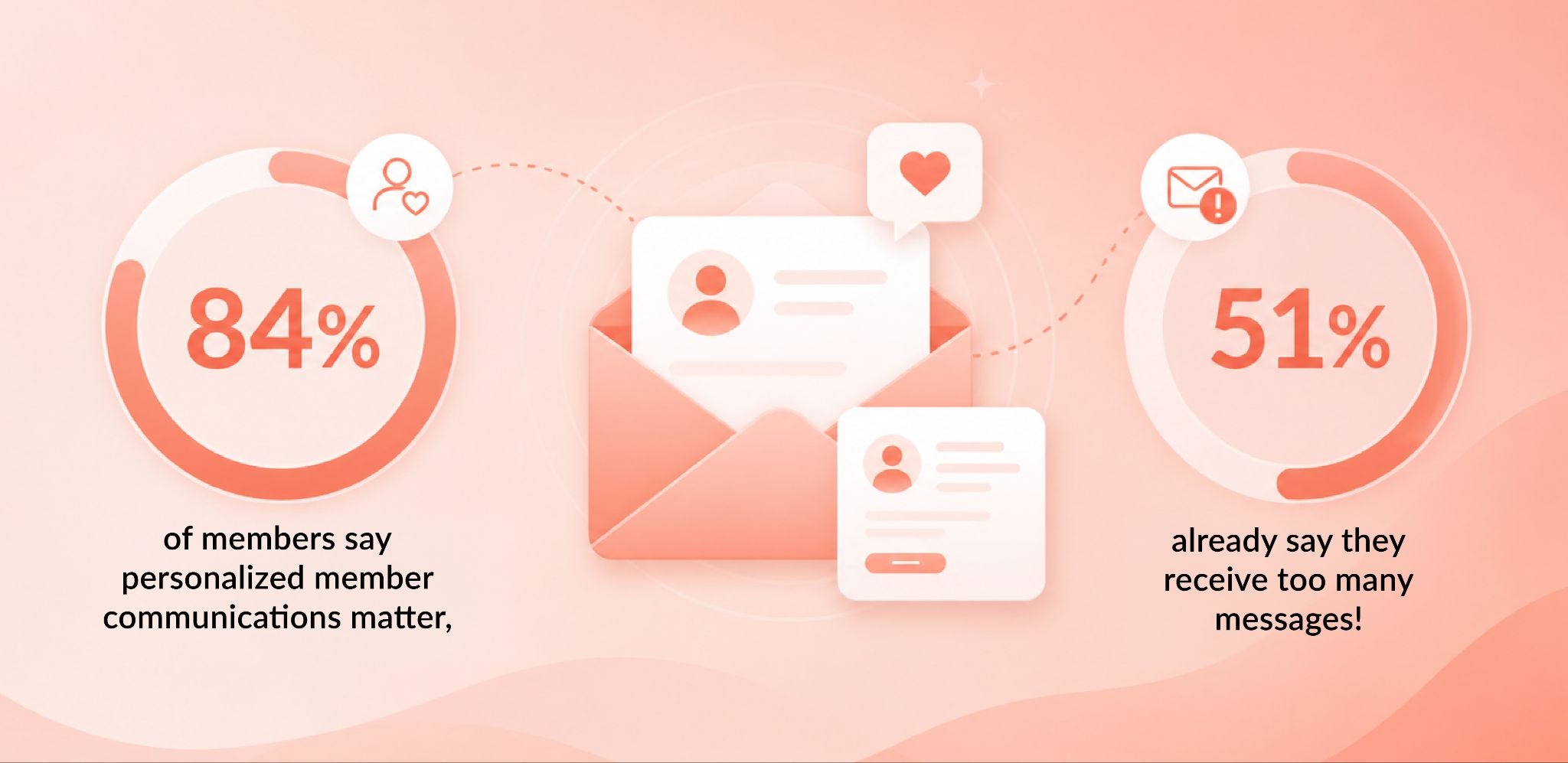
84% of members say personalized member communications matter, while 51% already say they receive too many messages. The answer isn't more sends. It's better-timed, behavior-triggered ones.
Content Marketing and Organic Search
Content marketing for member recruitment works by answering prospect questions before they ever see a join page. A prospect who finds an article through search arrives with context and intent that a cold prospect never has.
Every meaningful prospect segment deserves its own page: why join as a student, why join as a small business owner, why join as an early-career professional. Generic benefit pages treat them as the same reader and convert neither well.
For organizations building the full online presence behind membership, the guide on how to build a membership website covers the structural decisions worth making before the content strategy.
Partner Channels That Bring Better-Fit Members
Partner channels produce more than volume. They produce fit. The Health & Fitness Association found that 89% of fitness operators saw higher retention from members acquired through corporate wellness partnerships. Pre-qualified audiences arrived more committed and stayed longer.
Use AI Responsibly
94% of members are comfortable with AI when it's transparent and human-centered. The strongest use cases reduce friction and improve relevance. Think message drafting, content recommendations, and segmentation. Not a replacement for the relationships that convert high-value prospects.
How to Run a Membership Drive
A membership drive is a focused, time-bound campaign to recruit specific member segments with a clear goal, a targeted offer, and a structured follow-up plan.
The membership growth ideas that produce consistent results share the same DNA: a deadline, a prospect list, a sequence of touches, and a way to measure what worked.
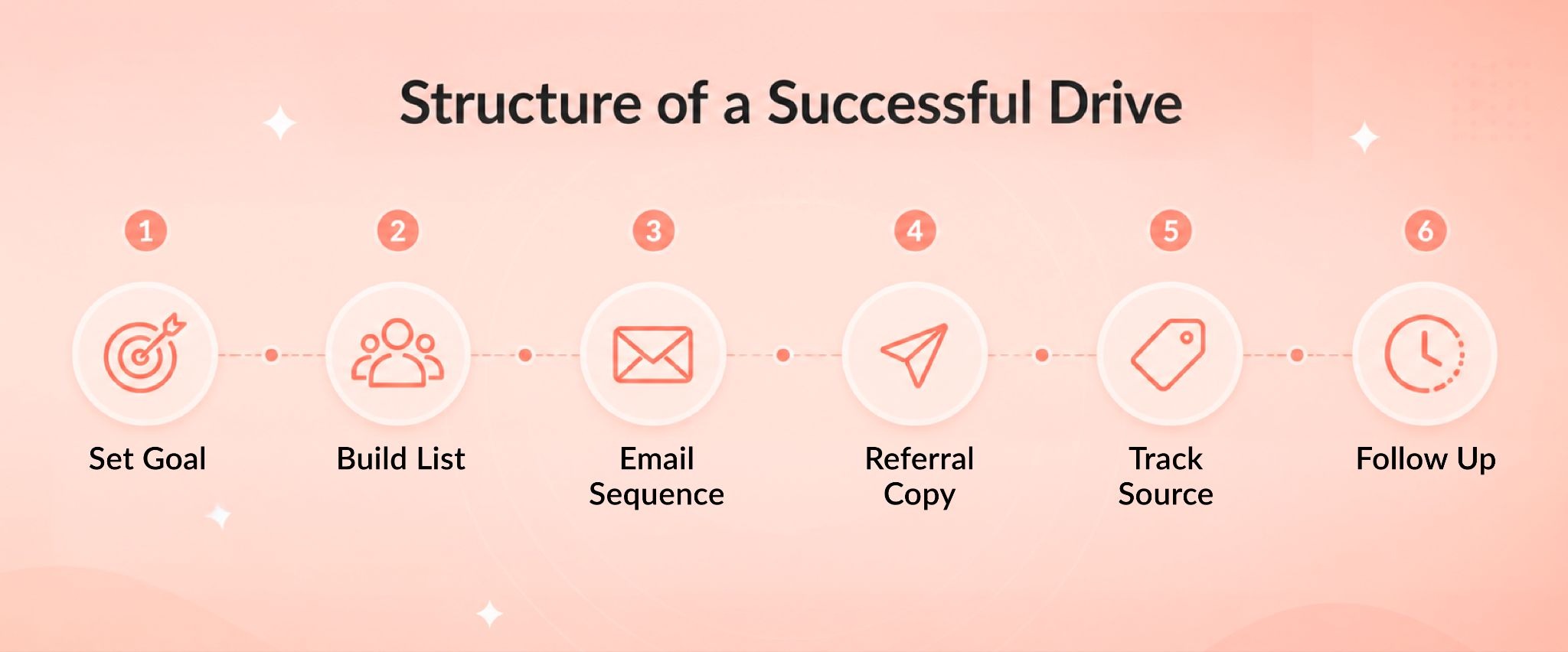
Structure of a Successful Drive
A successful membership drive follows this structure:
- Set a specific goal: "40 new members in 30 days from our event attendee list"
- Build a prospect list before sending anything
- Create a 3 to 5-touch email sequence, not a single announcement
- Give members ready-to-use referral copy they can forward with one click
- Tag every signup by source: email, event, referral, website, or partner
- Follow up within 24 hours with anyone who clicked, attended, or started the form
Drive Ideas by Theme
- Seasonal membership drive (new-year or fiscal-year): Fresh energy, new budgets, natural "new chapter" momentum
- Conference or open-house drive: Run during or immediately after a major event while community is visible and felt value is fresh
- Impact or anniversary drive: Mission-connected messaging that frames membership as participation in something meaningful
Always set up thank-you page conversion tracking before any membership recruitment campaign launches. Many organizations run drives, get results, and can't tell which touchpoints produced which signups because attribution wasn't configured. Fix that first.
How to Convert Event Attendees Into Members
Events are the fastest path from "never heard of you" to "this is exactly what I needed."
58% of associations saw increased in-person conference attendance in 2023, according to MGI's 2023 benchmarking report. The missed opportunity is the 48 hours after the event ends. Most organizations let that window close without a plan.
Managing events for members as structured acquisition touchpoints changes what an event can do for the membership pipeline.
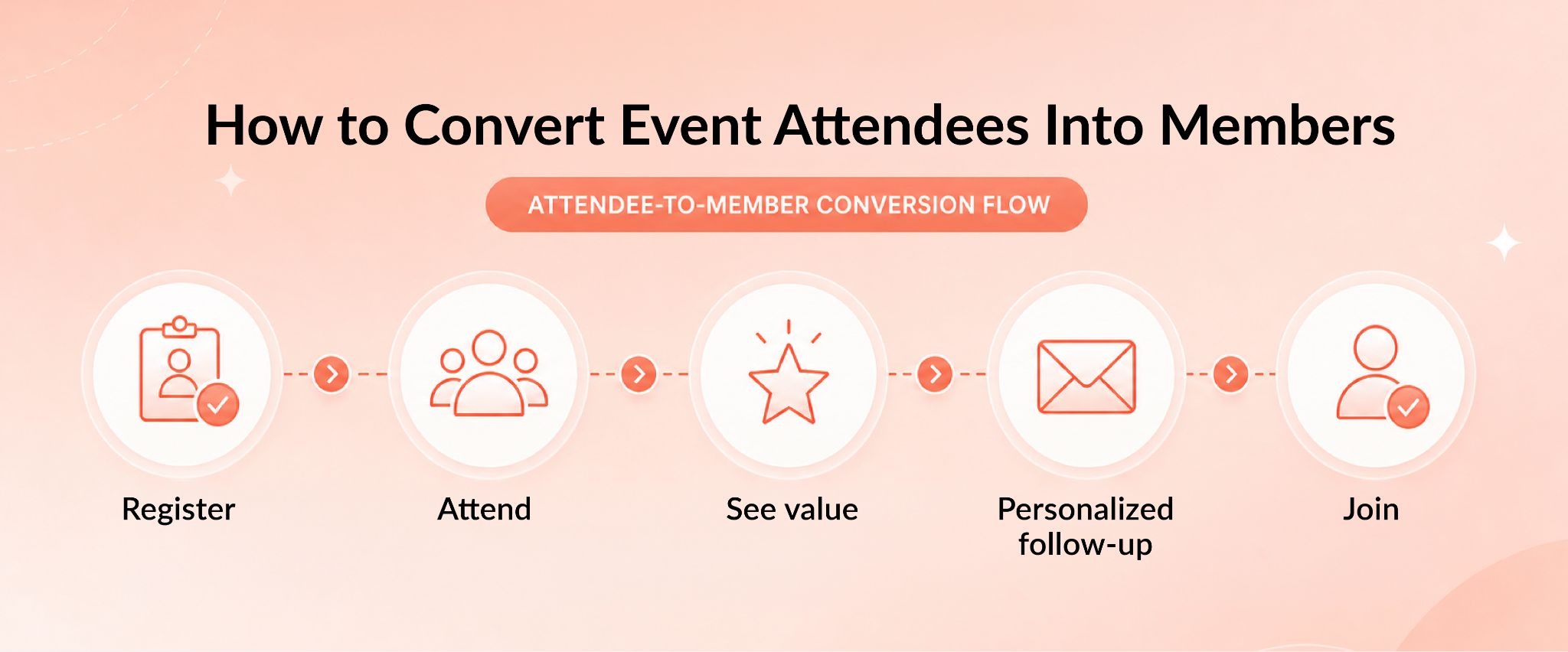
The Attendee-to-Member Conversion Flow
Register → Attend → See value → Personalized follow-up → Join
Key steps to build this path:
- Before the event: Public pages should clearly show member vs. nonmember pricing and what members get beyond the event
- During the event: Gentle join prompts tied to a logical next step, not a hard sell
- After the event (within 24-48 hours): Personalized follow-up referencing what the attendee actually attended, a recap, proof of community value, and one clear member-only next step
A follow-up that references the specific session someone attended converts meaningfully better than a generic "thanks for joining us" email. Free webinars and open-house events also work as low-friction lead magnets, giving prospects a first experience before they commit.
Use Community Access as Proof, Not a Passive Perk
"You get access to our community" is too vague to convert anyone. The Higher Logic 2024 Association Community Benchmark Report found that communities incorporating mentoring, volunteering, job boards, and guided first steps generated significantly more engagement than passive-access communities. Show the community in action. Give prospects a reason to want in, not just a door to walk through.
How to Create a Member Referral Program
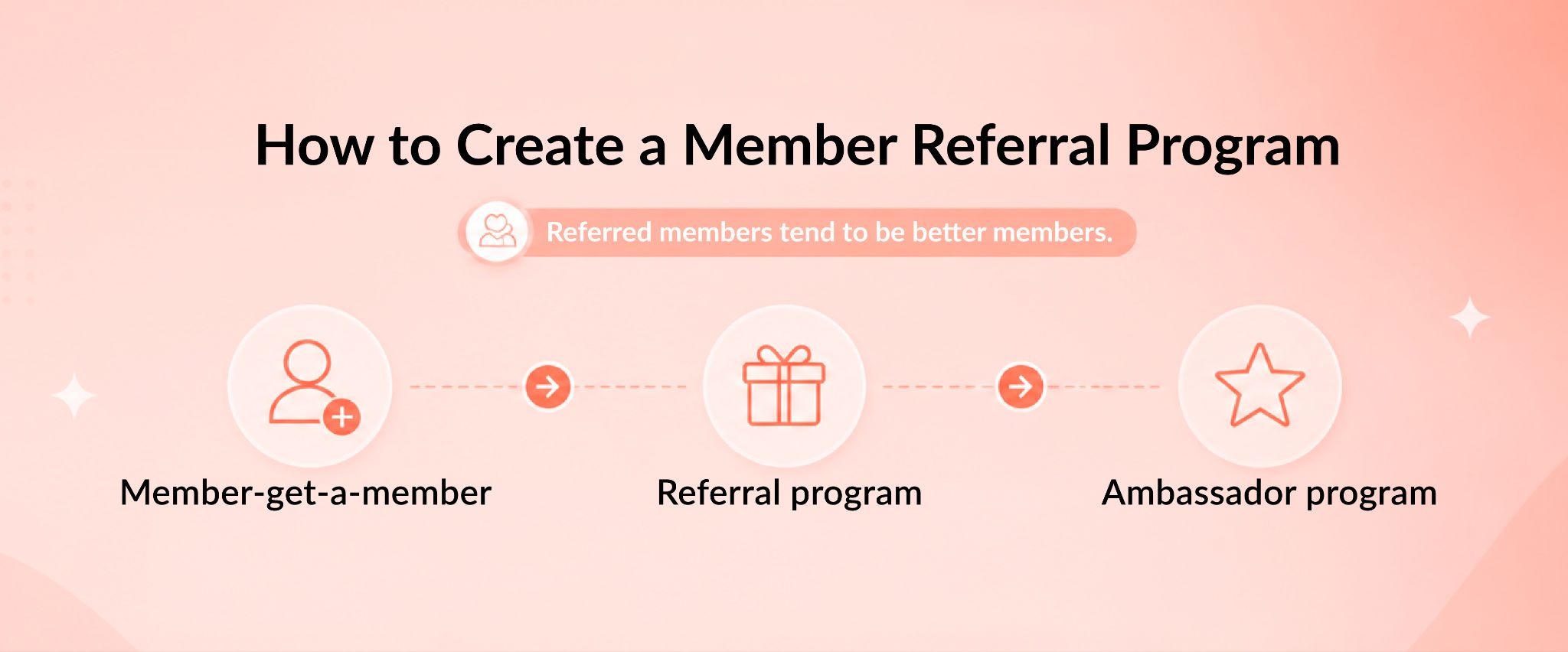
Referred members tend to be better members. 🤝
A peer-reviewed study in the Journal of Marketing found that referred customers showed higher contribution margins and stronger long-term retention than non-referred ones. People recruited by someone they trust arrive more ready to engage.
Referral Program vs. Ambassador Program vs. Member-Get-a-Member
- Member-get-a-member: A simple incentive for any current member who refers a new one
- Referral program: A tracked system with specific tools, rewards, and attribution
- Ambassador program: A selected group of highly engaged members who actively recruit
Most organizations should start with a simple referral loop before building a full ambassador program.
Who to Invite First
Start with engaged members, volunteers, committee leaders, frequent event attendees, and members who have publicly praised the organization. Asking a disengaged member to recruit is asking someone who hasn't decided to stay to convince others to join.
Give Members Simple Tools
- Copy-and-paste email text they can forward
- Trackable referral links tied to their member account
- Event invitation copy for a colleague
- Short social blurbs for platforms they already use
Remove every step that requires a member to create something from scratch.
When you set up a member referral program, attribution infrastructure matters as much as incentive design. A platform like Join It, or any CRM with source tracking, connects each new signup to the member who referred them. When that data is visible, you can track referral-based membership growth as its own acquisition channel and build on what works.
Avoid Common Referral Mistakes
Don't use referral incentives to hide weak member value. Referral programs and peer-to-peer recruitment both amplify what's already there. If the underlying offer isn't compelling, perks won't fix it.
Don't remove perks abruptly. When the American Chemical Society discontinued its member-get-a-member incentive, the backlash in the chemistry community on Reddit showed something transferable: members who actively recruited others feel reciprocity. Changes need advance notice and a clear rationale.
Membership Pricing Strategy for Growth
Getting membership dues right is a growth decision, not just an accounting one. It determines who joins, who delays, and who decides it isn't worth it.
Price Around Value, Not Tradition
A membership pricing strategy built on member research outperforms one built on internal budget math. One of the more revealing data points from recent research: 25% of association members have employer-paid dues, according to the Momentive 2024 study. Of those, only 40% say they would stay without hesitation if they had to pay themselves. 48% say they'd "stay for now but reassess."
That's a significant portion of "retained" members held by an HR budget, not personal conviction.
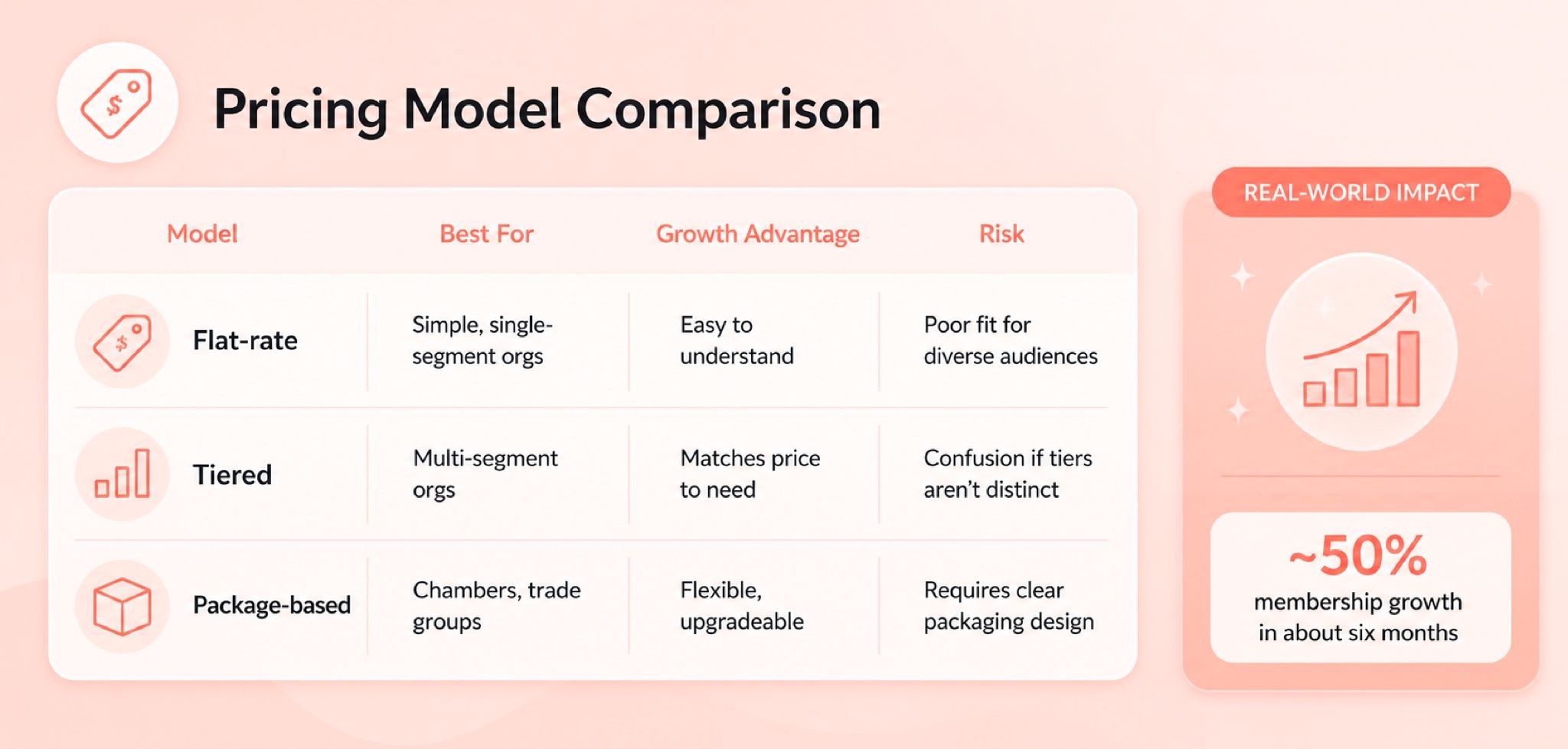
Pricing Model Comparison
Annual vs. monthly: Annual dues produce stronger commitment and simpler cash flow. Monthly lowers the entry barrier but increases early-churn risk without a strong activation plan.
Sliding scale membership dues and student or early-career options open doors for high-potential segments. A student rate today creates a long-term professional member.
Discounted first-year dues and free trial offers increase conversion volume but require strong onboarding before the full-price renewal arrives.
The SWFL Inc. Example
After moving from traditional dues tiers to a free basic membership plus four customizable packages, SWFL Inc., profiled by ACCE, saw roughly 50% membership growth in about six months, crossing 1,000 members. Lower-friction entry with a clear upgrade path drove the result, not discounting.
Reduce Sign-Up Friction
People decide to join. Then they see the form. That gap is where a meaningful share of potential members disappear every month. The goal is to make joining easy enough that a decided prospect never finds a reason to stop.
What Kills Join Completions
- Forms that mix membership and donation intent. CiviCRM practitioners have specifically asked how to create a free membership sign-up with "no hint of needing to contribute." Mixed intent creates hesitation.
- Pricing that only appears mid-form, not before it
- Mobile forms that are difficult to navigate or complete
- Confirmation emails that are late, unclear, or missing a next step
- Too many required fields asking for information only needed post-signup
A simple membership form asks only for what's needed to process the membership and send a confirmation. That means a simple sign-up process with minimal required fields and no surprise steps before payment. Profile questions, committee interests, and preferences belong in onboarding, not the join form.
For organizations that want joining to be possible anywhere on their site, the option to add membership signups to your website through embedded widgets reduces steps between interest and commitment.
Every completed membership application should immediately trigger: a confirmation, a source tag in the member record, and one clear next step. For more on that moment, this guide on how to welcome new members covers what the first message should and shouldn't do.
Membership Growth Metrics That Actually Matter
The right growth KPI tells you not just whether membership grew, but why, from where, and whether it will hold.
What to Review and When
Weekly: Campaign performance, form starts vs. completions, event registrations from nonmembers, referral link activity.
Monthly: Net growth rate, acquisition cost by channel, referral share, conversion by price point, engagement score, and first-value indicators.
Track these membership metrics consistently, not just after campaigns, and patterns that predict problems will appear before they affect renewal. Dedicated membership management software that centralizes member records and source tags makes this possible without manual data assembly.
Membership Growth by Organization Type
The same growth principles apply across sectors. The levers are different.
The clearest answer to how to increase association membership is shifting the message toward career outcomes. Job opportunities, certifications, and mentoring consistently outperform conference access.
Nonprofit membership growth often stalls when joining and donating share the same page. Separate the two, then activate through low-effort participation before asking for financial commitment.
The strongest chamber membership growth strategies involve redesigning the model itself. The shift is away from legacy tier logic toward flexible, value-based packages and investor-framing approaches that ask businesses to support broader community outcomes rather than simply buy a benefits bundle.
The national gym membership growth rate looks healthy in aggregate. The Health & Fitness Association reported U.S. fitness memberships at 72.9 million in 2023, yet average member retention was only 66.4% in 2024. Corporate wellness partnerships produced both better volume and better retention: 89% of operators saw higher retention from members acquired through those channels.
Alumni organizations should start with communication reach, not event or giving asks. CASE's 2024 findings show only 19.7% of contactable alumni are engaged at all, with communication accounting for 15.4% of that engagement.
Churches need recurring belonging, not just attendance counts. Barna Group research found Gen Z churchgoers average 1.9 weekends per month, attending more frequently than older generations. The growth opportunity is building connection between services, not just improving the Sunday experience.
For the retention side of the story across all types, see the membership retention guide.
Common Membership Growth Mistakes
The patterns are consistent across organization types. Churn prevention starts at signup, not at renewal. Most are fixable with operational changes, not strategic overhauls.
Member engagement strategies that activate new members in the first 30 days reduce almost every other problem on this list.
A 90-Day Membership Growth Plan
Days 1-30: Audit your membership page for outcome language. Walk through your join form on mobile and complete it yourself. Pull gross and net growth rates as a baseline before anything changes.
Days 31-60: Run one focused drive with a specific goal and a 5-touch email sequence. Deploy a referral ask with ready-to-use tools. Build the post-event follow-up for the next event before it happens.
Days 61-90: Compare acquisition cost and conversion rate by channel. Refine what the data shows, not what the team assumed. Scale what worked.
Growing your membership sustainably requires all three phases working in sequence. When the strategy is ready, manage memberships in one place and start a free trial to put the right operational infrastructure behind it.
Membership Growth FAQ
What is a membership drive?
A focused, time-bound campaign to recruit new members around a specific goal, targeted prospect list, and structured outreach sequence. It differs from year-round recruitment because it creates urgency and provides a clear before-and-after result to measure.
What's the best time of year for a membership drive?
There's no universal answer. The strongest timing connects to your audience's professional calendar, a major event, or a fiscal year start. Your audience's attention cycle is more predictive than any generic seasonal recommendation.
How do current members help recruit new members?
Through referral programs, ambassador activities, event invitations, and social proof. Engaged members given simple tools and public recognition for their referrals produce meaningfully better results than passive members sent a generic "spread the word" email.
How much should you charge for membership dues?
Price based on the outcomes you deliver, not just the cost of delivering programs. Survey members on what they value, research comparable organizations, and communicate the reason clearly. Organizations that raise dues annually and explain why tend to have stronger renewal rates than those that avoid the conversation entirely.
Annual vs. monthly membership dues: which is better?
Annual dues produce stronger commitment and simpler cash flow. Monthly lowers the entry barrier but creates higher early-churn risk. The right answer depends on how quickly new members experience clear value.
How do you convert event attendees into members?
Design the conversion path before the event starts. Know which attendees are nonmembers, plan a member-only next step, and send a personalized follow-up within 24 to 48 hours referencing what they actually attended. Generic recaps convert poorly.
How do you attract younger members to your association?
Lead with career outcomes: credentials, mentoring, peer community, and professional development. Build mobile-first experiences. Millennials now represent 25% of association memberships and respond to identity, belonging, and concrete outcomes more than traditional benefit lists written for a different generation.
Sources
- Higher Logic. 2025 Association Member Experience Report
- Marketing General Inc. How to Strengthen Your Association's Value Proposition
- Glue Up. Membership Growth Challenges
- Marketing General Inc. Five Association Membership Growth Drivers
- Boston Bar Association. Benefits of Membership
- Momentive Software. 2024 Association Trends Study
- Marketing General Inc. 2025 Membership Marketing Benchmarking Report
- Higher Logic. 2026 Association Email Benchmark
- Health & Fitness Association. Corporate Wellness and the Fitness Industry
- CiviCRM Stack Exchange. Conversion Tracking on Thank-You Pages
- Marketing General Inc. 2023 Membership Marketing Benchmarking Report
- Higher Logic. 2024 Association Community Benchmark Report
- Reddit. ACS Member-Get-a-Member Campaign
- ACCE. Chamber Membership Trends
- CiviCRM Stack Exchange. How to Create a Free Membership Sign-Up
- Health & Fitness Association. 2025 Club Industry Benchmarks
- CASE. Alumni Engagement 2024 Key Findings
- Barna Group. Young Adults Lead Resurgence in Church Attendance


