9 Tips for Engaging Prospective Members


Your next 50 members probably already know you exist. They attended your webinar, downloaded your free guide, or visited your join page more than once. They just did not commit yet.
That gap between "interested" and "enrolled" is where most membership growth is won or lost. Closing it is not about better ads or bigger lists. It is about better engagement at exactly the right moments.
This article walks through nine practical ways to move prospective members from curious to committed, using strategies that build trust instead of pressure. Whether you are mapping the full member journey map from first touchpoint to signup or trying to convert prospective new members who attended your last event, these tips will help.
Key Takeaways
- A prospective member is not a cold lead. They already know your organization exists and have shown real interest.
- Warm prospects convert 8.6 times better than cold outreach. The leads you need are often already in your orbit.
- Personalized outreach from a recognized member can generate 27 times more clicks than a generic email campaign.
- Engagement fades fast after an event. Your first follow-up window is within 48 hours, not next week.
- Only 11 percent of associations describe their value proposition as very compelling. That gap is where most prospects quietly disappear.
- The signup form is the final barrier. One unnecessary field can cost you a completed membership.
- Prospects who do not join today are not saying no forever. Most are saying not yet, and asking why is where growth starts.
- Join It is rated Excellent on Trustpilot and gives organizations a dedicated place to track prospective members, manage follow-up communication, and turn genuine interest into signed memberships.
What Are Prospective Members?
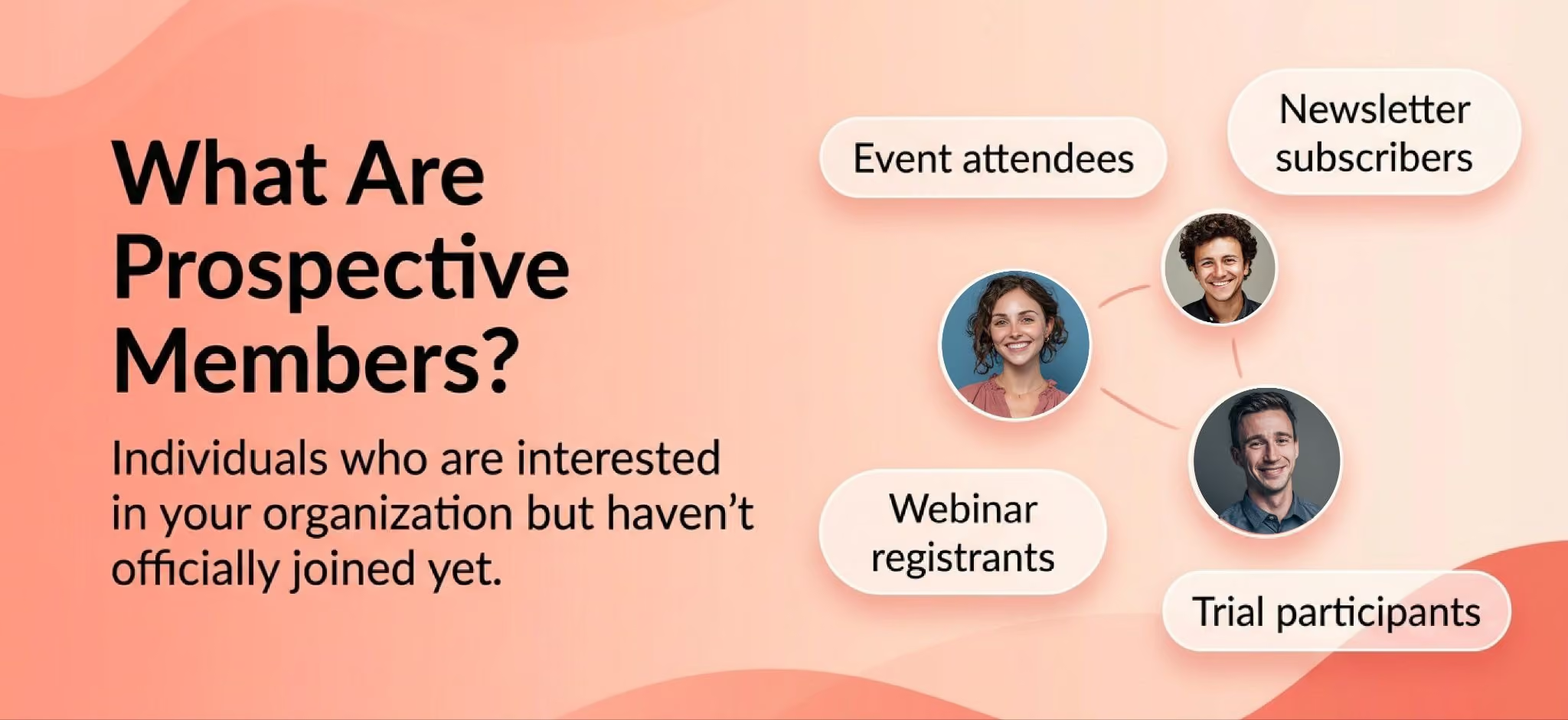
A prospective member, sometimes called a potential member, is someone who has already shown genuine interest in your organization but has not yet become an active, paying member.
They are not strangers. They have some level of awareness and some connection to what you do. What they are missing is enough trust, clarity, or momentum to take the final step.
Prospective members typically include:
- Event attendees who came once and never joined
- Newsletter subscribers who open your emails but have not signed up
- Webinar registrants who engaged with your content
- Trial participants who sampled a membership benefit
- Referrals from current members who were personally introduced
- People who started but did not complete the signup process
- Lapsed members who are considering rejoining
The key distinction is between cold prospects (minimal awareness, no real relationship) and warm prospects (people who have had at least one meaningful touchpoint with your organization). Warm prospects convert faster, cost less to engage, and respond far better to outreach. Much more on that in Tip 3.
Prospective Member Engagement at a Glance
Different types of prospective members need different things before they join. Here is a quick reference before the nine tips.
1. Segment Prospective Members Based on Their Interest and Behavior
Sending the same message to every prospect is one of the fastest ways to lose them.
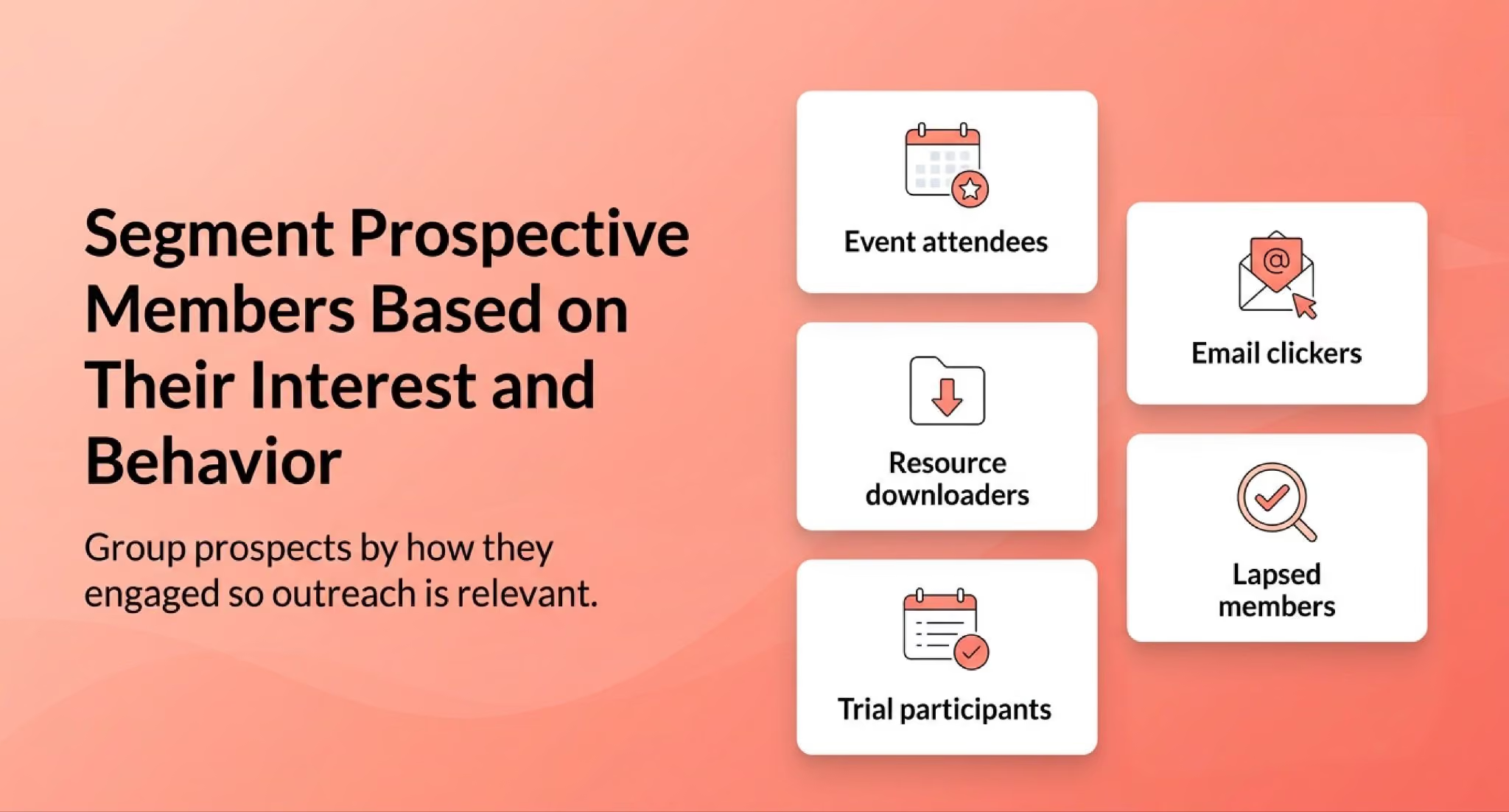
Segmentation means dividing your prospect list into meaningful groups based on how they found you, what they engaged with, and how close they are to making a decision. Interest-based email segments consistently perform four times better than one-size-fits-all outreach. The difference is not the writing. It is the relevance.
You can segment by:
- The event they attended
- Email links they clicked
- Resources they downloaded
- Membership type or pricing tier they viewed
- Trial activity or webinar participation
Once you have these groups, segmented email campaigns become significantly more effective. Building your email marketing for membership programs on these audience segments from the start is what turns outreach into actual signups.
Examples of Prospective Member Segments
- Event attendees who have never joined
- Email subscribers who click membership-related content
- Trial users who have not upgraded
- Referrals from current members
- Lapsed members who may be ready to rejoin
Each group needs a different message. A lapsed member does not need the same pitch as a first-time event attendee. Treating them differently, whether the goal is to convert email subscribers into members or re-engage someone who left years ago, is what separates organizations that grow from organizations that plateau.
2. Personalize Your Communication Before Asking Them to Join
Personalization is not about adding a first name to a subject line.
Real personalized prospective member communication means referencing what someone actually did. Mention the session they attended. Reference the guide they downloaded. Have a real staff member or current member send the outreach, not a generic inbox.
An informal email sent by a recognized member can generate 27 times more clicks and five times the enrollment rate of a generic outreach email. That kind of lift is not a small optimization. It is a fundamentally different outcome.
What a Personalized Prospective Member Message Should Include
- Their name
- A specific reference to their recent interaction with your organization
- A membership benefit directly tied to their stated or demonstrated interest
- One clear next step
- A tone that is helpful, not promotional
Your prospective member email sequence should feel like a conversation, not a campaign. If your organization sends direct invitations to prospective members, each message should feel written for one person, not copied from a template for one thousand.
3. Focus First on Warm Prospective Members
Here is something most organizations get backwards: they spend more energy chasing cold leads than nurturing warm ones already in their orbit.
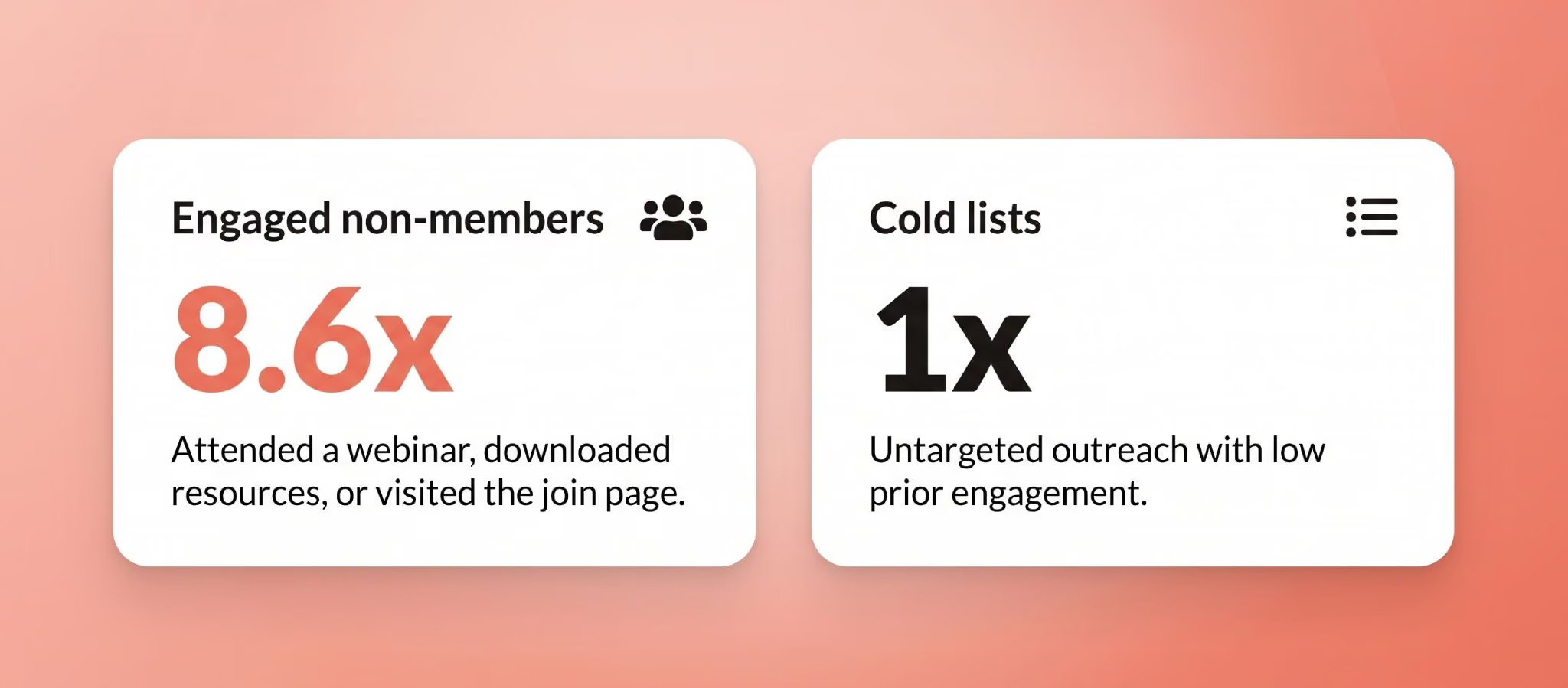
Outreach to engaged non-members performs 8.6 times better than outreach to cold lists. Yet many organizations have no structured way to identify who those warm prospects even are. If you cannot track prospective members before they join, you are flying blind on your most valuable conversion pool.
Warm Prospective Members to Prioritize
- Nonmember event attendees
- Webinar participants
- Newsletter subscribers
- People who requested membership information
- Referrals introduced by current members
- Trial members who did not convert
- Lapsed members who left on good terms
Lapsed members deserve a dedicated re-engagement effort. They already understand your value. They left for a reason, and directly asking them what that reason was is often all it takes to restart the conversation.
4. Create Low-Pressure Ways for Prospects to Experience Membership Value
Some prospects are genuinely interested but simply not ready to commit financially yet.
Pushing them toward a signup before they have experienced any real value rarely accelerates a decision. More often, it ends the relationship. The better move is to let them explore member benefits prospects actually care about before any payment is involved.
This is what a low-pressure entry point does: it shifts the prospect's mental question from "Should I pay for this?" to "Do I want more of what I am already experiencing?" An introductory membership offer, whether a free webinar or a discounted first month, gives prospects the confidence to commit without feeling like they are taking a risk.
Good Low-Pressure Offers for Prospective Members
- Use a guest pass membership to attend one event with no obligation
- Join a free membership preview webinar or open house designed for prospects
- Access one member-only resource without signing up
- Try a short trial membership with no obligation
- Book a brief consultation to ask questions about membership
Industry experience suggests that free trials typically convert between 20 and 30 percent of participants into paying members. With strong nurturing and a clear value demonstration, some organizations see that figure approach 50 percent. The goal is not to give everything away. It is to show enough that saying yes becomes the obvious next step.
5. Follow Up Quickly After Events, Webinars, and First Touchpoints
Timing matters more than most organizations realize.
Interest fades fast. Attendee engagement drops sharply within the first 48 hours of an event. Organizations that treat post-event outreach as a structured system rather than a single thank-you email see dramatically higher event attendee to member conversion rates.
Your first follow-up should not just acknowledge attendance. For nonmember attendees especially, it needs to do more than a thank-you. It should remind them what they experienced, offer something genuinely useful, and point to a clear next step. A structured post-event email sequence is one of the most reliable systems for converting event momentum into new memberships. Explore event ideas that engage members to build experiences that feed naturally into your follow-up system.
A Simple Post-Event Follow-Up Sequence for Prospective Members
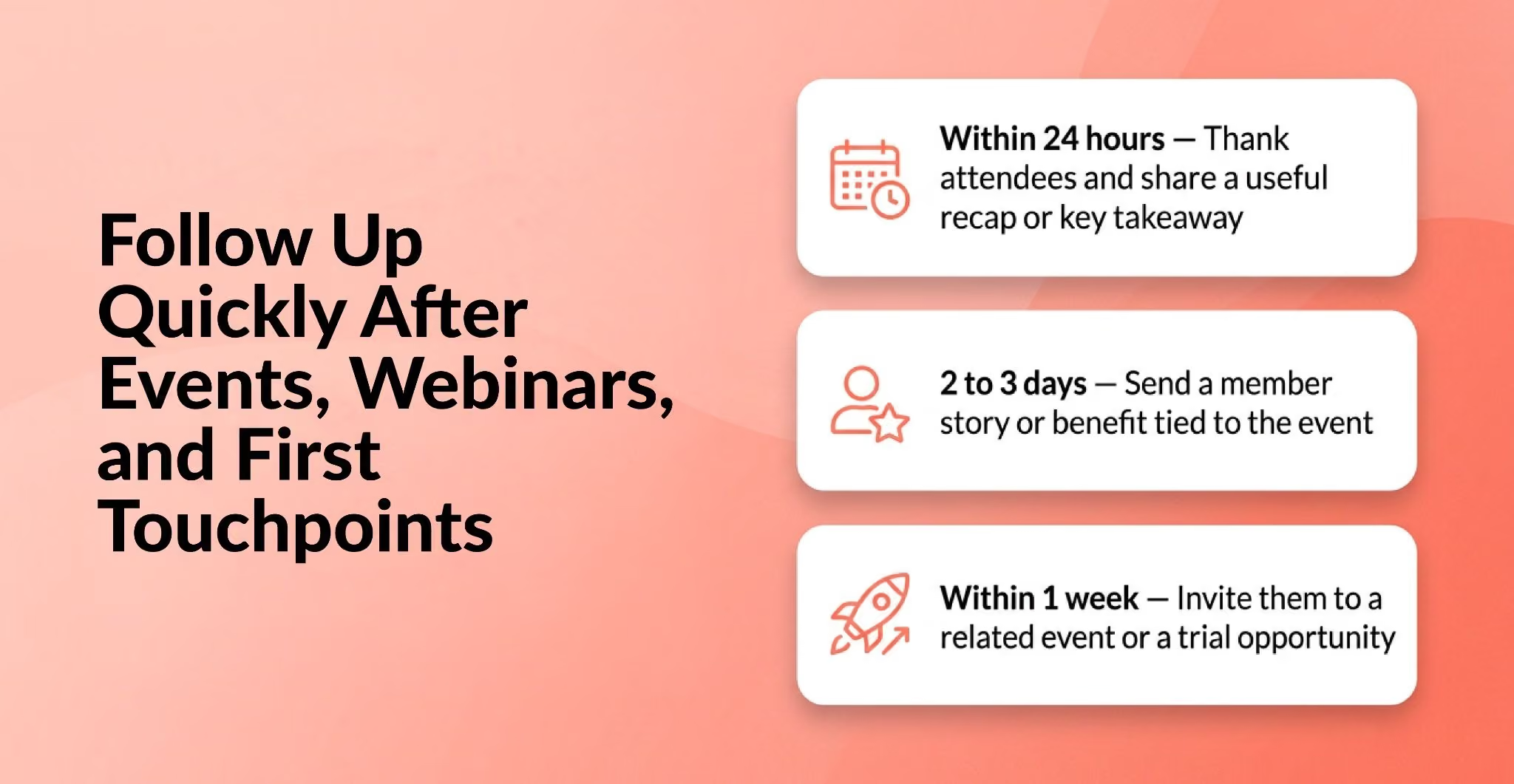
- Within 24 hours: Thank them and share a useful recap or key takeaway from the event
- Within 2 to 3 days: Send a relevant member story or specific benefit connected to the event topic
- Within 1 week: Invite them to a related event, group, or trial opportunity
- Within 2 weeks: Send a clear, warm membership invitation with a single direct CTA
One clear call to action per message. Not five links, not three options. One direction, stated simply.
6. Use Member Stories and Social Proof to Build Trust
Prospects do not distrust you. They just do not know you well enough yet.
Member testimonials, real stories, and visible social proof close that gap faster than any marketing copy can. 92 percent of people trust a referral from someone they know, per Nielsen's Global Trust in Advertising survey. Word-of-mouth and peer recommendations remain the most credible form of membership marketing for reaching prospective members. And prospects who see real outcomes from real members are far more likely to believe those outcomes are possible for them too.
A structured membership referral program turns that peer trust into a repeatable acquisition channel. Visible community activity matters here as well. Strong community engagement strategies make your membership feel alive, not theoretical. A quiet community raises doubts before a prospect ever reaches the join page.
What Strong Member Stories Should Show
- Who the member is and a bit about their background
- Why they decided to join when they did
- What specific problem or challenge they had before joining
- What changed in a concrete way after becoming a member
- What measurable result or outcome they received
Vague testimonials do not convert. "Great organization, highly recommend" answers nothing. Specific stories about real, named outcomes are what turn skepticism into action.
7. Make Your Membership Value Proposition Clear and Specific
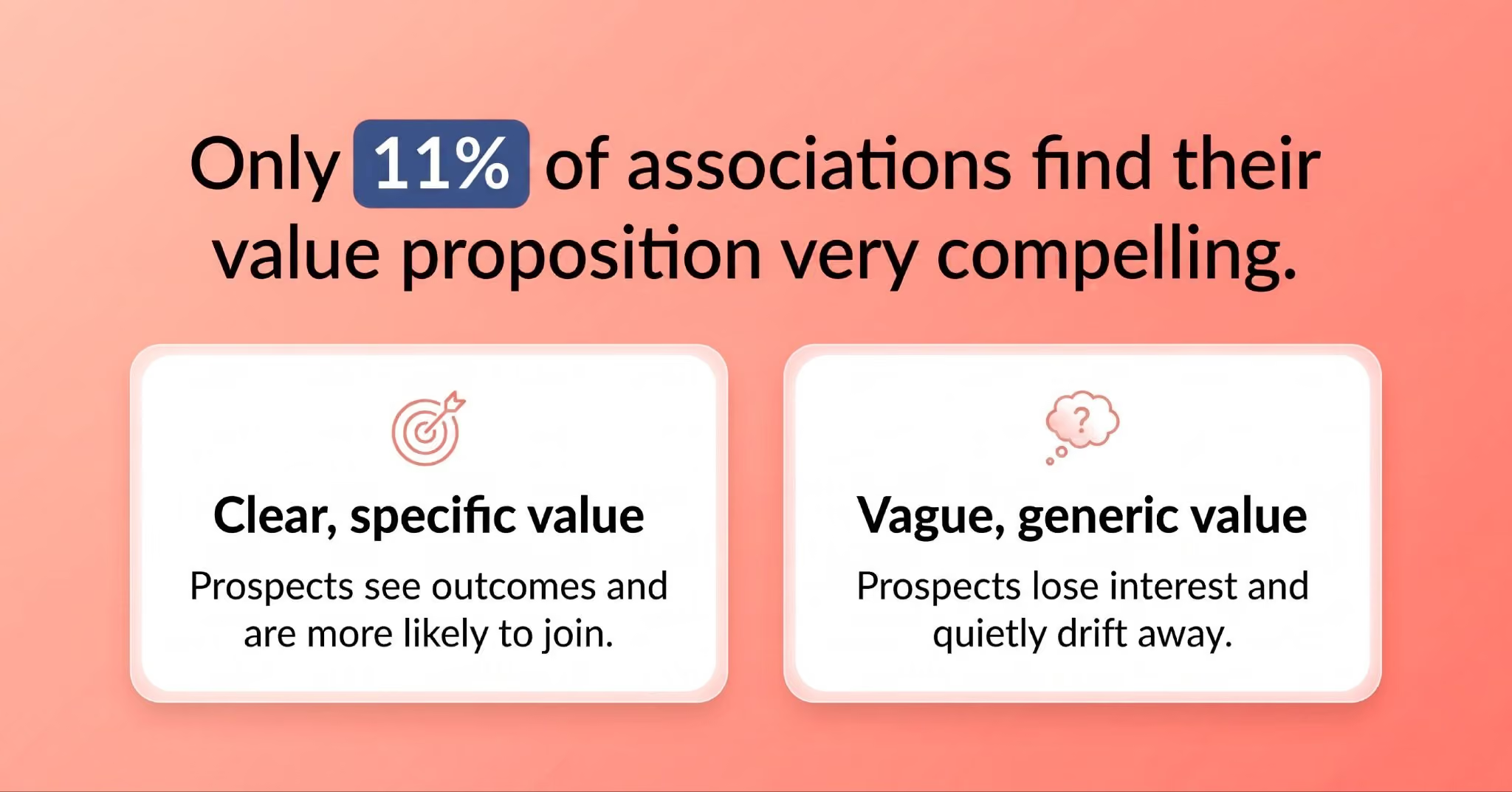
Here is a number worth sitting with: only 11 percent of associations describe their value proposition as "very compelling." That means the vast majority of organizations are trying to recruit prospective members with messaging that even they do not fully believe in.
A strong membership value proposition answers the question prospects are quietly asking: why join a membership like this when their time and budget are already stretched? The answer needs to be specific, outcome-focused, and genuinely different from what they can find on their own.
Generic benefit lists do not answer that. Before-and-after membership benefits examples do.
Instead of "networking opportunities," say "meet professionals in your industry at monthly member-only events." Instead of "access to resources," say "download templates, training guides, and tools built specifically for your role." Instead of "community," say "connect with peers who are solving the exact problems you are dealing with right now."
That shift from category to outcome is what separates a pitch that converts from one that gets ignored. A clear membership growth strategy starts here, long before anyone reaches the join page.
Common Value Proposition Mistakes
- Listing too many vague benefits without concrete examples
- Burying pricing or making membership tiers confusing to compare
- Writing copy that focuses on the organization rather than the prospect's outcome
- Using identical messaging for every audience segment
- Failing to show real results from real members anywhere in the funnel
8. Simplify the Signup Process for Prospective Members
You have done the hard work. A prospect is ready to join. And then they hit a membership application form that asks for fourteen pieces of information, does not work on mobile, and gives no confirmation after submission.
This is signup friction, and it is one of the most preventable reasons prospects do not convert. Removing unnecessary form fields alone can double sign-up rates. The goal is to simplify membership signup to the point where nothing stands between a ready prospect and a completed registration. A simple membership form builder helps keep the process clean, fast, and mobile-friendly without sacrificing the information you actually need.
What to Check on Your Membership Signup Page
- Is the CTA button visible without scrolling?
- Is the pricing clear before the prospect starts the form?
- Are the membership benefits easy to understand at a glance?
- Is the form too long for a first-time joiner?
- Does it work cleanly on mobile devices?
- Does the prospect know exactly what happens after they submit?
If the answer to any of these is "no" or "not sure," that is your conversion bottleneck. A smooth signup also sets the tone for member onboarding, giving new members immediate confidence in the experience ahead.
9. Ask for Feedback When Prospective Members Do Not Join
Not every prospect will join, even after strong engagement. That is not a failure. That is data.
When someone does not convert, asking why is one of the highest-value activities your organization can do. Their answers will surface specific content gaps, membership pricing objections, and friction points that no internal analysis will catch on its own.
Simple questions work best:
- What stopped you from joining today?
- Was the pricing clear?
- Were the benefits relevant to your situation?
- Would you like us to follow up at a later time?
The responses will sharpen your messaging, improve your follow-up sequences, and make your signup experience better for the next wave of prospective members. A listening loop is one of the most underrated member engagement ideas in membership marketing, and almost no organization uses it consistently.
Common Reasons Prospective Members Do Not Join
- They do not clearly understand the value being offered
- The price feels high relative to what they can see before joining
- They are not ready yet but could convert later with the right follow-up
- The signup process felt confusing or slow
- Inactive community signals made the organization feel dormant
- They were never personally invited
- They believe free touchpoints give them enough value without paying
Every one of these is solvable. But only if you know which one is driving non-conversions in your specific organization.
How to Measure Prospective Member Engagement
Engagement without measurement is guesswork. Tracking membership conversion across the prospect journey shows you exactly where momentum builds and where it breaks down.
Key metrics to track using a dedicated membership CRM:
- Event attendee to member conversion rate: how many event guests become paying members
- Email subscriber to member conversion rate: which nurturing sequences are actually driving signups
- Trial to paid conversion rate: what percentage of trial members upgrade
- Signup form completion rate: where in the process prospects are dropping off
- Follow-up email open and click rates: whether post-event sequences are generating real engagement
- Time from first touchpoint to signup: how long the average conversion takes
- Number of warm prospects in the pipeline: the size of your immediately actionable lead pool
These numbers will tell you whether your trust-building efforts are translating into membership growth, or just activity. Use them to shape a member engagement strategy rooted in what actually works for your specific audience.
Common Mistakes to Avoid When Engaging Prospective Members
Even strong organizations make these consistently. Recognizing them is most of the fix.
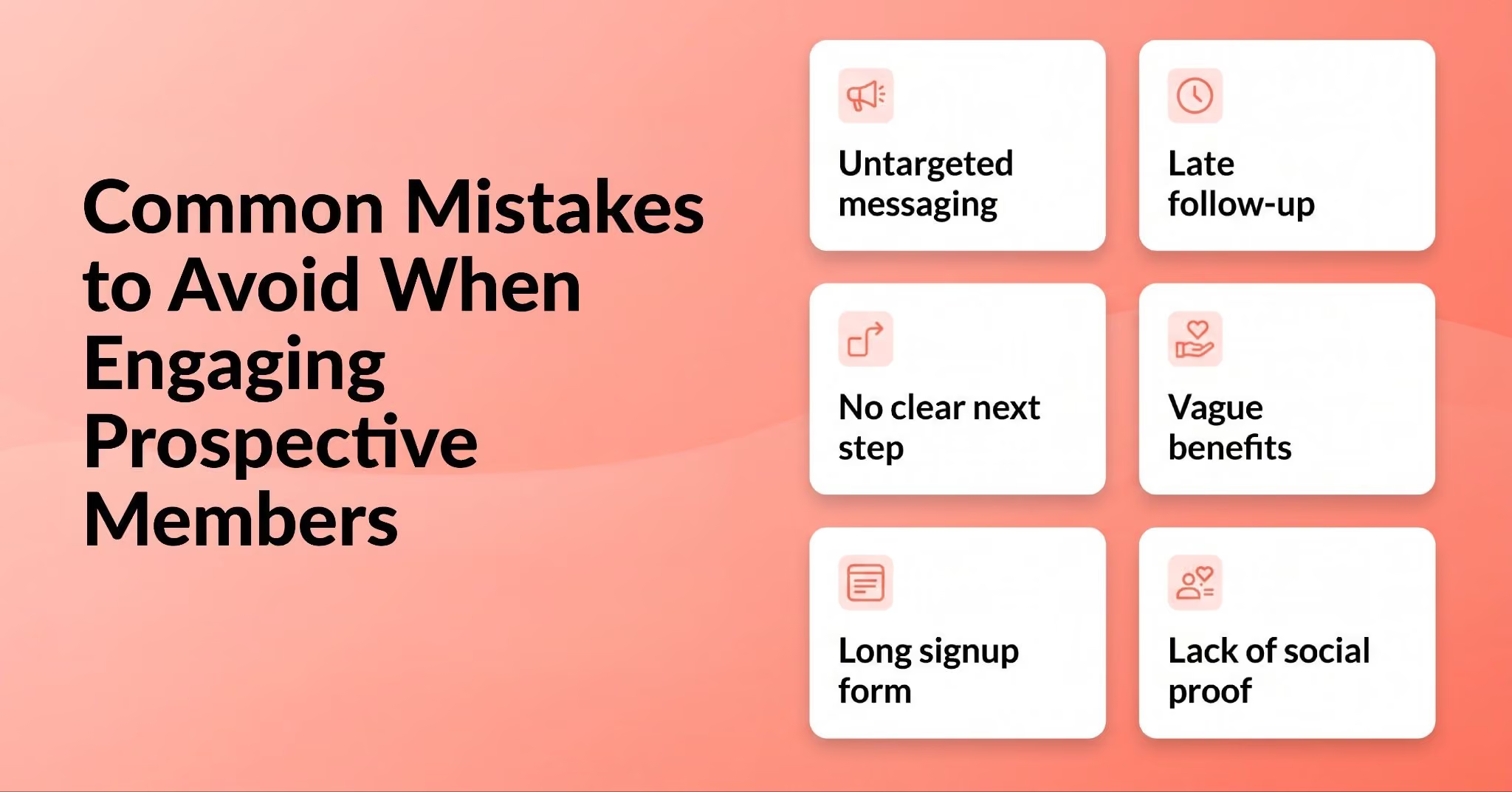
- Sending the same message to everyone. Untargeted outreach underperforms. Segmentation is where effective member recruitment begins.
- Following up too late. Interest cools within 48 hours. Your first message should arrive the same day as the touchpoint.
- Only sending a thank-you after events. Gratitude without a next step moves no one toward membership.
- Using vague benefit statements. Prospects need specific outcomes, not broad categories.
- Making the signup form too long. Every additional field reduces completion rates.
- Not showing social proof. A community that appears quiet will not attract new members.
- Ignoring pricing concerns. If prospects feel uncertain about cost, address it directly rather than hoping they overlook it.
- Not tracking prospects in a system. You cannot nurture what you cannot see.
- Sounding too promotional too early. Trust always comes before the ask.
Where Join It Can Help
Engaging prospective members is significantly easier when your tools support the entire journey from first interest to signed membership.
Join It is membership management software built to help organizations track prospects and non-members, manage membership forms, send follow-up communications, and simplify the path from curiosity to commitment. If you are exploring options, Join It pricing is transparent and designed to scale with your organization's size and stage.
FAQs About Prospective Members
What are prospective members?
Prospective members are people who have shown genuine interest in joining an organization but have not yet become active, paying members. They typically include event attendees, email subscribers, webinar registrants, trial users, referrals from current members, and lapsed members who are considering rejoining.
How do you engage prospective members?
The most effective approach combines segmentation, personalized communication, low-pressure entry points, timely follow-up, and clear social proof. The underlying goal is building trust before making the membership ask, not after.
How do you convert event attendees into members?
Post-event follow-up within 24 hours is the single most important step. Combine a useful recap with a relevant member benefit, then guide the attendee toward one clear next action such as a trial membership or a personal invitation to join.
What should a prospective member email include?
A strong prospective member email includes the recipient's name, a specific reference to their recent interaction with your organization, a membership benefit tied to their interest, and one clear next step. Keep the tone human and helpful rather than promotional.
Why do prospective members not join?
The most common barriers are unclear value, pricing concerns, signup friction, a community that appears inactive, and never receiving a personal invitation. Asking departing prospects directly is the most reliable way to find out which barrier applies to your organization.
How can referrals help recruit prospective members?
Referrals reduce the trust barrier significantly because the invitation comes from someone the prospect already knows and respects. People are four times more likely to act on a peer recommendation than on cold outreach from an organization they have no prior relationship with.
Turn Prospective Member Interest Into Membership Growth
Most prospective members need three things before they join: clarity about what they will receive, trust that it is worth the commitment, and a timely, personal invitation to take the next step.
None of that happens automatically. It happens through segmentation, structured follow-up, specific value communication, and a signup experience designed to convert prospects into members with as little friction as possible.
Focus on the warm leads already in your orbit. Measure what converts. Fix what does not. And remember that most people who do not join today are not saying no forever. They are saying "not yet."
Ready to make the path to association membership growth simpler, starting with the prospects already paying attention? Book a call with Join It or start a free trial to see how it works.
Sources
- Nielsen. Global Trust in Advertising Survey
- Marketing General Incorporated. 2025 Membership Marketing Benchmarking Report

Guides from the Experts
Through our work with 4,000+ organizations - we’ve put together helpful guides to assist; regardless of where you are on your journey.
.webp)

A Complete Guide to Membership Organizations
Everything you need to know to manage and grow your membership business
.webp)
Maximize Membership Retention: 10 Proven Strategies
Tried and true strategies that not only win membership, but keep them

Build a Membership Website: A Step-by-Step Guide
Your one-stop resource for knowing all the features your modern membership website needs
Ready to start your free trial?
Our membership software is intuitive to use and even easier to test for yourself.