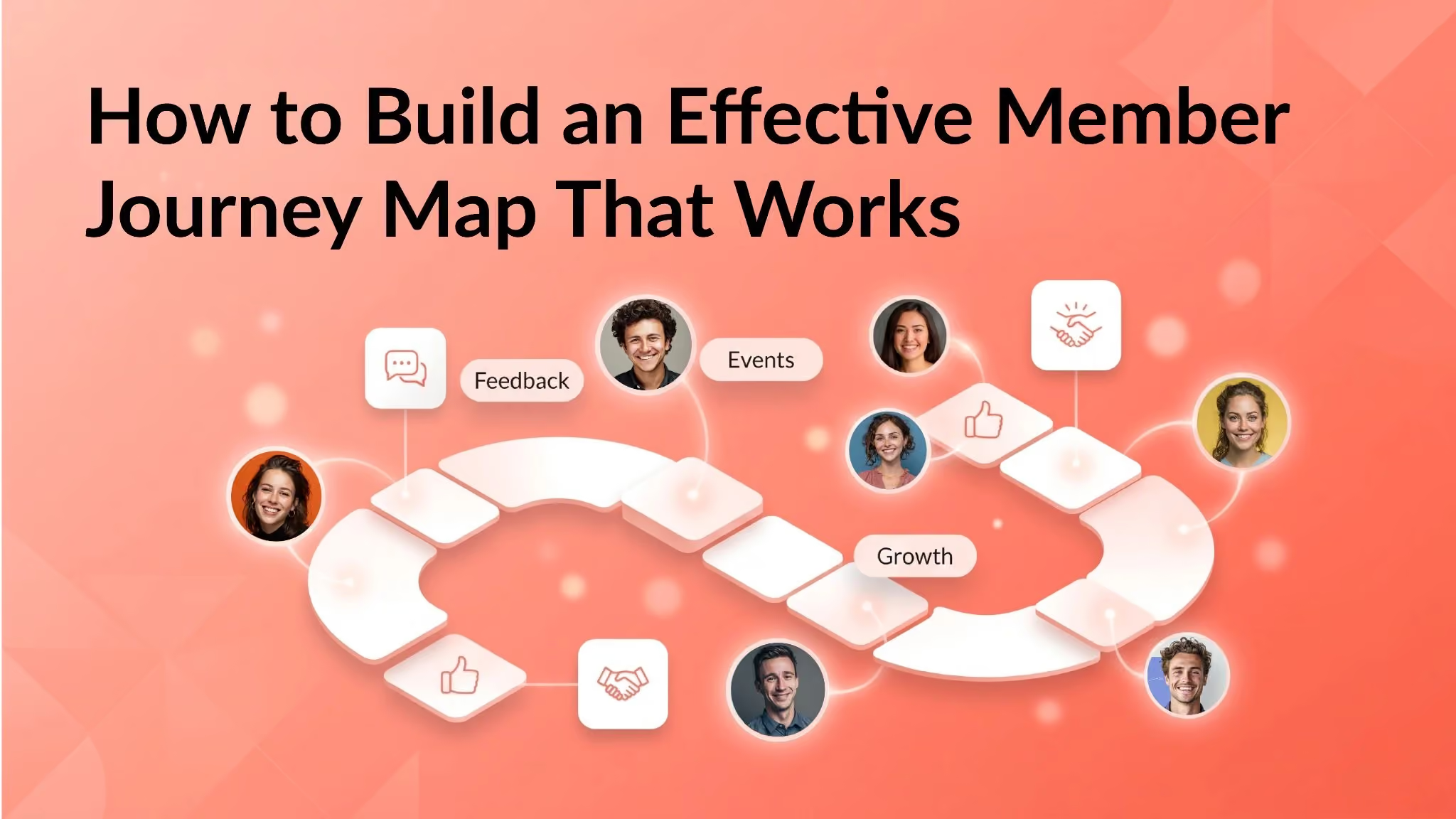
How to Build an Effective Member Journey Map That Works


Most membership organizations track two moments with real precision: the day someone joins and the day their renewal is due.
Everything in between? A well-intentioned mystery.
That gap is where members quietly disengage, where value goes unseen, and where renewal risk builds without a single warning sign. A well-designed member journey map solves exactly that problem , not by adding more emails to your calendar, but by helping your team see what members actually experience versus what you intend to deliver.
This article explains what a member journey really is, why mapping it changes everything, and how to build a map that improves onboarding, engagement, and retention in a way your renewal reminders alone never will.
What Is a Member Journey?
The member journey is the full path a person takes with a membership organization — from the moment they first discover you to the day they become a loyal advocate, or quietly stop renewing.
It covers every decision, every interaction, every unspoken question, and every moment of doubt along the way. And it starts before someone joins. Long before, in many cases.
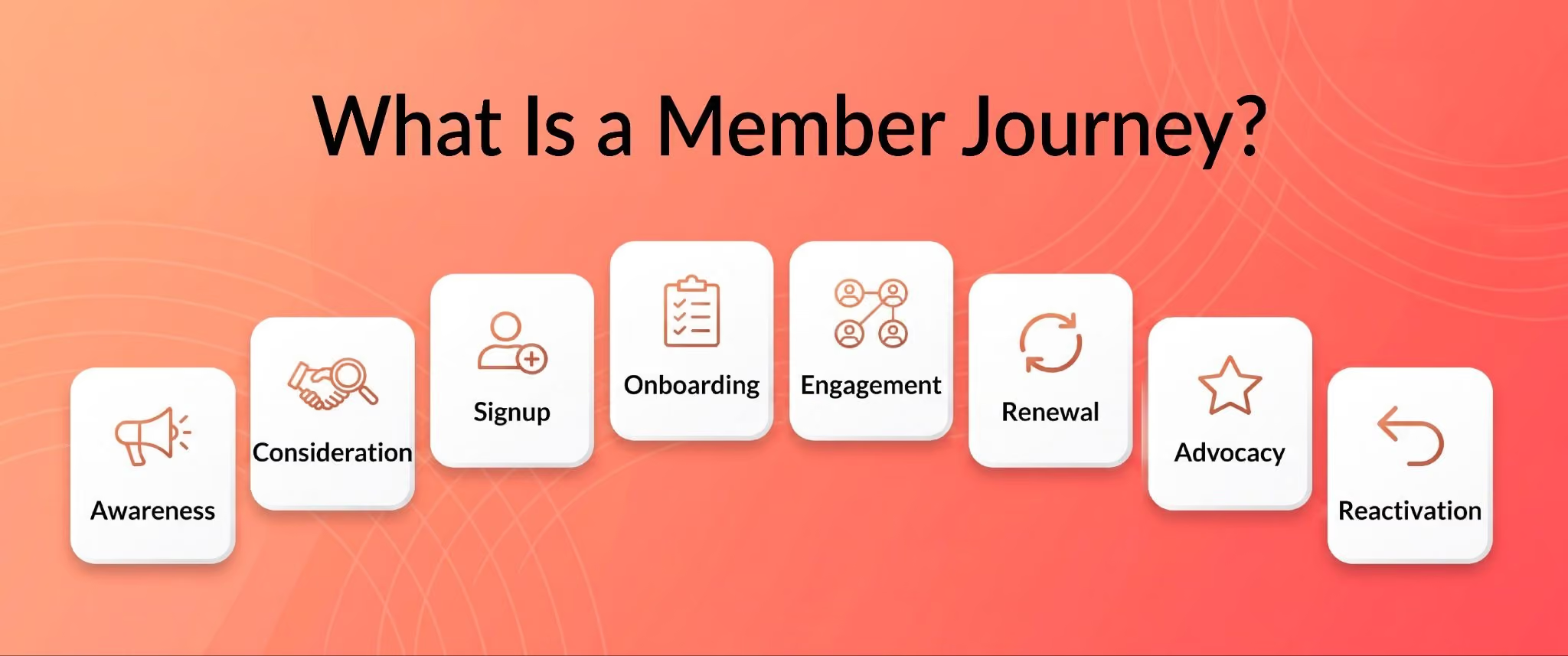
For membership organizations — whether associations, nonprofits, clubs, or professional communities — the journey typically looks like this:
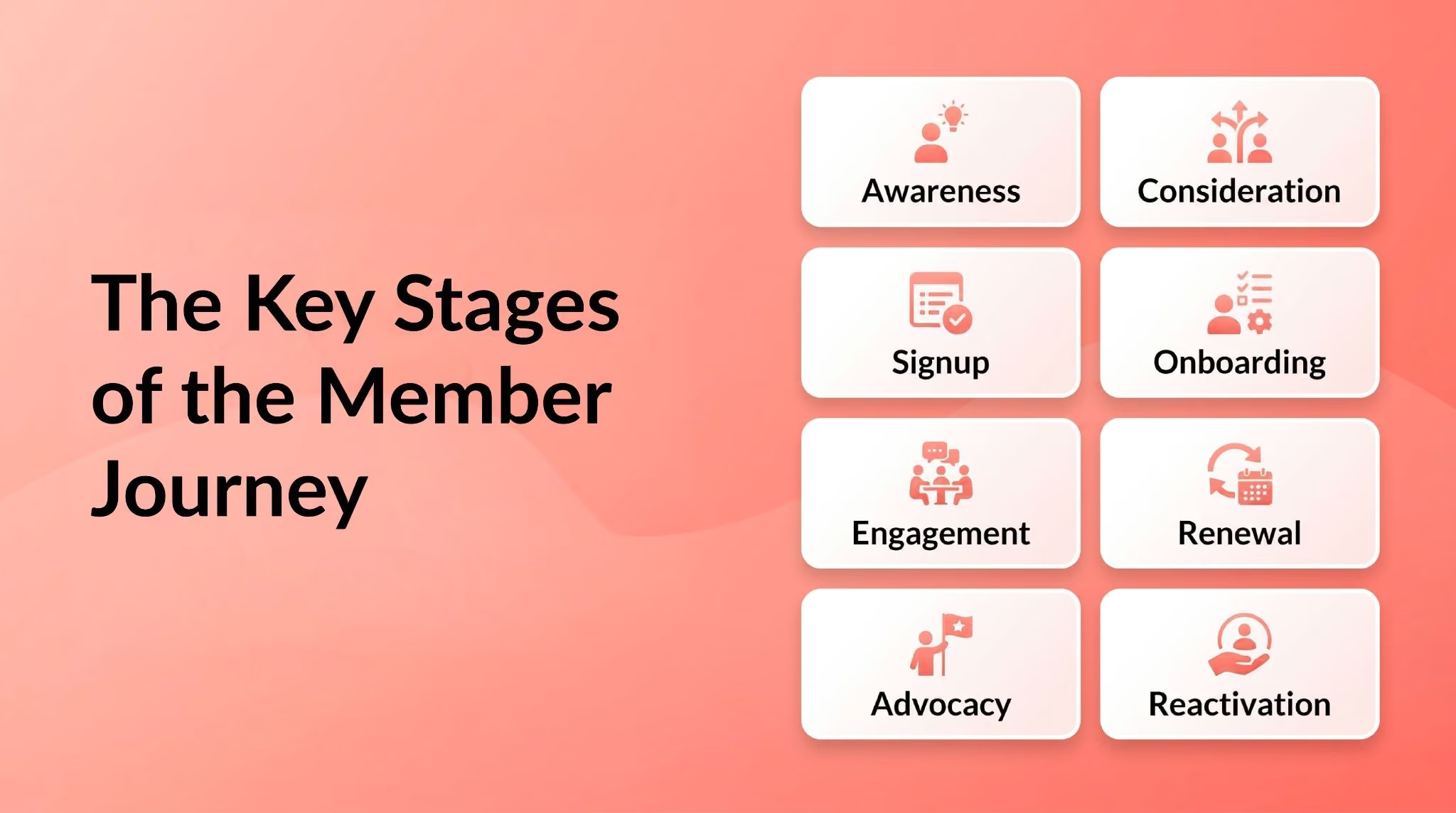
Awareness → Consideration → Signup → Onboarding → Engagement → Renewal → Advocacy → Reactivation
That is the member lifecycle in eight words. What happens inside each of those stages is where organizations either earn long-term members or lose them to indifference.
What Is a Member Journey Map?
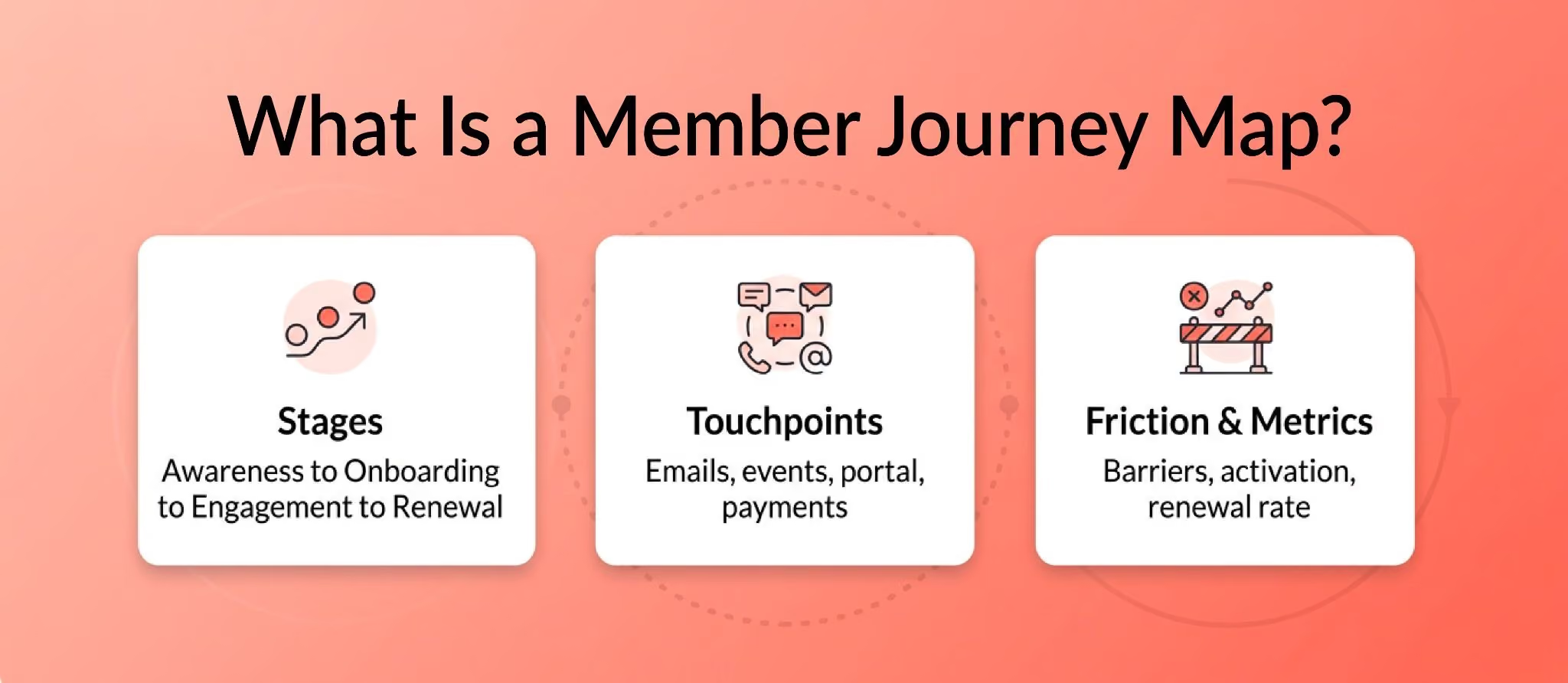
A member journey map is the structured document that makes the invisible visible.
It captures every stage of the membership experience, the touchpoints, the member's questions, the friction points, the communications your team sends, who owns each part of the journey, and what success actually looks like at each step.
Think of it less like a flowchart and more like an operating map for how your organization delivers value.
A strong member journey map typically includes:
- Journey stages from awareness through reactivation
- Member goals and questions at each stage
- Touchpoints across digital, human, payment, and community channels
- Friction points where members slow down, go silent, or drop off
- Behavior-based communication tied to what members do, not just the calendar
- Data signals that reveal whether the journey is actually working
- Team ownership for each stage
- Metrics to track progress over time
The map is only useful if it drives better decisions. A beautiful diagram that lives in a shared folder and never changes anything helps no one.
Why Member Journey Mapping Matters More Than You Think
Here is the uncomfortable reality behind most membership organizations.
According to Marketing General's 2025 Membership Marketing Benchmarking Report, only 11% of association leaders believe their value proposition is very compelling. Yet 45% reported membership growth in the same period.
That means many organizations are growing despite a weak value story, not because of a strong one. That pattern only holds for so long.
The ASAE 2026 State of Associations Report confirms the underlying pressure: retention and engagement remain the top challenge for nearly one-third of associations.
And from the member side? Higher Logic's 2025 Association Member Experience Report found that 46% of nonmembers are not even aware a relevant association exists for them.
The member journey problem is actually three problems at once:
- Visibility — prospects don't know you exist
- Value — members can't see what they're getting
- Renewal — when the invoice arrives, they're not sure it was worth it
A well-built member journey map connects all three. It helps your team see the full picture, not just the moments you're already watching.
Member Journey vs. Customer Journey: Why the Difference Matters
Many organizations borrow the customer journey framework and try to apply it to membership. It doesn't quite fit.
A customer journey typically ends at purchase. A member journey is a recurring relationship built on belonging, access, community, professional development, and annual recommitment. Those are fundamentally different dynamics.
Members don't just buy something. They join something. That distinction shapes everything about how you design the journey.
The Key Stages of the Member Journey
Every member journey moves through stages. They're not always linear. Members skip ahead, fall back, go quiet for months, or resurface after two years away.
But understanding each stage clearly is what makes the map actionable.
Most organizations design well for stages one and two. The real membership work happens in stages three through eight. That's where the member journey map earns its value.
The Three Moments That Define Every Member Journey
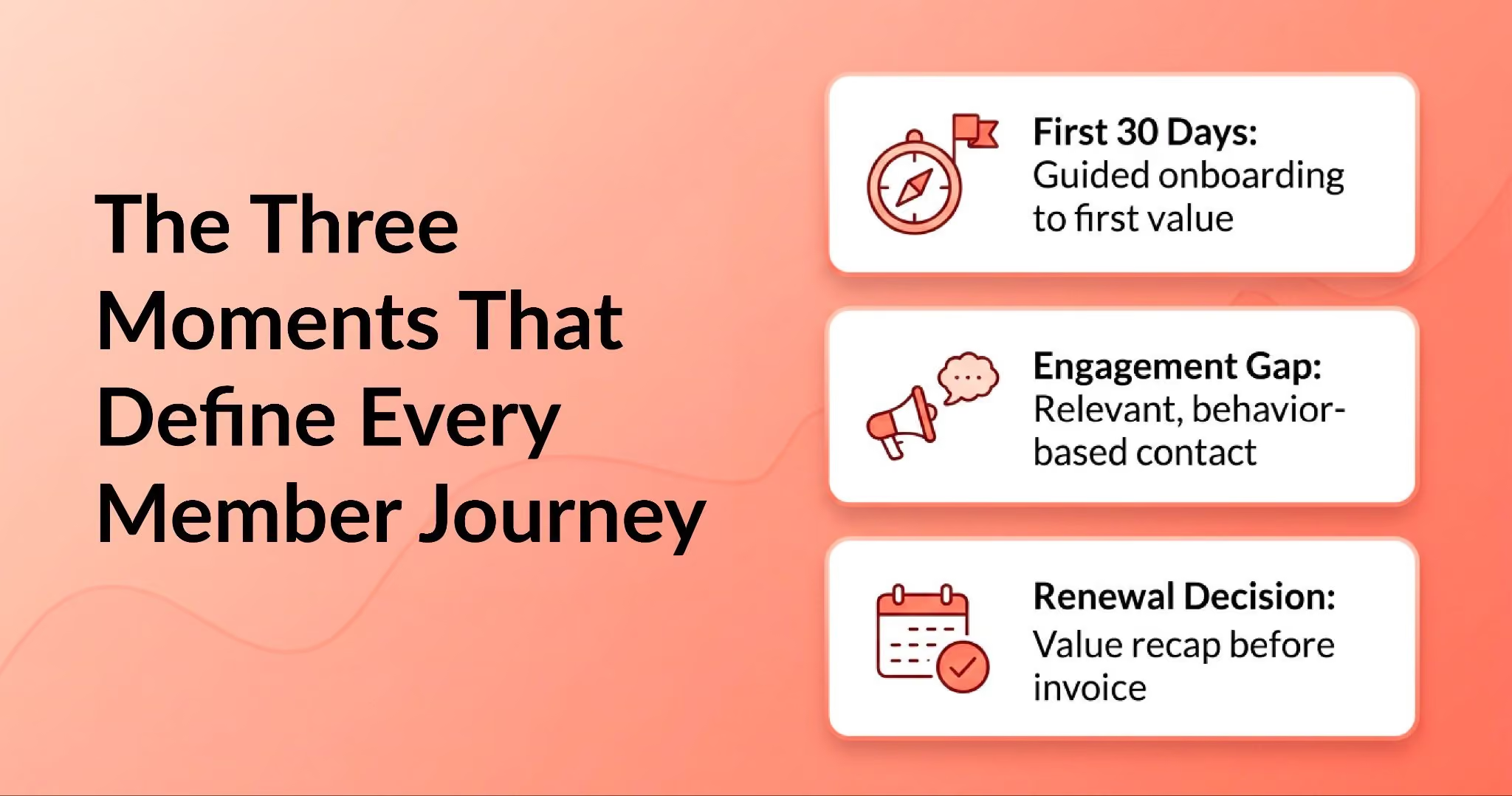
You can map every touchpoint and still miss what actually matters. The member journey lives or dies at three specific moments.
🎯 Moment 1: The First 30 Days
Higher Logic's 2026 community onboarding analysis found something that should stop every membership team in its tracks.
Members who found it very easy to get involved reported 95% engagement and 93% five-year renewal intent. Those who found it difficult reported just 18% engagement and 64% renewal intent.
That gap is created almost entirely within the first 30 days.
A single welcome email is not new member onboarding. It's a notification. Real onboarding is a guided sequence that helps members reach their first meaningful win quickly: a first portal login, a first event registration, a first useful resource, a first community connection.
The top self-reported barrier to engagement isn't lack of interest. According to the same research, it's "lack of time" at 36%. But "no time" almost always means "no compelling reason to prioritize this right now." Fix the first value moment and the time objection disappears on its own.
🔄 Moment 2: The Engagement Gap
After the welcome sequence ends, many organizations go quiet. Or worse: they switch to a broadcast newsletter that looks identical whether the recipient joined yesterday or five years ago.
That's the engagement gap. And it's where passive members are quietly created.
Higher Logic's 2025–2026 Association Email Benchmark Report tells the story in numbers. The average open rate across associations is 33.54% with a click rate of 2.68%. But targeted sends to lists under 500 recipients hit nearly 48% open rates and 8%+ clicks.
Segmented, behavior-based communication outperforms broadcast every single time.
Member engagement ideas don't need to be elaborate. The most effective ones are simply relevant: the right message, sent to the right member, at the right moment in their journey. If you connect memberships to events, event participation becomes a live engagement signal, not just a registration count.
💳 Moment 3: The Renewal Decision
Here is how many organizations handle renewal: send an invoice. Hope for the best.
Here is what members are actually thinking when that invoice arrives: "Did I use this enough to justify paying again?"
62% of members now pay their own dues, up from 55% the prior year. When people spend their own money on membership, they need to feel the value before they're asked to recommit to it.
Renewal should feel like a value review, not a payment event.
The study found that 33% of nonmembers cite cost as a barrier and 28% say they don't see enough ROI. Those same objections live in the minds of your current members every time renewal season arrives.
Send the value recap before the invoice. Show members what they used, what they gained, and what's coming next. Then ask them to renew. Automatic membership renewal reminders that lead with value content outperform invoice-first workflows in every metric that matters.
How to Build Your Member Journey Map
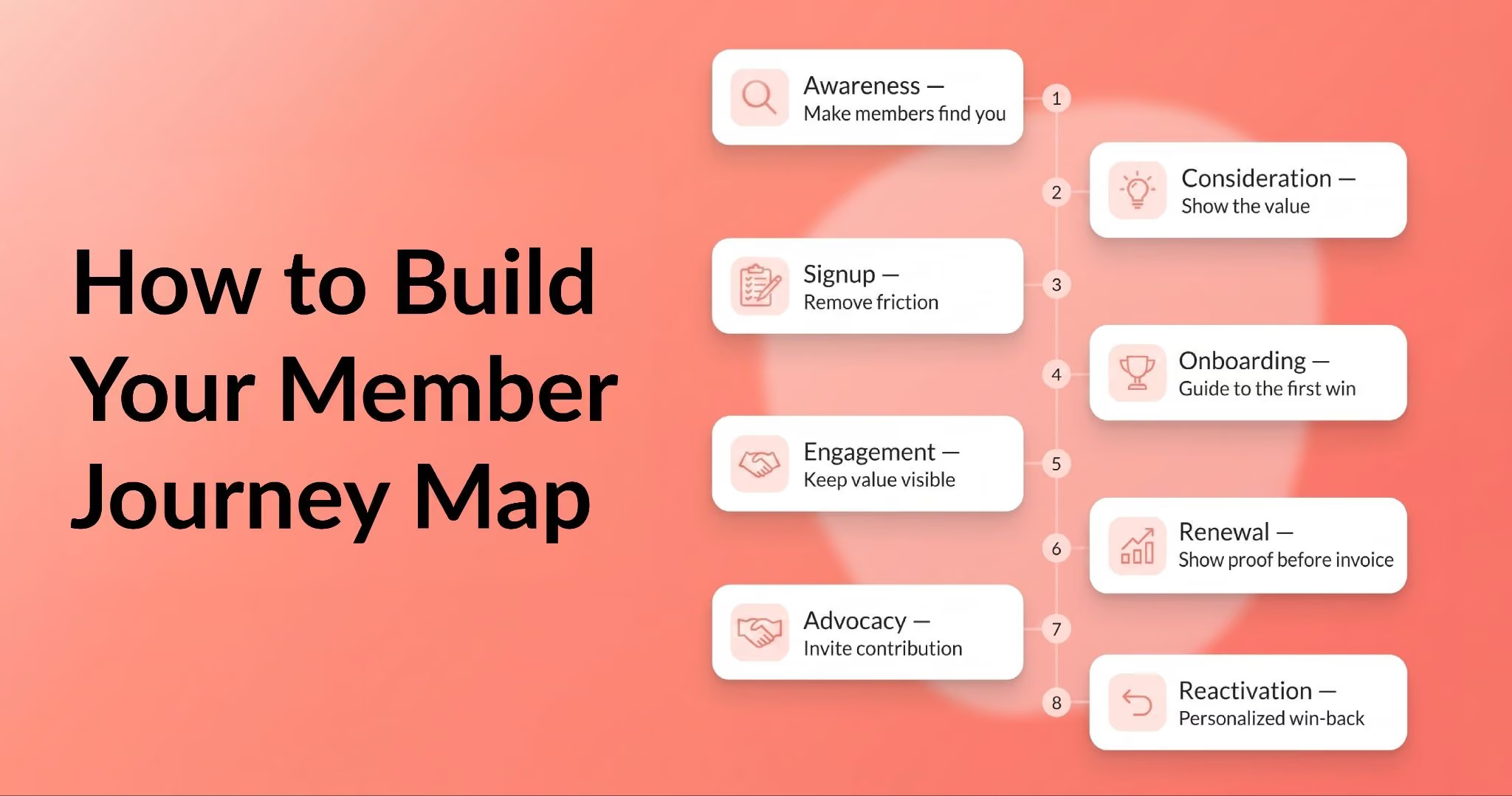
You don't need a design team or enterprise budget to build a useful member journey map. You need an honest process and a willingness to look at what's actually happening, not just what you intend to deliver.
Step 1: Define your goal. Are you fixing a broken onboarding sequence? Improving first-year renewal rates? Reducing manual admin work? Start with one specific goal. A map built for everything typically improves nothing.
Step 2: Choose which members you're mapping. New members in their first year behave very differently from five-year veterans. Lapsed members need a completely different journey from engaged ones. Start with the segment where the gap between potential and current performance is largest.
Step 3: Collect real evidence before assuming anything. Survey your members. Read your support tickets. Pull your email engagement data. Check your portal login reports. Talk to members who didn't renew and ask why. A membership CRM that tracks login activity, email engagement, and payment history in one place makes this step significantly faster.
Step 4: Document every touchpoint across the lifecycle. From the first Google search to the final renewal reminder, list every interaction. Search result, join page, payment confirmation, welcome email, simple member portal login, event registration, newsletter, renewal notice. Everything.
Step 5: Build the current-state map first. Document what actually happens today, not what you wish happened. This is the step most organizations skip. You cannot improve a journey you haven't honestly mapped.
Step 6: Design the future-state version. Now build the improved journey you want to create: a cleaner signup process, a guided onboarding sequence, segmented email communication, value reminders before renewal, a structured win-back campaign for lapsed members.
Step 7: Assign an owner and at least one metric to every stage. Without ownership, nothing changes. Without a metric, you won't know if the change worked.
Finding Friction Before It Costs You Members
Friction is silent. That's what makes it so dangerous.
Members rarely tell you when the join form was too long, the welcome email was confusing, or the renewal invoice arrived before any value reminder. They just quietly decide not to renew.
Here are the signals worth watching closely:
- Low activation rate after signup: check your confirmation email and first-login experience
- High support volume in week one: your onboarding sequence isn't answering the right questions
- Declining email engagement mid-year: your member communication tools aren't matching what members actually care about at that stage
- Invoice-first renewal communication: administrators on membership forums consistently describe these as "curt" and "unfriendly" — and members agree with their feet
- Lapsed members with no captured reason for leaving: you cannot fix a problem you never measured
Friction almost always lives in one of these five places. Your map should make each one visible before it becomes a churn pattern.
Member Journey Metrics That Actually Matter
Not every metric deserves your attention. Track the signals that tell you whether members are moving successfully from one stage to the next.
The goal is not to track everything. The goal is to catch problems early, before renewal season delivers the bad news.
Automation and the Human Touch
A great member journey uses both automation and human connection. The skill is knowing which one belongs where.
Automate the consistent moments:
- Welcome email sequences
- Profile completion reminders
- Event follow-ups
- Value-first renewal reminders
- Lapsed member win-back campaigns
Automation handles consistency so your team can focus on the irreplaceable moments.
Keep humans where relationships actually form:
- Personal welcome notes for high-value new members
- Check-ins with at-risk members before renewal
- Responses to confusion or complaints
- Volunteer and mentor recruitment conversations
The results of doing this well are tangible. The American Association for Respiratory Care used a segmented, automated win-back campaign and recovered 800 lapsed members and $64,000 in dues. Automation made the scale possible. Thoughtful segmentation made it effective.
How Membership Software Supports the Full Journey
When member data lives across five different tools — a spreadsheet, an email platform, a payment system, an event tool, and a community — you can't see the member journey clearly. You see fragments.
Membership management software brings those fragments into one view: member records, payment history, event participation, digital membership cards, renewal data, and communication logs all in one place.
That visibility changes how your team operates. Instead of reacting to lapse, you can spot inactivity early. Instead of sending generic invoices, you can send value-first sequences timed to each member's actual behavior.
Join It is built for exactly this kind of work: helping associations, clubs, nonprofits, and community organizations manage the full member journey without the complexity of enterprise software.
The Member Journey Is a Value Problem, Not a Renewal Problem
Here is the mindset shift worth making.
Most organizations treat the member journey as a renewal problem. Better reminders. Easier payment. Fewer lapses.
But the membership experience is shaped long before any invoice arrives. It's shaped by whether a new member found value in week one. Whether they felt recognized in month three. Whether they used at least one meaningful benefit before renewal season began.
Member retention strategies that actually work don't start at renewal. They start at onboarding.
The member journey map is the tool that connects those dots. Not a diagram. An operating system for how your organization earns the right to ask for another year.
Final Takeaway
The strongest member journeys aren't built by accident.
They're built by organizations that know exactly what members experience at every stage — where value is delivered, where it's missing, and what to fix next.
You don't need to map everything at once. Pick the stage where members are most likely to get stuck. Map it honestly. Improve one thing. Then move to the next.
That's how good journeys get built, and how good organizations earn the kind of loyalty that doesn't need a discount code to survive renewal season.
Ready to start? Start a free trial with Join It and see how centralized member management supports every stage of the journey. Or book a call with Join It to talk through what your member journey needs most right now.
FAQs About the Member Journey
What is a member journey?
The member journey is the full path a person takes with a membership organization, from first awareness through signup, onboarding, engagement, renewal, advocacy, and reactivation. It includes every decision, interaction, and moment of doubt along the way.
What is a member journey map?
A member journey map is a structured framework that documents each stage of the member experience — including touchpoints, member questions, friction points, communication moments, team ownership, and success metrics. It shows what members actually experience, not just what the organization intends to deliver.
What are the key stages of the member journey?
The core stages are: awareness, consideration, signup, activation, onboarding, first value, ongoing engagement, renewal, advocacy, and reactivation. Not every member moves through these stages linearly.
How is a member journey different from a customer journey?
A customer journey typically ends at a transaction. A member journey is a recurring relationship built on belonging, community, professional value, and annual recommitment. Members can also become volunteers, mentors, advocates, and donors — roles that don't exist in a standard customer model.
What should happen in the first 30 days after a member joins?
Every new member should complete a guided onboarding path: first login, profile setup, first benefit used or event registered, and at least one meaningful early win that makes membership feel worth joining. That first value moment sets the trajectory for everything that follows.
How often should you update a member journey map?
Review key engagement signals monthly, test one improvement each quarter, and revisit the full journey map annually or after any major changes to your onboarding process, renewal cycle, or membership program.

Guides from the Experts
Through our work with 4,000+ organizations - we’ve put together helpful guides to assist; regardless of where you are on your journey.
.webp)

A Complete Guide to Membership Organizations
Everything you need to know to manage and grow your membership business
.webp)
Maximize Membership Retention: 10 Proven Strategies
Tried and true strategies that not only win membership, but keep them

Build a Membership Website: A Step-by-Step Guide
Your one-stop resource for knowing all the features your modern membership website needs
Ready to start your free trial?
Our membership software is intuitive to use and even easier to test for yourself.