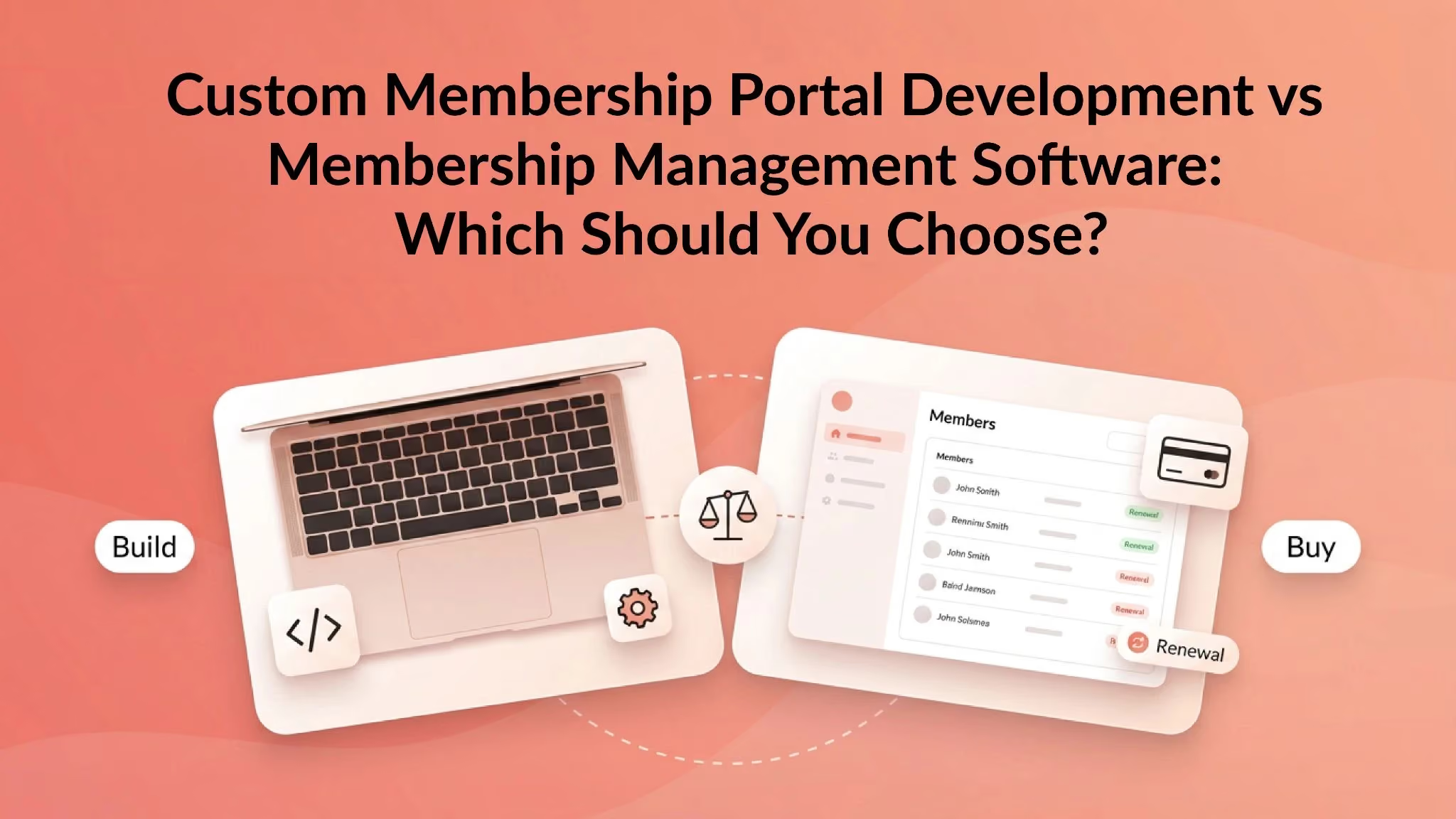
Member Portal Development vs Membership Management Software


Most teams don't search for membership portal development because they love building software. They search because a volunteer is drowning in renewal reminders, a spreadsheet broke last Tuesday, and three members emailed asking why their login stopped working.
That is the real story behind this keyword.
The decision you're about to make is not just about building a login page. It's about deciding who will own member records, payments, renewals, permissions, reporting, and maintenance for the next three to five years.
Get it right, and your members get a seamless experience. Get it wrong, and you're calling a developer every time a renewal fails.
What People Really Mean by "Membership Portal Development"
When most clubs, associations, nonprofits, and chambers search for membership portal development, they are not looking for code. They are looking for a way out of a broken workflow.
The symptoms are familiar. Members email staff for basic updates. Renewals get missed because reminders go out manually. Payments are tracked in a spreadsheet one person controls. Nobody can answer "who is currently active?" without digging through three documents.
According to a Community Brands Digital Member Study, 63% of members say technology plays a big role in their lives. Yet only 26% rate their organization as "excellent" on technology. That gap is not a design problem. It is an operations problem.
The request sounds like "we need a portal." The real need is a system of record for members, payments, renewals, events, and communications.
A portal is only the front door. What happens behind it is what actually matters.
The Real Question to Ask First
Before choosing between custom development and ready-made software, ask this harder question: Are your needs truly unique, or just operationally neglected?
Most of the time, the honest answer is the second one. Replacing spreadsheets for membership management is not solved by adding a login page. It is solved by adding the right system underneath that login page.
What Is a Membership Portal?
A membership portal is the member-facing online area where members log in, view membership status, update profiles, renew, access member-only content, and manage payments. It is not a public website. It is not a payment form. It is the online home where members manage their relationship with your organization.
A good self-service member portal gives members everything they need without having to email staff. That single shift can transform your admin workload overnight.
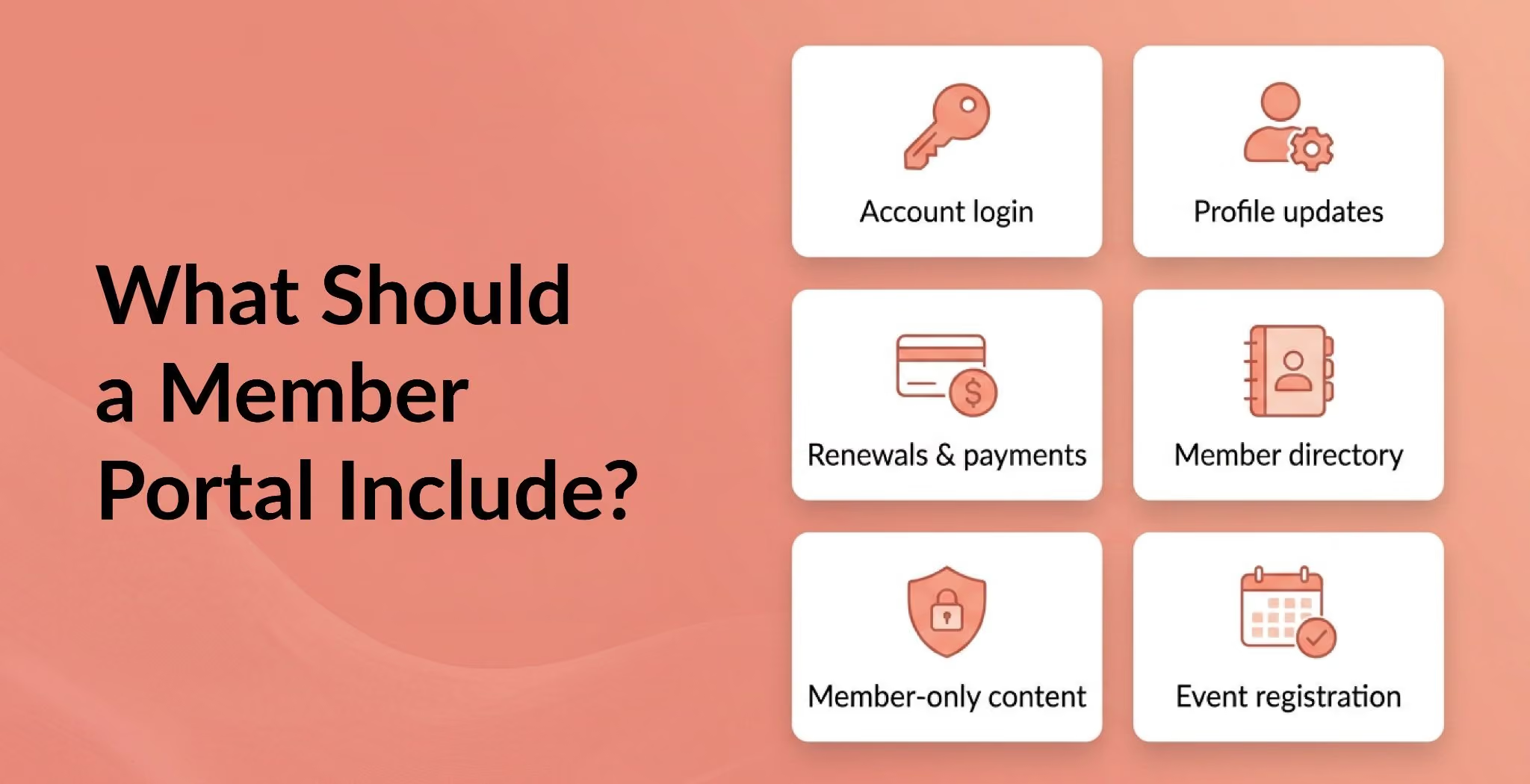
What Should a Member Portal Include?
A complete member portal covers:
- Account creation and login with password reset and email verification
- Member profile updates so members can edit contact and payment details themselves
- Membership status, renewal dates, and payment history visible at a glance
- Member directory or searchable member directory for community visibility
- Member-only content with gated member content properly protected
- Event registration tied to membership status
- Digital membership cards for mobile-first member identity and on-site QR code verification
Behind the member-facing side, staff also need member records, status tracking, payment tracking, renewal reports, admin roles, and segmented communication tools. The portal is only one layer of the full system.
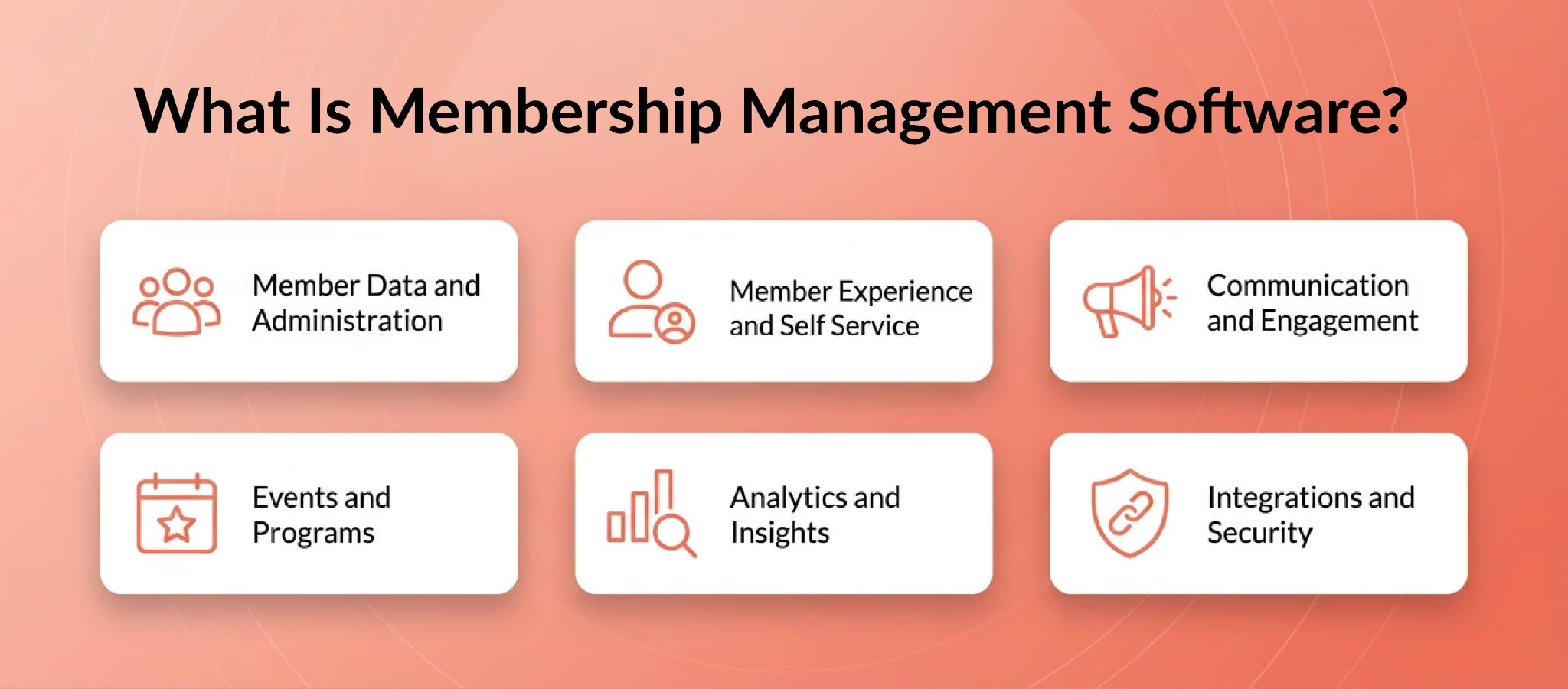
What Is Membership Management Software?
Membership management software is the operational system that manages member records, payments, renewals, member types, communications, events, and reporting, often with a built-in self-service portal included.
The distinction matters. A member portal is the interface members see. Membership management software is the system of record that powers everything behind it.
Many teams go looking for a portal and discover they actually need the whole system. That realization usually comes after the first renewal cycle.
Custom vs Software: The Real Tradeoffs at a Glance
The core principle: software wins on operational complexity. Custom wins only when your organization creates enough differentiated value from owning that complexity to justify the cost.
Why Custom Membership Portal Development Is More Complex Than It Looks
Here is where most teams get surprised.
A membership portal sounds like a website with a login. But the moment it touches recurring billing, failed payments, authentication, role-based access control, invoice states, renewal logic, and member entitlements, it stops being a website project. It becomes an ongoing software product.
Not a website. A product. With all the maintenance that implies.
Recurring Payments Are an Entire Lifecycle
Recurring payments for memberships involve far more than collecting a card number once.
Stripe's subscription documentation makes this explicit: subscriptions require event-driven handling for invoice creation, payment failures, customer authentication, retries, plan changes, cancellations, and access provisioning. Most of this activity happens asynchronously through webhook events.
"Collect dues online" is not one feature. It is a lifecycle with at least ten distinct states, each requiring logic, testing, and maintenance. And if you process card data directly, PCI DSS compliance may require handling more than 300 security controls.
Building that from scratch is a serious long-term commitment, not a one-time project.
Failed Payments Need Their Own Rules
What happens when a member's card fails? Does access continue? For how long? Who gets notified? How many reminders go out before the account lapses?
Automated failed payment notifications handle this cleanly in membership software. In a custom build, every one of those questions becomes a separate development task, and then a maintenance task whenever behavior needs to change.
Access Control Is a Security Requirement, Not a UI Feature
Member portals are built on permission decisions: active vs lapsed members, member-only resources, board roles, chapter access, event entitlements, billing history, and protected documents.
OWASP's 2025 Top 10 ranks broken access control as the single top web application security risk. That is directly relevant here, because a membership system is essentially an access control system at its core.
Custom development means your team owns this problem permanently.
When Custom Membership Portal Development Makes Sense
To be clear: custom is not wrong. It is just rarely the right first move for routine member management.
Custom development earns its cost when:
- Your membership logic is genuinely unusual: complex chapter structures, certification workflows, multi-step approval processes, or eligibility rules that no standard platform can model
- You need deep integrations with CRM, ERP, AMS, LMS, or proprietary internal systems that require custom data flows
- You have real internal technical ownership: dedicated developers, product managers, documented security processes, and a funded maintenance budget
- The member experience itself is a strategic differentiator, not just an administrative tool, and the competitive value comes from owning the logic entirely
For association membership portal development specifically, ASAE frames custom portals as significant investments that should start simple, integrate with existing systems, and be carefully planned before committing to a full custom build.
If those conditions don't describe your organization, the next section is more important.
When Membership Management Software Is the Better Choice
For most clubs, nonprofits, chambers, and volunteer-led organizations, software is the smarter starting point.
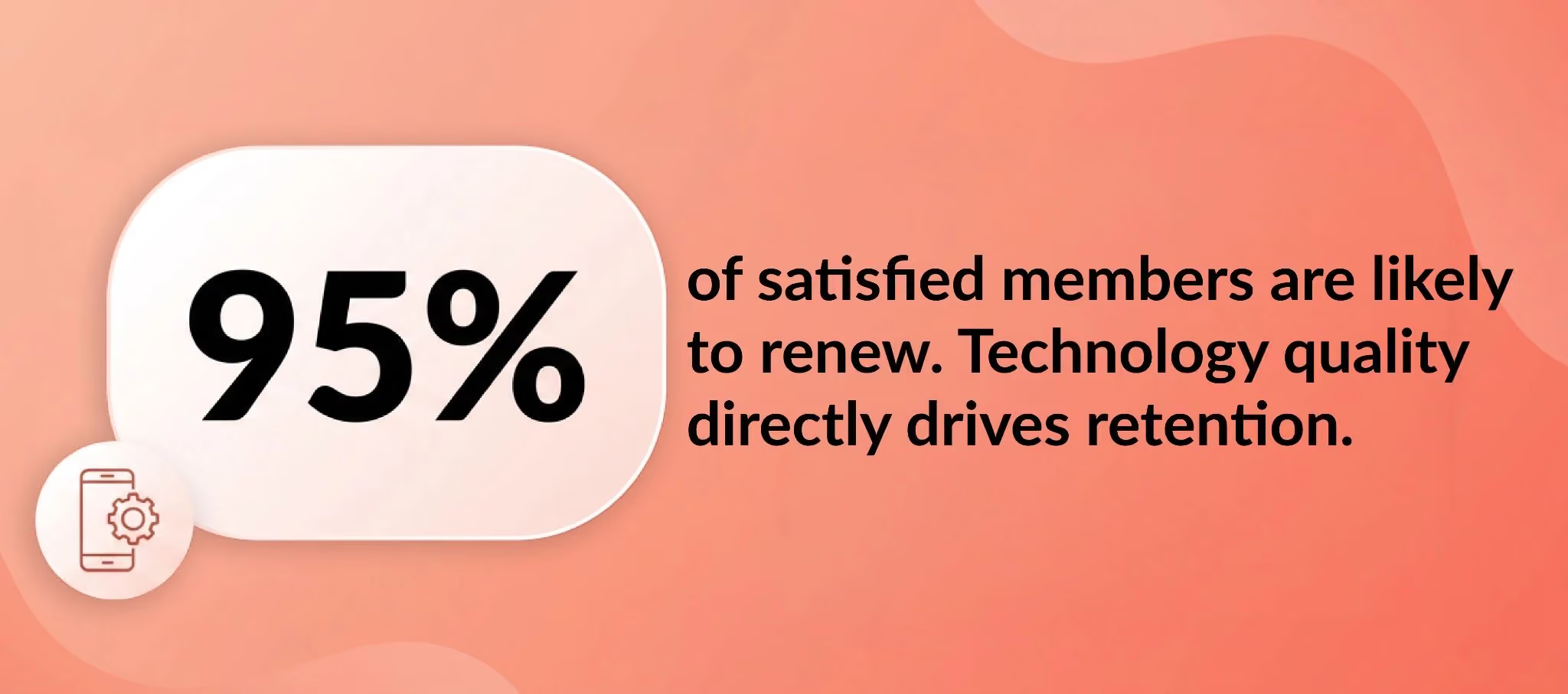
ASAE research found that among members highly satisfied with their organization's technology, 95% reported a high likelihood of renewal. Technology quality directly drives retention. This is not a UX preference. It is a membership economics argument.
Software wins when:
You need online member accounts quickly. A purpose-built platform gives members login, profile updates, payment history, and membership status without months of development work.
You want automatic membership renewal reminders without building them. Manual renewal chasing creates missed revenue and volunteer burnout. Automated reminders are not a luxury.
Your team needs to manage it without a developer on call. NTEN's 2022 research found staff time is the most frequent barrier to technology adoption, affecting more than 80% of organizations surveyed. A system your volunteers can actually run is worth more than a system with more theoretical features.
You need membership automation without rebuilding it from scratch. Automated renewals, status changes, reminders, and failed payment flows are already solved problems in good membership software. You should not be solving them again.
Purpose-built solutions exist for every audience type. Club membership management, nonprofit membership management, association management, and chamber of commerce membership management each have platforms designed specifically for their operational needs.
The Hybrid Option: Buy the Core, Customize the Edge
The smartest answer is often neither pure custom nor fully out-of-the-box software.
Use membership software as your system of record for member data, payments, renewals, status rules, events, and reporting. Then customize what is truly unique: your public website, branded member journeys, community platform, LMS integration, or internal dashboards.
The principle is simple: do not rebuild the operational core. Customize the experience layer.
If you are planning to build a membership website from the ground up, this hybrid approach is worth serious consideration before committing to a full custom build. Connecting membership software to community forums, content platforms, or event tools through SSO and API integration is a valid, lower-risk architectural path.
You still need technical ownership. But you are not rebuilding billing and authentication logic from scratch.
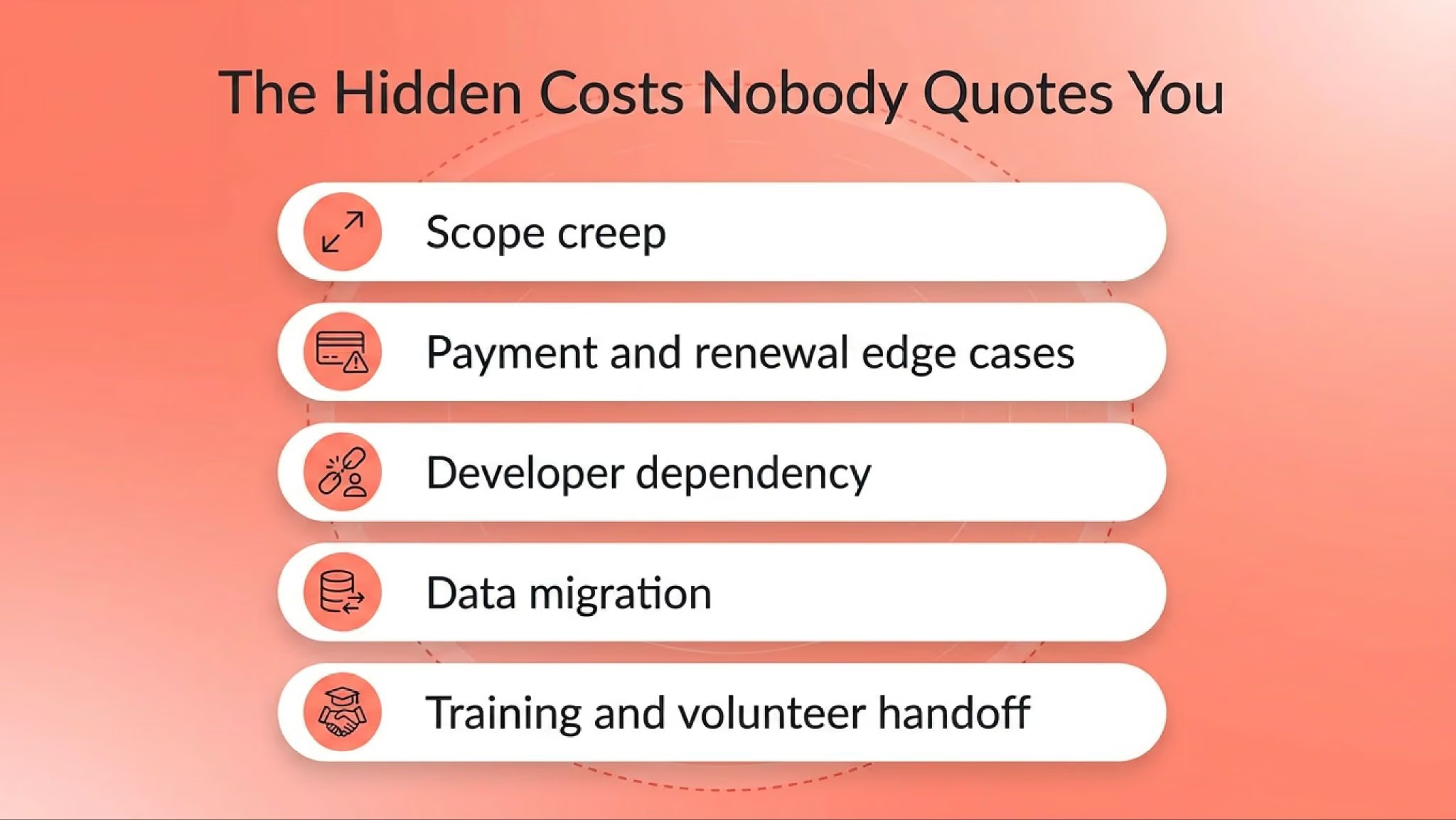
The Hidden Costs Nobody Quotes You
The proposal looks clean. The invoice grows.
Here is what rarely appears in a custom development quote:
🔴 Scope creep. A Reddit web design thread described it plainly: a secure member portal with file management, branding, and payments is "basically a small SaaS project," not a budget website add-on. Stakeholders always add one more thing.
🔴 Payment and renewal edge cases. Failed cards, grace periods, manual payments, refunds, upgrades, downgrades, access provisioning changes. Each one requires logic, testing, and eventual maintenance.
🔴 Developer dependency. What happens when the original developer moves on? Who fixes the broken renewal flow at 11pm before your annual membership drive?
🔴 Data migration. Moving from spreadsheets means cleaning duplicate records, standardizing membership types, and confirming renewal dates before a single page goes live. A portal does not fix bad data. It exposes it faster.
🔴 Training and volunteer handoff. NTEN's 2024 Nonprofit Digital Investments Report found training is roughly 1% of most nonprofit tech budgets. The system that feels free to build often costs the most to teach.
A practical rule: a portal without a named owner becomes a liability within 18 months.
What Real Organizations Experienced
Theory is useful. Evidence is better.
The Oklahoma Cattlemen's Association moved away from a manual database controlled by one person on one computer. After switching to dedicated membership software, all staff could access member data, field reps could work from mobile devices, and the annual membership category grew by more than 300 members. Auto-renewal eliminated mailing and postage costs entirely.
One organization reviewed on Capterra reported replacing the equivalent of up to 2 FTE through operational streamlining after adopting membership software.
For volunteer-run organizations, reducing admin hours by a few per month is often the difference between a sustainable operation and a burned-out membership chair resigning in March.
Where Join It Fits in This Decision
Join It is an example of ready-made membership management software built for organizations that need fast setup and lower ongoing maintenance, without sacrificing core functionality.
It includes a self-service member portal, automated renewals, custom member fields, admin-only custom fields for internal data workflows, digital membership cards, event registration for members, and member-only events tied directly to membership status.
Join It is not the right fit for organizations with deeply unusual membership logic or complex multi-system integrations that no standard platform can support. But for standard membership operations, it removes the need to build, maintain, and debug core infrastructure from scratch.
See Join It pricing to evaluate whether it fits your budget and scale.
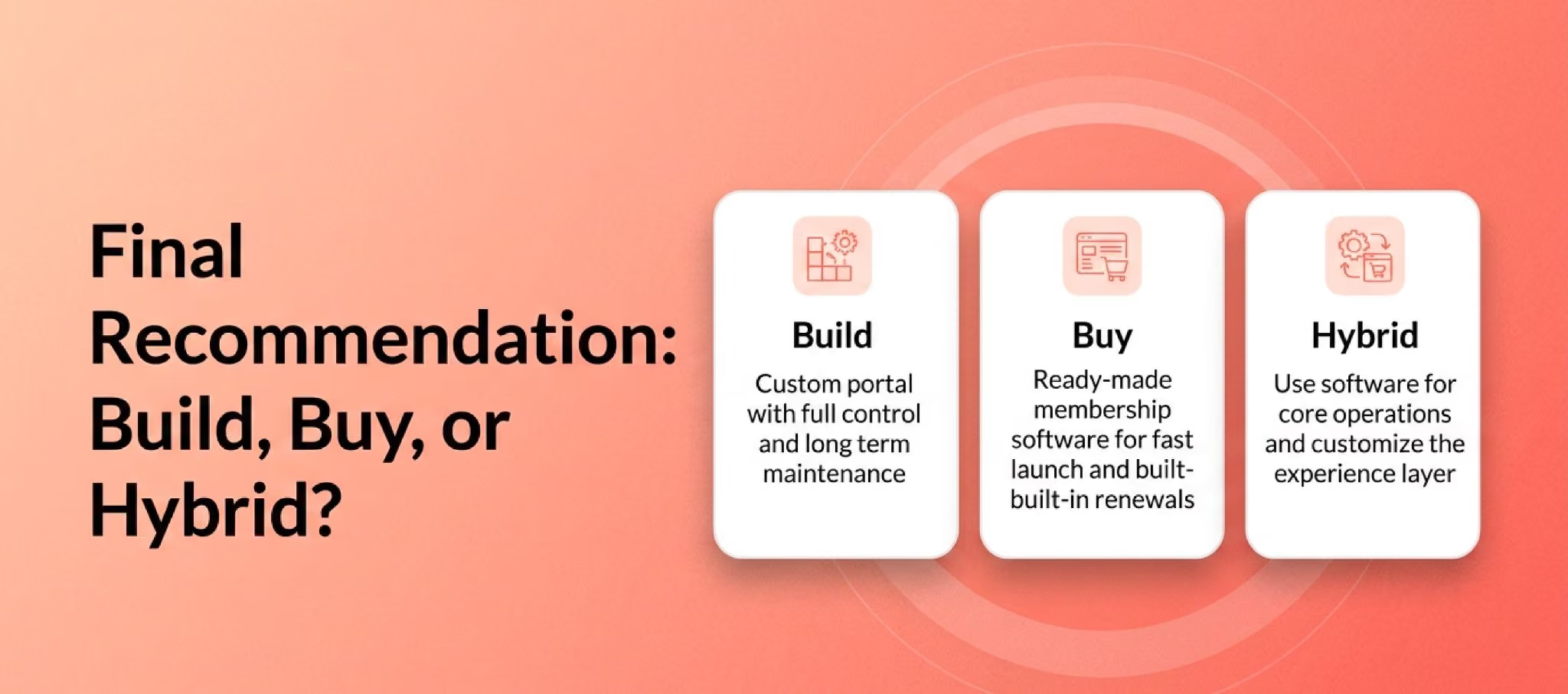
Final Recommendation: Build, Buy, or Hybrid?
Here is the clearest decision rule this topic allows.
Choose membership management software if your core needs are member records, payments, automated renewals, reminders, event registration, communication, and reporting. You have a small team or volunteers. You need to launch without months of development. Maintenance should not fall on one developer indefinitely.
Choose custom membership portal development if your membership logic is genuinely unusual, your integration requirements cannot be met by any standard platform, you have a dedicated technical team with funded maintenance capacity, and the member experience is itself a competitive differentiator.
Choose hybrid if you want a proven system of record for operations with a customized website, content experience, community layer, or integration architecture layered around it.
The governing question is not "which option has more features?" It is: what are we signing up to own after launch?
If the honest answer is "we are not sure," start with software. You can always build custom work on top. You cannot easily replace a brittle custom system mid-operation without disrupting your members.
Start a free trial or book a call to see if Join It fits your organization's needs.
Frequently Asked Questions
What is membership portal development?
Membership portal development is the process of planning, designing, building, and maintaining an online portal where members log in, manage accounts, renew dues, make payments, register for events, and access member-only resources.
What is the difference between a member portal and membership management software?
A member portal is the member-facing interface where members log in and self-serve. Membership management software is the full operational system of record that includes the portal plus payments, renewals, member database, reporting, and communications tools.
What is the difference between a member portal and an AMS?
An AMS (association management software) typically covers broader association operations including financials and chapter management. A member portal is the member-facing layer. Many AMS platforms include a portal, or connect to one through integration.
When is membership management software better than custom development?
When your core needs are standard: member records, payments, renewals, reminders, events, communication, and reporting. Standard needs belong on proven platforms. Custom development earns its cost only when a workflow genuinely cannot be supported any other way.
What are the hidden costs of a custom member portal?
Scope creep, payment edge case handling, developer dependency, plugin conflicts, data migration and cleanup, staff training, volunteer handoff difficulty, and long-term maintenance ownership are the costs most teams discover after the build begins.
What is the best membership software for small organizations?
The criteria that matter more than any brand name: easy setup, built-in renewals, payment processing, self-service member portal, reliable support, simple reporting, and straightforward volunteer handoff. The best option is the one your team can run confidently without calling a developer.
Can a member portal integrate with an existing website or AMS?
Yes, but integrations require data mapping, authentication design, payment flow alignment, member status synchronization, and testing across edge cases. An integration is not complete until the failure states work as reliably as the success states.

Guides from the Experts
Through our work with 4,000+ organizations - we’ve put together helpful guides to assist; regardless of where you are on your journey.
.webp)

A Complete Guide to Membership Organizations
Everything you need to know to manage and grow your membership business
.webp)
Maximize Membership Retention: 10 Proven Strategies
Tried and true strategies that not only win membership, but keep them

Build a Membership Website: A Step-by-Step Guide
Your one-stop resource for knowing all the features your modern membership website needs
Ready to start your free trial?
Our membership software is intuitive to use and even easier to test for yourself.