
Why Church Attendance Is Declining (15 Reasons) + U.S. Statistics (2026)


Church attendance in America isn't what it used to be.
If you're a church leader, you've probably felt it. Sunday morning looks different than it did five years ago, let alone fifteen. The reality? Only about 20% of U.S. adults attend church weekly today, down from roughly 30% two decades ago. Meanwhile, 57% now say they "seldom or never" attend religious services. [1]
But here's what matters most: understanding why people have stepped away is the first step toward welcoming them back.
This isn't a doom-and-gloom post. It's a realistic look at church attendance trends backed by data from Gallup, Pew Research, and real conversations happening in online communities. More importantly, we'll explore what churches can actually do about it in 2026, with measurable actions and realistic expectations.
Key numbers to know:
- 1 in 5 Americans attends church weekly (church attendance rates at historic lows)
- 41% attend at least monthly, including those who go weekly
- 3 in 5 attend rarely or never
- ~85% of pre-pandemic attendance levels have returned in most churches
- 32% attended in-person in the past month (late 2024), while 27% watched online
Stats first. Then 15 reasons church attendance is declining. Then what churches can do that's both measurable and realistic.
Let's dive in.
Key takeaways
Church Attendance Statistics in the U.S. (2026)
Latest church attendance rates (weekly vs monthly vs seldom/never)
Church attendance statistics show a clear pattern: regular weekly worship has declined significantly.
Here's the breakdown. According to recent data from Gallup and Pew Research, about 1 in 5 Americans attends weekly, while 41% attend at least monthly (which includes weekly attenders). Nearly 3 in 5 attend rarely or never.[2]
These are self-reported survey numbers, so there's always some variance. What counts as "regular" attendance has shifted, too. Many pastors now consider twice a month as "regular," whereas most members still define it as weekly. This expectation gap matters.
Note: Based on Gallup and Pew survey data. Figures represent self-reported attendance and may include both in-person and online participation depending on how respondents interpret "attendance."
Church attendance trends over time (what the long view shows)
Long-term church attendance trends tell a story of steady decline, especially in weekly worship.
Two decades ago, an average of 30% of Americans attended church weekly. That number has dropped to around 20% today. The "never attend" category has climbed from about 15% in the early 2000s to over 30% now.

What's driving this? Several factors we'll explore below, but the shift is clear: church is no longer a default Sunday activity for most Americans.
Church attendance since COVID (in-person vs online vs hybrid)
The pandemic permanently changed how we measure church attendance.
In late 2024, 32% of U.S. adults said they attended in-person in the past month, and another 27% watched a religious service online. When you account for both modes, overall participation (~40% monthly) has held relatively steady. But how people participate has fundamentally changed.[3]
By 2024, 91% of churches were live-streaming services. [4] Online church attendance is here to stay. The challenge? Some formerly frequent in-person attenders now watch from home exclusively. And 16% of Christians who regularly attended before COVID now attend neither in-person nor online, highlighting a subset that simply disengaged entirely.
On average, U.S. church attendance in-person is ~85% of pre-pandemic levels. Most churches haven't fully recovered their 2019 numbers.
Church attendance by age (Gen Z + Millennials)
Generational differences in church attendance reveal a fascinating paradox.

Only 22% of adults under 30 attend church regularly (weekly or nearly weekly), compared to ~30% nationally. The share of under-30s who attend at least monthly has dropped nearly 20 percentage points in the last decade, from ~65% to 45%.
But here's the twist: among those who do attend, Gen Z churchgoers now attend more frequently than Boomer churchgoers. Gen Z Christians attend about 23 services per year compared to Boomers' 17 services per year. [5] This is a "winnowing effect." Many less-committed young people have stopped going entirely, leaving a smaller core who prioritize church highly.
Older adults, meanwhile, have seen both a drop in numbers and frequency (some seniors now seldom attending who used to go regularly).
Church attendance by tradition/denomination (where patterns differ)
Declining church attendance cuts across almost all denominations, though levels vary.
Mormons report the highest regular attendance (about 67% attend weekly/almost weekly), followed by Protestants (44%) and Catholics (33%). Historically mainline Protestant denominations have been hit hardest, with some losing 40% of members since 2000. [6] Even conservative and evangelical churches, which grew in the early 2000s, are now seeing record-low attendance rates in many cases.
One bright spot: non-denominational Christian churches grew in the 2010s, adding an estimated 6.5 million attendees and thousands of new congregations by 2020. This suggests some people leaving traditional denominations are opting for independent churches.
Church attendance by state (only what we can say responsibly)
Regional church attendance patterns reflect broader cultural attitudes toward religion.
Church attendance remains highest in the "Bible Belt" states (Mississippi, Alabama often report weekly attendance near 45-50%), and lowest in New England and the Pacific Northwest. For example, Vermont had the lowest weekly church attendance at only 17% of adults in a 2022 Gallup poll.[7] These differences reflect regional religiosity: Southern and midwestern communities tend to be more church-oriented, while more secular attitudes prevail in parts of the Northeast and West.|8]
Credibility note: State-level data varies by source and survey methodology, so treat specific rankings as directional rather than absolute.
Why Church Attendance Is Declining (15 Reasons)
Understanding why church attendance is declining requires looking at both cultural shifts and internal church challenges. Each reason below includes evidence, real voices from church communities, the underlying need people are trying to meet, and a hopeful response churches can try.
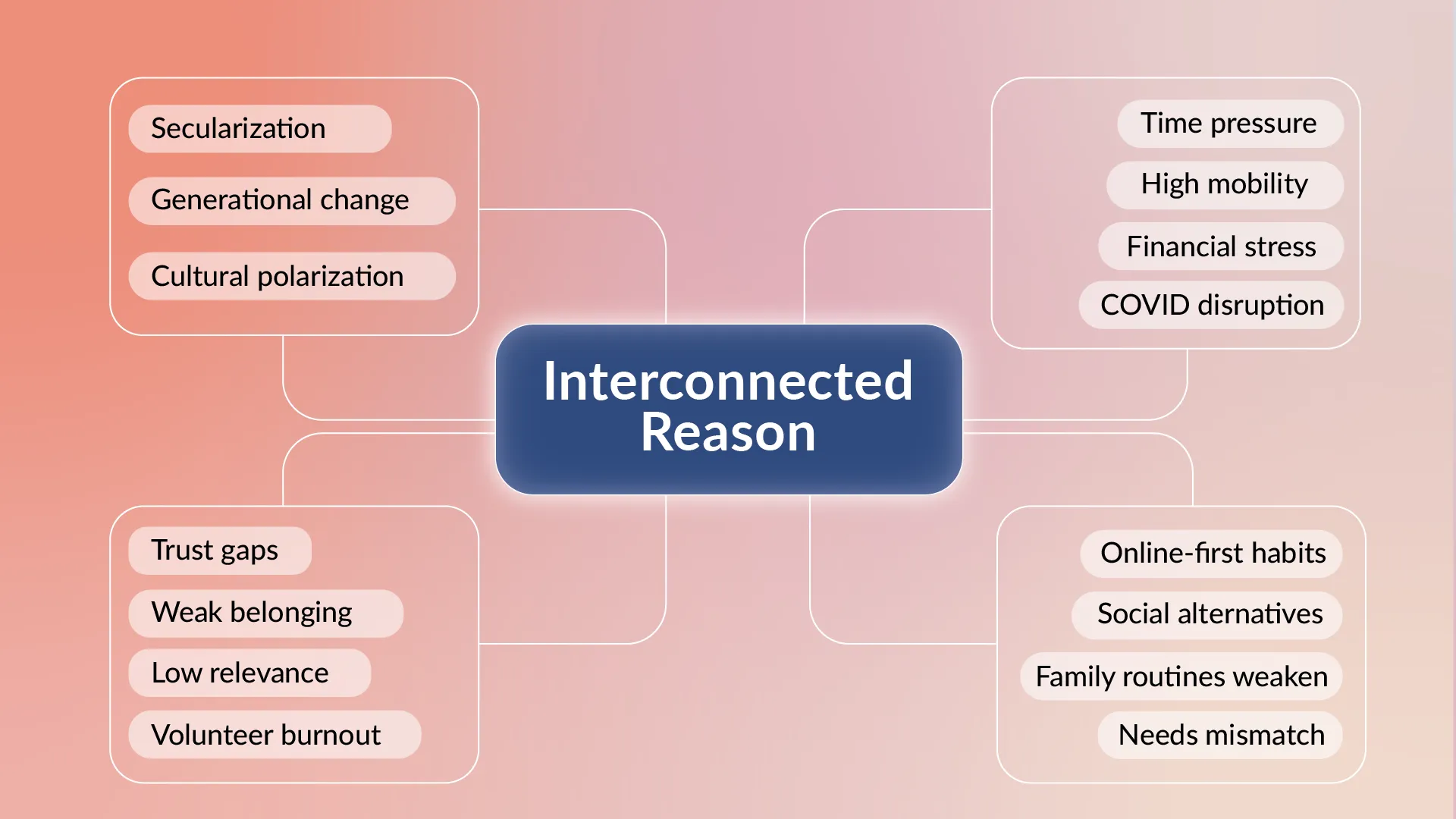
Reason 1: Secularization + the rise of "nones"
What it is: America is becoming less religious overall, with fewer people feeling a cultural obligation to attend church.
Evidence: The long-term cultural shift means church is no longer the "default" habit it once was. The percentage of Americans who identify as having no religious affiliation ("nones") has grown steadily, especially among younger generations. This is a decades-long trend toward secularization.
Real voice: Many in online forums explain they simply don't believe organized religion is necessary for living a good life. One Pew Research survey found 37% of non-attenders said they "practice their faith in other ways" and don't need church.
Need beneath it: Meaning and spiritual fulfillment. People still seek purpose, but they're finding it outside of church, through meditation, nature, philosophy, or personal spirituality.
Hopeful response: Churches that clearly articulate what they uniquely offer (community in Christ, sacraments, service opportunities, biblical truth) and live that out authentically can still attract seekers. Focus on being a place where people encounter God, not just a cultural routine.
What to measure: Newcomer retention (how many first-time visitors return), conversion/baptism rates.
Reason 2: Distrust in institutions (credibility gaps)
What it is: Widespread loss of trust in churches due to scandals, hypocrisy, and moral failures of leaders.
Evidence: Gallup found only 30% of Americans rate clergy high in honesty/ethics, down from 56% in 2001. High-profile abuse cases, financial mismanagement, and visible hypocrisy have badly damaged the church's reputation. Barna research notes that "repeated reports of abuse or hypocrisy have eroded trust, especially among women."|9]
Real voice: From Reddit: "I left after seeing church leaders preach love but gossip about people behind their backs. The hypocrisy was too much." Credibility issues are a recurring complaint in online church discussions.
Need beneath it: Trust and integrity. People need to see that church leaders live what they teach and that the community is genuinely caring, not just performative.
Hopeful response: Prioritize transparency, accountability structures, and authentic vulnerability from leadership. Acknowledge past failures openly and demonstrate lasting change. Trust is rebuilt slowly through consistent integrity.
What to measure: Sentiment surveys, volunteer health (are people willing to serve?), giving trends (financial trust indicator).
Reason 3: Time pressure + overscheduled weekends
What it is: Modern life is busier than ever, and church often loses out to kids' sports, work demands, and travel.
Evidence: Competing time demands have exploded. Youth sports leagues that play on Sunday, workplaces expecting weekend availability, and more frequent travel all crowd out church. Compared to a generation ago, more families take mini-vacations year-round, meaning they aren't in town every Sunday. |10]
Real voice: A common refrain: "Between soccer tournaments and work, we're just not home on Sundays anymore." Attendance is one of the clearest signals of engagement in any membership management community, and busyness directly impacts it.
Need beneath it: Flexibility and margin. People crave rest and family time, and they guard their limited free time fiercely.
Hopeful response: Offer flexible service times (Saturday evening, Sunday evening options), or create meaningful midweek touchpoints. Emphasize that showing up 2-3 times a month is valuable, not a failure. Help families integrate faith into their busy lives rather than adding another obligation.
What to measure: Attendance patterns by cohort (are families with kids attending less?), survey "why did you miss?" responses.
Reason 4: Mobility (people move and don't reattach)
What it is: Americans relocate frequently for jobs or school, and many never settle into a new church after moving.
Evidence: The transient nature of modern life chips away at church involvement. Starting over socially is costly, and church isn't always the default landing place when someone moves to a new city. People who might have attended in their old town simply don't reconnect.
Real voice: "I moved for work three years ago and still haven't found a church. It's harder than I thought to break into a new community." This sentiment appears repeatedly in online discussions.
Need beneath it: Belonging and community connection. People need to feel welcomed and included quickly, or they won't stick around.
Hopeful response: Develop intentional newcomer pathways: personal follow-up within 48 hours, clear next steps (join a small group, attend a newcomer lunch), and a culture where long-time members actively welcome new faces. Make "breaking in" easier.
What to measure: 4-week retention rate (% of first-time visitors who return at least once in the next month), newcomer conversion to members.
Reason 5: Online content makes "showing up" optional
What it is: High-quality online church services reduce friction but can also reduce in-person attendance.
Evidence: 91% of churches now stream services, giving people the option to watch from home. While this is a great first step for seekers, it also means regular attenders can catch the sermon via podcast later, freeing up Sunday morning. As one pastor noted, "our church streams the message for free via podcast", so the question becomes: why physically attend?|11]

Real voice: "I realized I could get the sermon content online and skip the hassle of getting the kids ready. Now we only go a couple times a month." This trade-off is common.
Need beneath it: Convenience and efficiency. People value their time highly and want spiritual input without the logistical effort.
Hopeful response: Position online as an on-ramp, not the destination. Emphasize what in-person offers that streaming can't: communion, fellowship, hands-on serving, kids' ministry. Create reasons to be physically present beyond just hearing a message.
What to measure: Online vs. in-person attendance ratios, engagement metrics (do online viewers eventually attend in person?).
Reason 6: Weak belonging (people don't feel known)
What it is: Many attenders feel anonymous or like outsiders, never truly connecting.
Evidence: Only about 1 in 4 young adults who left church say they felt like church cared about them. There's a difference between "friendly" (a handshake at the door) and "included" (invited into community). When people don't feel known or needed, they drift away.|12]
Real voice: From Reddit: "After years of faithful attendance I left and didn't return one day. Not one person from the 'family' reached out to me." The lack of follow-up validated the decision to leave.|13]
Need beneath it: Genuine belonging and mattering. People need to feel their presence is noticed and their absence would be missed.
Hopeful response: Build belonging systems, not just attendance moments. Implement simple follow-up rhythms (notice when someone misses 2 weeks, reach out personally), create pathways into small groups, and give people meaningful roles. Use tools like member check-in features to track engagement patterns and prompt care.
What to measure: 4-week retention, small group participation rate, volunteer involvement, "did anyone notice you were gone?" sentiment checks.
Reason 7: Sermons feel disconnected from real life
What it is: Preaching that doesn't address everyday struggles or leaves no room for questions feels irrelevant.
Evidence: 20% of young adults said "I dislike the sermons" was a very important reason for not attending|14], and 23% said church "provided superficial or poor Bible teaching". If sermons avoid tough topics or come across as repetitive lectures, people label church "out of touch."
Real voice: "It's the same message I've heard 100 times. Nothing about how to handle anxiety, work stress, or real doubts I have."
Need beneath it: Relevance and answers to life's questions. People need teaching that connects Scripture to their Monday-morning reality.
Hopeful response: Preach to real-life questions. Create space for Q&A after services or in small groups. Address contemporary issues through a biblical lens. Show how ancient truth applies to modern struggles. Depth and relevance aren't mutually exclusive.
What to measure: Sermon engagement (stay-through rate, post-service discussions), feedback surveys, attendance trends during different series.
Reason 8: Polarization and culture fatigue
What it is: People avoid churches that feel overly political or embroiled in culture war battles.
Evidence: Many have left churches that aligned tightly with a political party or agenda. For example, a Reddit user recounted leaving after hearing crude political jokes during church events, saying "the mix of politics and worship was too jarring". Churches seen as "judgmental" or too partisan risk alienating those who come seeking spiritual guidance, not political rallies.
Real voice: "I always felt like an outsider at church since I had more progressive views. Then I saw a drastic increase in secular political conservatism permeating every aspect of the church." That user stopped attending in 2015.
Need beneath it: Spiritual refuge and unity. People want a place to encounter God and find common ground in Christ, not fight ideological battles.
Hopeful response: Keep the main thing the main thing. You can have convictions without making church a political platform. Create space for Christians with different political views to worship together. Focus on biblical teaching and loving community over partisan talking points.
What to measure: Diversity of attendees (age, background, political leanings), exit interview feedback, sentiment around "welcoming" vs. "divisive."
Reason 9: Church no longer "runs the social calendar"
What it is: People now have countless alternatives for community beyond church.
Evidence: Generations ago, church was the primary social outlet. Now people find community through fitness clubs, hobby groups, online forums, coworking spaces, and more. As one pastor put it, "We now live in a culture that's drowning in options." The needs church used to meet (fellowship, support, purpose) can be met elsewhere.
Real voice: Young adults often find "their people" on Discord or Reddit around shared interests rather than at church.
Need beneath it: Community and shared purpose. People still crave belonging, just not necessarily in a church building.
Hopeful response: Don't try to compete with every social option. Instead, be excellent at what church uniquely offers: gospel-centered community, intergenerational relationships, service opportunities, and spiritual depth. Make church relationally sticky through authentic care.
What to measure: Newcomer sources (how did they hear about you?), retention by engagement level.
Reason 10: Family habit transfer is weaker
What it is: Fewer families build a weekly church rhythm, so attendance becomes occasional.
Evidence: Family patterns matter. When parents don't prioritize weekly attendance, kids don't form the habit either. The result? The next generation views church as optional. Monthly church attendance among committed churchgoers dropped from 34% to 28% in just two years pre-pandemic, showing even regulars were attending less often.
Real voice: "My parents went every Sunday without fail. I go when I can, which ends up being 2-3 times a month. My kids will probably go even less." This generational slide-down is a common pattern.
Need beneath it: Routine and family identity. Families need rhythms that ground them and shared activities that build identity.
Hopeful response: Help families see church as part of their family identity, not just another activity. Offer family-focused events and emphasize "we do this together." Provide resources for faith formation at home (family devotionals, parent coaching). Celebrate families who prioritize attendance.
What to measure: Family attendance consistency, generational retention (are kids of members staying connected?).
Reason 11: Youth disengagement (Gen Z expectations shift)
What it is: Young people have different expectations and see church as boring, judgmental, or irrelevant.
Evidence: Only 15-20% of Gen Z attends regularly, the lowest of any generation. Barna research found young adults cite churches as "anti-science," "judgmental about sexuality," and "unfriendly to doubt." 31% said church is boring, and 20% said they didn't experience God there.
Real voice: "Church never answered my hard questions. It felt like I had to pretend I had it all figured out." Authenticity and space for doubt matter to Gen Z.
Need beneath it: Authenticity, answers, and ownership. Young people want genuine community where they can ask hard questions and contribute meaningfully.
Hopeful response: Give youth ownership. Let students lead worship, choose service projects, and shape programming. Create safe spaces for doubt and questions. Be willing to engage science, mental health, and contemporary issues honestly. Student-led initiatives often improve engagement. (For ideas, check out these youth group fundraiser ideas that empower students.)
What to measure: Youth attendance by cohort, youth volunteer participation, retention into young adulthood.
Reason 12: Volunteer burnout (a small core carries everything)
What it is: When a shrinking pool of volunteers does more and more, they burn out and quality suffers.
Evidence: 36% of pastors said "declining or inconsistent volunteering" is a major issue facing their church.|15], As attendance drops, so does the volunteer base. A small core gets overextended, programs suffer in quality, and that drives more people away. It's a vicious cycle.

Real voice: "I was running kids' ministry by myself for two years. I finally had to step down. I was exhausted, and I don't think the church even noticed how close to the edge I was."
Need beneath it: Shared load and sustainable ministry capacity. Volunteers need to feel supported and not exploited.
Hopeful response: Broaden the volunteer base by making it easier to serve (short-term commitments, clear roles, good training). Celebrate and care for volunteers. Rotate responsibilities to prevent burnout. Sometimes less is more: cut back programs to sustainable levels rather than run everything poorly.
What to measure: Volunteer count and hours, turnover rate, volunteer satisfaction surveys.
Reason 13: Financial pressure + stress reduces participation
What it is: Economic hardship means people work extra shifts, have less margin, and attend less.
Evidence: Cost of living increases, longer work hours, and financial stress leave people with less energy for commitments. Some work multiple jobs or gig work that requires weekend hours. This isn't a lack of commitment; it's survival mode.
Real voice: "Between two jobs and trying to pay rent, I just don't have the bandwidth for church on Sunday mornings. I'm exhausted."
Need beneath it: Rest and practical support. Financially stressed people need tangible help, not just spiritual encouragement.
Hopeful response: Meet practical needs. Offer financial counseling, job networking, or even a benevolence fund. Show that church is a place that lightens burdens, not adds to them. Be flexible with service times for those working non-traditional schedules.
What to measure: Member needs assessments, benevolence requests, attendance correlation with local economic indicators.
Reason 14: COVID broke routines (some never rebuilt them)
What it is: The pandemic disrupted church-going habits, and many never restarted.
Evidence: During shutdowns, people got used to watching from home or realized they didn't miss Sunday services as much as expected. Some formerly frequent attenders simply broke the habit permanently. Even those who wanted to return faced new norms: hybrid attendance became acceptable, and the pressure to be there every week diminished.
Real voice: "We stopped going during COVID and just… never went back. It wasn't intentional at first, but now it's been three years."
Need beneath it: Renewed invitation and habit formation. People need a reason to rebuild the routine.
Hopeful response: Personally invite people back. Don't assume they'll just return on their own. Reach out with warmth, not guilt. Make re-entry easy: offer connection points beyond just Sunday service (small groups, service projects). Acknowledge the disruption and help people form new rhythms.
What to measure: Pre-pandemic vs. current attendance lists (who hasn't returned?), outreach response rates.
Reason 15: "Needs mismatch" (people still want meaning, just not in that format)
What it is: People haven't stopped seeking meaning and community; they've changed channels.
Evidence: As one researcher noted, "Our culture hasn't stopped being spiritual; people just explore spirituality outside of church." They seek meaning through volunteer work, online communities, wellness practices, or personal spirituality. The need for purpose remains; church just isn't meeting it for them.
Real voice: "I feel more connected to God on a hike than I ever did sitting in a pew." Or: "I get my sense of purpose from serving at the food bank, not from church."
Need beneath it: Meaning, purpose, transcendence. Universal human needs that church used to uniquely fill.
Hopeful response: Map your church's offerings to these core needs. Are you providing genuine community? Opportunities for meaningful service? Space for encountering God? Deep relationships? If not, refocus. Meet people's real needs with the unique resources of gospel-centered community.
What to measure: Member satisfaction with sense of purpose/belonging, exit interviews asking "what need went unmet?"
Needs Map Table
What People Are Saying (Real-World Patterns from Discussions)

Top "why I stopped going" themes
Looking at actual conversations in Reddit threads and forums, here are the most common reasons people give for leaving church:
- "I practice my faith in other ways." 37% of non-attenders say they can be religious/spiritual on their own. Example: "I just want a place to connect with God. When I realized I could do that anywhere, anytime, I stopped going."
- Church feels cliquish or unwelcoming. "Some churches feel like 'members only'... I have been made to feel like an outsider for 20 years." Newcomers struggle to break into established social circles.
- Too judgmental/hypocritical. "Too many judgmental people" tops many lists. Stories of gossip, moral failures, and harsh attitudes drive people away.|16]
- Sermons are boring or irrelevant. "It's the same message I've heard 100 times." 20% of young adults dislike the sermons, citing lack of depth or connection to real life.
- Too political. "The mix of politics and worship was too jarring and shocked me out." People seeking spiritual guidance don't want partisan rallies.
- I don't feel God's presence there. 20% of young adults said they didn't experience God at church, so it felt spiritually empty.
- Too busy / no time. 22% cite "not having time" as a key reason, with work, kids' activities, and life demands crowding out church.
- No one noticed when I left. "After years of faithful attendance... Not one person from the 'family' reached out to me." Lack of follow-up validates the decision to leave.
Top "what would bring me back" themes
What would draw people back? Here's what matters most:
- Genuine belonging and care. People want to be known, not just greeted. They want their absence noticed and their presence valued.
- Authenticity and transparency. Space for doubts, questions, and real struggles without judgment. Leaders who are vulnerable about their own challenges.
- Relevant teaching. Sermons that address everyday life: work stress, relationships, mental health, doubts, parenting, finances.
- Practical support. Help with real needs: job networking, financial counseling, meals during crises, childcare assistance.
- Meaningful service opportunities. Clear ways to make a difference locally and globally. People want to contribute, not just consume.
What pastors/leaders mention (operational reality)
From the leadership side, church leaders cite these challenges:
- Volunteer load. 36% of pastors say declining volunteering is a major issue. Small core gets burned out running everything.
- Follow-up gaps. Hard to keep track of who's missing and reach out personally, especially without good systems.
- Kids ministry logistics. Lack of volunteers, parents anxious about safety, not enough children for peer fellowship in smaller churches.
- Program overload. Trying to maintain too many programs with shrinking capacity leads to everything done poorly rather than a few things done well.
The gap between what people want (genuine community, relevant teaching, practical support) and what struggling churches can provide (understaffed, overextended, focused on maintenance) is real. Bridging this gap requires hard choices and strategic focus.
What Churches Can Do in 2026 (Inspiring, Realistic, Measurable)
Here's the good news: churches that adapt thoughtfully can stabilize or even reverse decline trends. These aren't silver bullets, but practical steps that work.
Build belonging systems (not just attendance moments)
People stay where they feel known and needed.
Simple follow-up rhythm: Notice when someone misses 2-3 weeks and reach out with genuine care (not guilt). Text or call: "Hey, haven't seen you. Everything okay?" Many churches use member check-in tools to track attendance patterns and trigger follow-up prompts.
Newcomer pathway: First-time visitors should get personal follow-up within 48 hours, a clear invitation to the next step (newcomer lunch, small group), and a "buddy" or connector who helps them navigate. Make it easy to belong.
Small groups as glue: When people participate in small groups, they're exponentially more likely to stick around. Prioritize connecting people into these communities.
3 measurable signals:
- 4-week retention rate (% of first-time visitors who return within a month)
- Small group participation (% of attendees in a group)
- Volunteer health (volunteer count and satisfaction)
Make hybrid a bridge (online → in-person relationship)
Don't fight online church. Use it as an on-ramp.
Online as first step, in-person as deep step. Many people discover your church online first. Treat that as the start of a relationship, not a failure. Invite online viewers to specific in-person events: newcomer lunches, service projects, special worship nights.
Don't shame online attendance. Some people genuinely can't attend in person due to health, caregiving, or work schedules. Affirm their participation. But also create compelling reasons to be physically present: community, hands-on serving, kids' ministry excellence.
Measure the funnel: Track how many online viewers eventually attend in person or join a small group. Celebrate movement toward deeper engagement.
Create repeatable community touchpoints (events + service)
Church isn't just Sunday morning anymore.
Low-friction events: Monthly social gatherings, seasonal celebrations, game nights, cookouts. Easy ways for people to connect outside the formal service. Use event management tools to organize and track participation.
Service projects: Quarterly or monthly community service days. People bond through serving together, and it shows the church cares about the neighborhood. Many find purpose here.
Student-led nights: Give youth and young adults ownership of planning and leading events. Increases their investment and draws their friends.
Reduce admin load so leaders can focus on people
Churches shouldn't drown in spreadsheets.
Attendance tracking and follow-up should be easy, not a burden. Church attendance software can automate check-ins, generate follow-up lists, and free up leaders to actually care for people instead of managing data. For practical guidance, see how to check in a member.
The goal: spend less time on admin, more time on relationships. Systems should serve people, not enslave leaders.
Track what matters (the 5 signals that predict retention)
Measure what you can improve. Here are 5 metrics that actually matter:
- Attendance patterns by cohort (families with kids, singles, young adults, seniors). Which groups are disengaging?
- 4-week retention rate (newcomers who return). Are you creating stickiness?
- Small group participation (% of attendees). Connected people stay.
- Volunteer participation (active serving rate). Serving creates ownership.
- Giving trends (if you discuss finances). Giving follows engagement and trust.
If you want help tracking these, consider using a donations feature alongside attendance tools. Data without action is useless, but data that informs care is powerful.
Brief Note: Church Attendance Software & Trackers
Many churches use church attendance tracking tools as part of their broader church management software suite. These aren't magic solutions, but they can help.
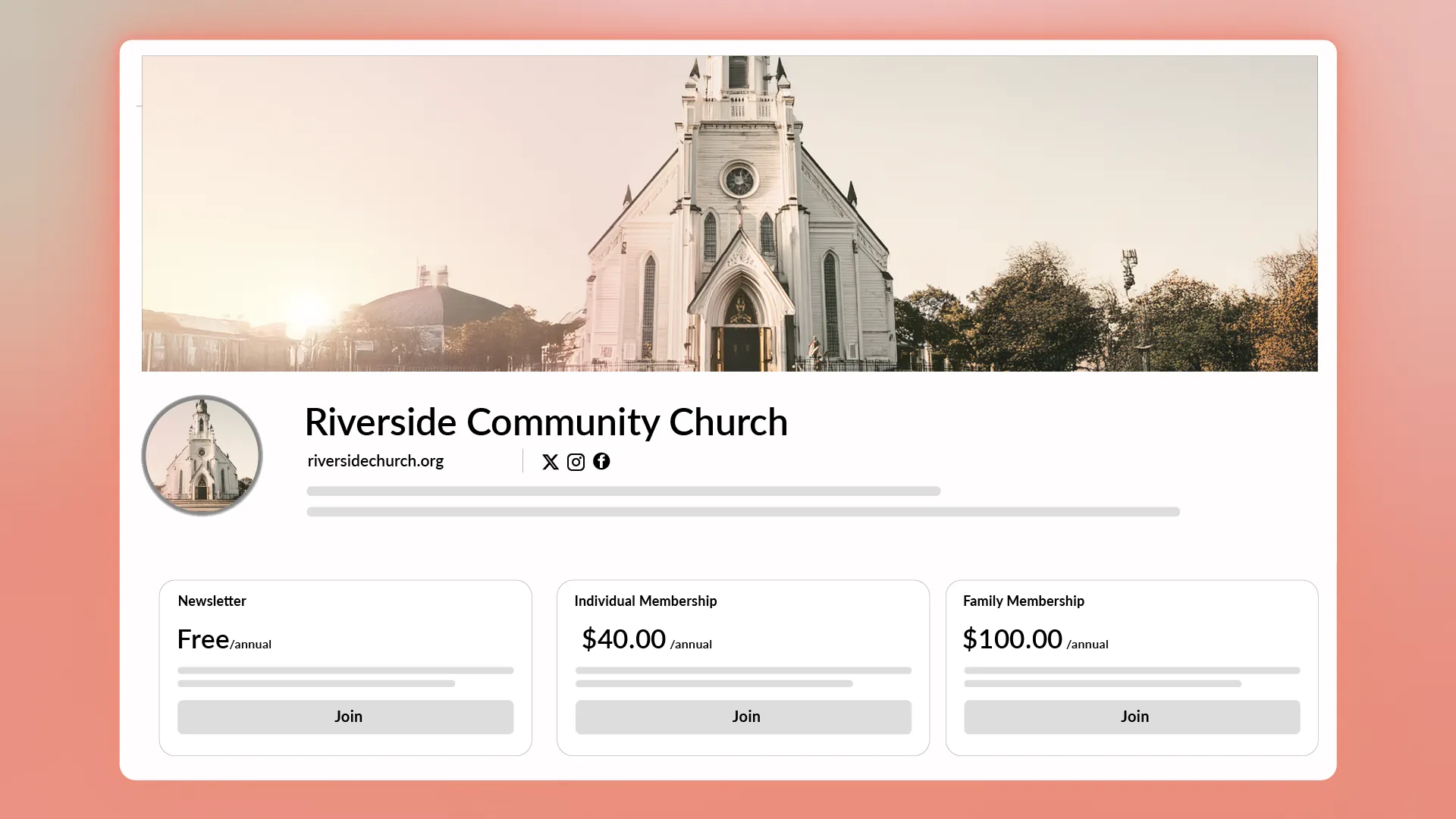
What these tools do (core use cases)
Church attendance software typically offers:
- Check-in systems for services, small groups, and kids' ministry (often tablet-based or kiosk)
- Attendance reporting (trends over time, who's missing, average attendance)
- Follow-up lists (automated alerts when someone misses X weeks)
- Mobile apps for leaders and members
- Integrations with giving, communications, and member databases
The goal is to move beyond paper sign-in sheets to accurate digital records that inform better care.
Common complaints (stay realistic)
No system is perfect. Common issues:
- Setup friction: Inputting all member data and training volunteers takes time upfront
- Volunteer adoption: Some volunteers resist new tech or find it complicated
- Cost scaling: Pricing based on congregation size can get expensive for larger churches
- Reliability: Wi-Fi issues or glitchy apps can cause Sunday morning chaos
- Privacy concerns: Some members are wary of being "tracked"
The key is choosing a user-friendly system and investing in training. And remember: the tool serves the mission (caring for people), not the other way around.
Where to go next (optional resources)
If you're exploring tools, check out:
- Digital membership cards for modern member experience
- Comparison guides for choosing the right platform
But don't let the search for perfect tools delay taking action. Even simple spreadsheets with consistent follow-up rhythms beat fancy software that goes unused.
FAQ
What is the meaning of church attendance?
Church attendance refers to how often someone participates in religious services or church activities, measured by frequency (weekly, monthly, seldom, or never). It's a key indicator of religious engagement and community involvement.
Why is church attendance declining?
Church attendance is declining due to multiple factors: cultural secularization, loss of trust in institutions, busy schedules competing for time, online alternatives reducing in-person need, weak belonging systems, and the COVID-19 disruption of routines. It's rarely one reason alone.
Is church attendance increasing or decreasing?
Church attendance is decreasing overall in the U.S. Only about 20% attend weekly today compared to 30% two decades ago. While some individual churches are growing (especially non-denominational ones), the national trend is downward across most denominations.
Is Gen Z going to church more?
Gen Z churchgoers attend more frequently (23 services/year) than older generations who attend (Boomers average 17 services/year). However, fewer Gen Z individuals attend church at all compared to older generations, creating a smaller but more committed core.
What's the average church attendance?
Average church attendance varies widely by denomination and region, but most U.S. churches average between 50-150 attendees on a typical Sunday. Larger churches (megachurches with 2,000+) are relatively rare, making up less than 1% of congregations.
Are church attendances up?
No, church attendances are generally down. Most U.S. churches are at about 85% of their pre-pandemic levels as of 2024, with many still working to recover those who haven't returned since COVID-19 shutdowns.
Closing
Here's what the data tells us: church attendance statistics show a real decline, driven by a complex mix of cultural shifts, trust issues, time pressures, and unmet needs.
But here's what matters more: people still want meaning, community, and purpose. They haven't stopped seeking connection or transcendence. They've just changed where and how they look for it.
The opportunity for churches in 2026 is to meet those needs well. Not through gimmicks or desperate programming, but through authentic gospel-centered community, relevant teaching that addresses real life, genuine belonging systems, and practical support for people's actual struggles.
Will every church reverse the trends? No. Some closures and consolidations are likely. But churches that focus on being excellent at what only church can uniquely provide (worship, sacraments, biblical community, service, gospel hope) and do so with authenticity, flexibility, and warmth will find people respond.
If you want practical ways to build community and bring people back consistently, check out these resources on how to grow church membership.
The numbers are sobering, but they're not the end of the story. The church has weathered storms before. With honest assessment, faithful adaptation, and reliance on God's grace, it can do so again.
References
- ChurchTrac. The State of Church Attendance Trends and Statistics 2023
- Gallup. Church Attendance Has Declined in Most U.S. Religious Groups
- Pew Research Center. How COVID-19 Affected U.S. Religious Life
- Religion Unplugged. Everything You Want To Know About Who's Watching Online Church
- Christianity Today. Study: Gen Z Now Leads in Church Attendance
- Star Tribune. As Minnesota Churches Close, A Way of Life Fades
- Online Baptist. The States With The Lowest Rate Of Church Attendance In 2022
- Vanco Payments. 2025 Church Attendance Statistics
- Barna Group. New Research: Men vs Women at Church
- Aimee Barreto. 10 Reasons Church Attendance Is Declining
- Carey Nieuwhof. The REAL Reasons Attending Church No Longer Makes Sense
- Reddit. What Caused You to Stop Going to Church?
- Reddit. Why Do So Many People Stop Going to Church?
- Pew Research Center. Why Americans Go to Religious Services
- Barna Group. What's on the Minds of America's Pastors
- Equipping Godly Women. 12 Reasons Why Americans Have Stopped Going to Church

Guides from the Experts
Through our work with 4,000+ organizations - we’ve put together helpful guides to assist; regardless of where you are on your journey.
.webp)

A Complete Guide to Membership Organizations
Everything you need to know to manage and grow your membership business
.webp)
Maximize Membership Retention: 10 Proven Strategies
Tried and true strategies that not only win membership, but keep them

Build a Membership Website: A Step-by-Step Guide
Your one-stop resource for knowing all the features your modern membership website needs
Ready to start your free trial?
Our membership software is intuitive to use and even easier to test for yourself.