
How to Calculate Membership Pricing (Free Calculator + Tier Examples)



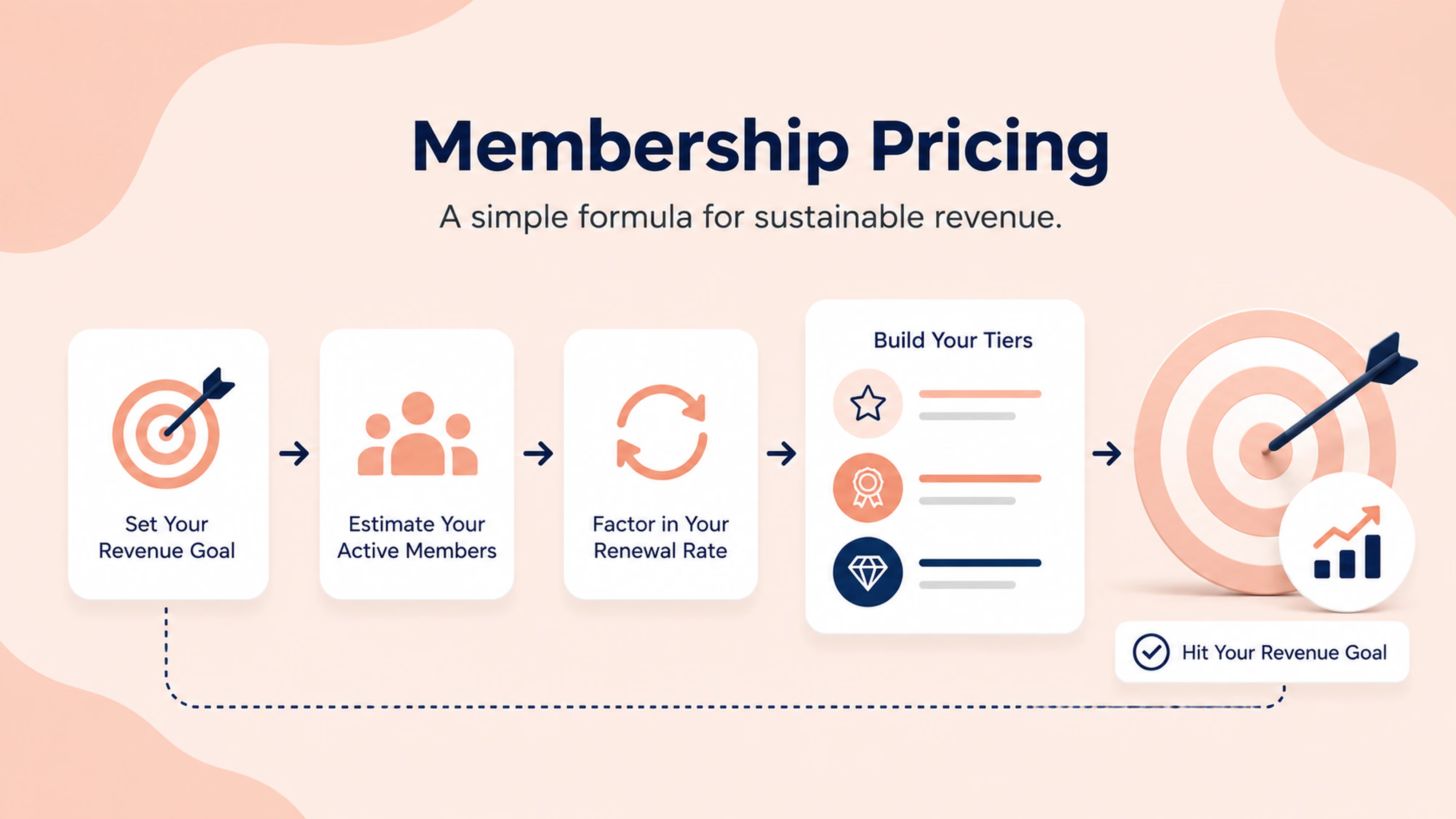
There is no universal membership price. The right number comes from working backward: start with a revenue goal, divide it across realistic membership tiers, then subtract what you'll lose to churn. Most organizations model three tiers and land on a blended average that hits their target. The fastest way to do this is a membership pricing calculator — plug in your goal, member count, and renewal rate, and see the numbers in under a minute.
Below is the method the calculator uses, the benchmarks worth checking your numbers against, and worked examples you can adapt.
Start with the goal, not the price tag
Guessing a price first is backward. Instead, anchor on three inputs:
- Annual revenue goal — what membership needs to bring in this year.
- Expected active members — a realistic count, not a hopeful one.
- Renewal/retention rate — the share of members who come back each cycle.
Divide your revenue goal by your expected members and you get the average dues per member you need. From there, you build tiers around that average rather than picking a round number and hoping it adds up.
Quick answer: To calculate membership pricing, divide your annual revenue goal by your expected number of members to find your target average dues, then design tiers above and below that average. Adjust for the members you'll lose to churn.
Build tiers around your target average
Two to three tiers is the sweet spot. More than that tends to create decision paralysis and pushes people toward the cheapest option. A common structure places an entry tier below your average, a "recommended" middle tier at or slightly above it, and a premium tier for your most committed members.
Here's an illustrative model for an organization targeting $120,000 from 500 members (a $300 blended average):
Illustrative example only — your split will differ by organization type.
Two pricing choices matter as much as the numbers:
- Anchor the middle tier. Highlighting a "recommended" plan guides members toward it and lifts your average dues without raising any single price.
- Offer monthly and annual. Monthly billing lowers the barrier to joining; annual billing improves commitment and stabilizes cash flow. You can collect both with recurring billing, so members choose the cadence that suits them.
For a deeper look at models, discounts, and dues increases, Join It's guide to membership pricing strategy covers the full playbook.
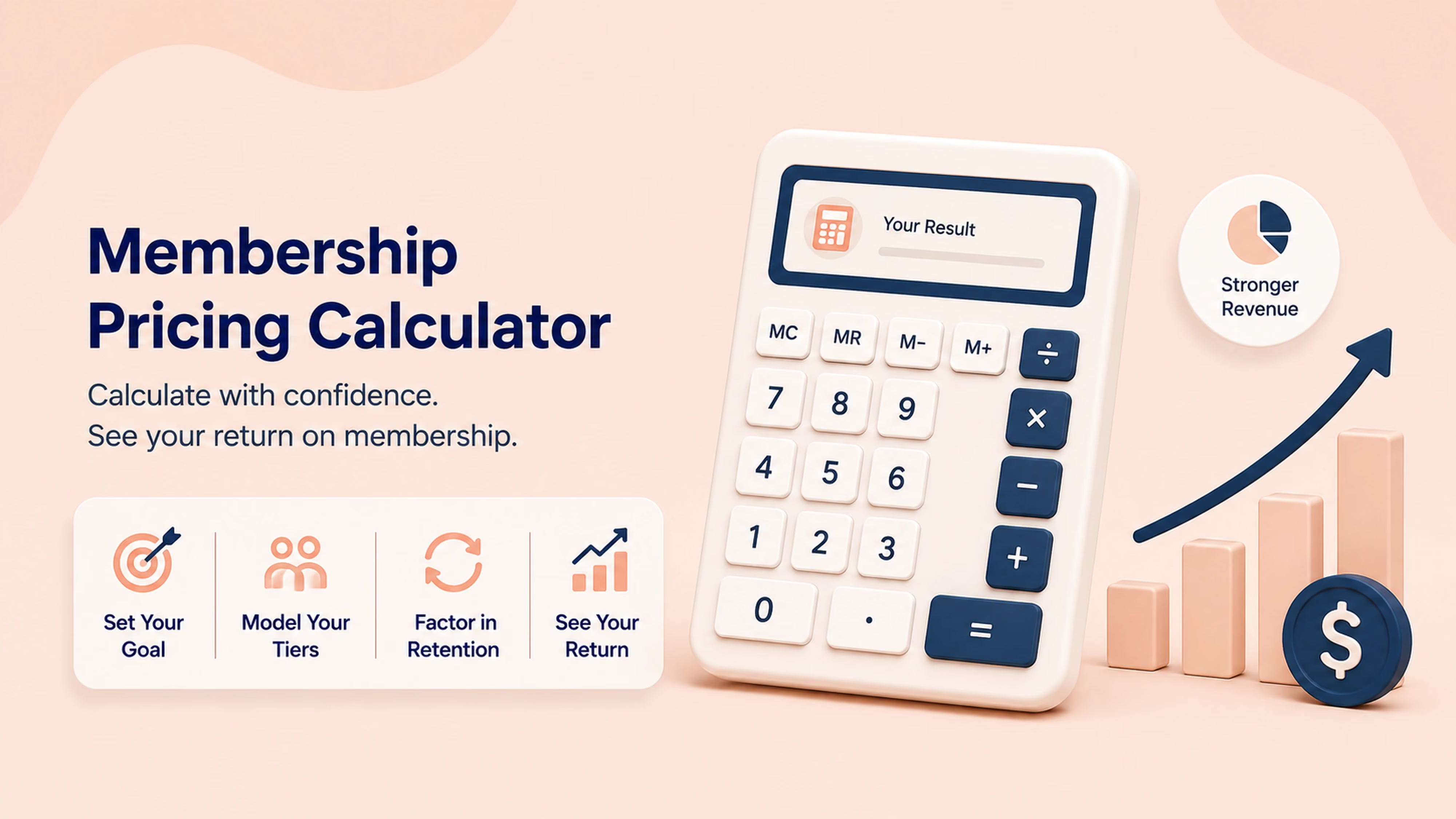
Subtract what churn takes back
Your projected revenue is only real if members renew. At an 80% renewal rate, one in five members doesn't return — and that gap comes straight out of your revenue model. Widely cited retention research suggests even a 5% improvement in retention can meaningfully increase profitability, because keeping a member costs far less than recruiting a new one.
A large share of that loss is involuntary — expired cards and failed payments, not members who actually wanted to leave. That's recoverable revenue. Automated renewal reminders and consistent recurring billing catch a meaningful portion of it before a member ever lapses. To go further, see Join It's member retention guide and its playbook on winning back lost members.
Check your number against benchmarks
Benchmarks won't set your price, but they'll tell you if you're wildly off. A few reference points:
- Association renewal rates typically sit around 80–85%, per commonly cited association benchmarking research, with first-year renewals often lower.
- Gym/fitness dues average roughly $65/month, per the Health & Fitness Association — though higher-priced clubs have grown fastest, showing value perception beats raw price sensitivity.
- Mission-driven organizations sometimes do well with voluntary or sliding-scale dues, where removing the barrier grows membership without gutting revenue.
Compare yourself to organizations of your type and size — a local arts nonprofit shouldn't benchmark against a national medical association.
Membership pricing by organization type
Practical buying criteria for a pricing/dues tool
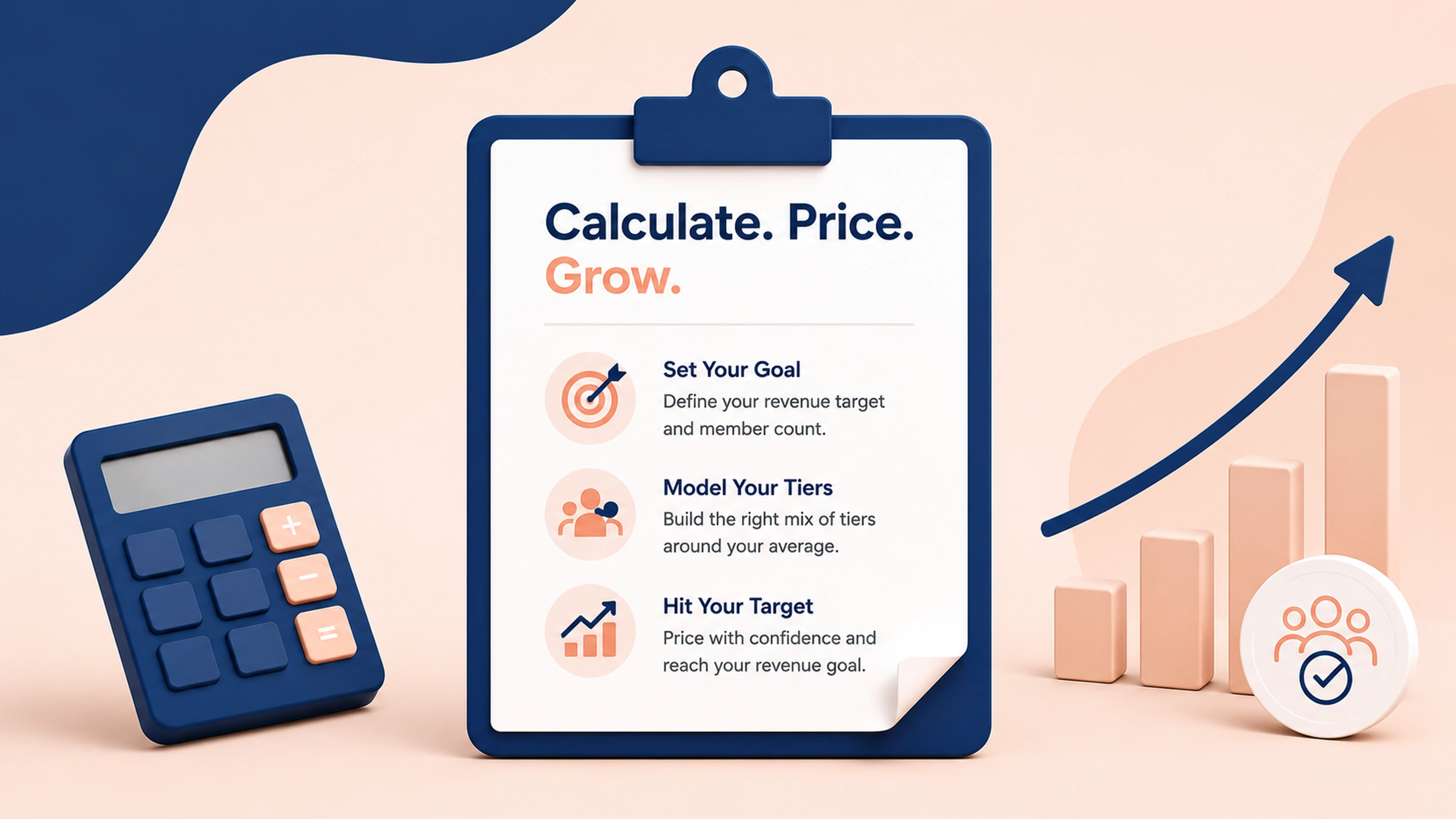
If you're evaluating software to run your pricing model, weigh:
- Unlimited tiers and price levels so your structure isn't capped.
- Monthly and annual billing out of the box.
- Automated renewals and reminders to protect the revenue you've modeled.
- Transparent fees — watch for setup fees, per-member charges, and transaction/service fees layered on top of payment processing.
- A clean member database and reporting that shows revenue by tier and renewal trends.
Where Join It fits
Join It is membership management software that lets you set up tiered pricing, collect dues online, and automate renewals — pricing starts under $29 a month. You can build the exact tier structure from the example above, collect recurring payments, send renewal reminders automatically, and give members a self-serve member portal and digital membership cards.
Join It is best for small-to-midsize associations, nonprofits, clubs, and communities that want a straightforward setup without enterprise complexity. A larger platform may fit better if you need a full association management system with heavy course/LMS delivery, complex chapter or organization-based billing, or deep custom AMS workflows. If you're comparing options, Join It's roundup of the best membership management software lays out the trade-offs.
Frequently asked questions
How much should I charge for membership?
Divide your annual revenue goal by your expected member count to find the average dues you need, then build tiers around that average. There's no fixed number — it depends on organization type, member value, and billing cadence.
How do I use a membership pricing calculator?
Enter your revenue goal, expected members, renewal rate, and number of tiers. The calculator returns a suggested tier structure, your average dues, projected revenue, and an estimate of revenue lost to churn.
How many membership tiers should I offer?
Two to three is ideal. Beyond that, most organizations see decision paralysis and members defaulting to the cheapest tier.
Should I charge monthly or annually?
Offer both. Monthly billing lowers the barrier to joining; annual billing increases commitment and stabilizes cash flow. Annual plans often carry a modest discount to encourage prepayment.
How does churn affect my pricing?
Churn reduces the revenue your model predicts. Much of it is involuntary — failed payments and expired cards — which automated reminders and recurring billing can recover.
Does Join It support tiered pricing and recurring dues?
Yes. Join It supports unlimited price levels, monthly and annual billing, and automated renewals, with pricing that starts under $29 a month.
Conclusion
Membership pricing isn't a guess — it's arithmetic you can run in minutes. Set your revenue goal, divide it into realistic tiers, and protect the total against churn. Once you have your numbers, a tool like Join It lets you turn the model into a live signup and billing setup without spreadsheets. Run your numbers in the membership pricing calculator to see your suggested tiers and projected revenue.
.avif)
Guides from the Experts
Through our work with 4,000+ organizations - we’ve put together helpful guides to assist; regardless of where you are on your journey.
.webp)

A Complete Guide to Membership Organizations
Everything you need to know to manage and grow your membership business
.webp)
Maximize Membership Retention: 10 Proven Strategies
Tried and true strategies that not only win membership, but keep them

Build a Membership Website: A Step-by-Step Guide
Your one-stop resource for knowing all the features your modern membership website needs
Ready to start your free trial?
Our membership software is intuitive to use and even easier to test for yourself.