Should Your Organization Offer Members-Only Events?


Offer members-only events when members have a clear reason to want the room to themselves. That might be a confidential peer discussion, a coaching session with limited seats, or a workshop their dues help fund. Open the doors when the purpose is to introduce people to your community. If both groups belong in the room but space is tight, give members first access and release remaining seats on a published date.
Which event access model fits your goal?
Start with one question for the organizer: Who would miss out if this event filled up tomorrow? If the answer is “the members who paid for time with our instructor,” protect their seats. If it’s “the neighbors we hoped would meet us for the first time,” make sure someone without a membership can register.
When is a members-only event worth offering?
Reserve the room when limiting attendance makes the experience materially better. Imagine a professional association running a peer roundtable where each participant brings a difficult client scenario. Members have a reason to return if they can speak candidly and everyone gets time to contribute. Explain who may attend, agree on how participants may share what they hear, and tell people whether the session will be recorded. A membership check alone cannot promise confidentiality.
Capacity is another good reason. A ceramics club with six wheels can promise six members actual practice time. “Bring a piece and spend an hour at the wheel with our instructor” gives members a clearer picture of what their dues support than calling the workshop exclusive. If the same six people always book first, try a second session or give the next opening to someone on the waiting list.
When should nonmembers be able to attend?
Open registration when meeting newcomers is part of the event itself. A local history society could welcome the public to a neighborhood walk. A visitor can try the activity, meet the guide and see whether they would enjoy coming back. Requiring them to join before they have met anyone puts the biggest decision at the start.
Give newcomers an obvious way in. Say whether they can attend alone, where to find the host and what to bring. At the end, invite them to a specific next activity. “Members can join next month’s archive visit” tells a visitor more than “Become a member today.” If the public event has a capacity limit, ask everyone to reserve a place, including members.
How can members get priority while guests still have a way in?
Hybrid access means members and nonmembers can attend under different booking rules. Here it describes who can book, regardless of whether the event takes place online or in person. Choose the simplest rule that protects the member benefit.
- Give members a head start when demand is uncertain. Publish the date, time and time zone when public booking opens. Make clear whether unclaimed seats are the only ones available to guests.
- Hold a member allocation when recruitment matters enough to guarantee some guest places. For a 30-seat dinner, an organizer might set aside 20 places for members and 10 for guests. Decide when unused places in either group become available to the waiting list.
- Split the program when only one part benefits from privacy. Run a public talk followed by a member workshop. Show separate start times and ticket entitlements so nobody learns at the door that their evening has ended.
What should the guest and pricing policy say?
Write the invitation before you configure the tickets. Can a guest book independently? Must the host attend? Does a household membership cover a partner? What happens if a member cancels both places? Give the registration volunteer the same answers you give attendees.
Example invitation for a club dinner
“Members can book through October 5 at 5 p.m. Eastern. Starting October 6 at 9 a.m. Eastern, each attending member may register one guest while seats remain. Member tickets are $15 and guest tickets are $25. The price includes dinner. If you or your guest can’t attend, reply to your confirmation so we can offer the seat to someone on the waiting list.”
Set prices around a benefit you can explain. If dues cover the room and tickets cover dinner, say so. If a guest ticket costs more, show both prices before anyone starts booking. For a recruitment event, consider whether the guest price leaves a newcomer comfortable trying one meeting.
Plan accessibility separately from eligibility. Publish venue access details or online participation options, name a contact for accommodation requests and explain how someone can arrange to attend with a support person. Give the check-in team that policy so the attendee can rely on the answer they received. The W3C accessible events checklist covers planning for in-person and remote participants.
How do you put the access rule into practice?
Ask one current member, one guest and one organizer to walk through booking before you announce the event. Check what each person can see, which ticket they can buy and what the confirmation promises. Try a lapsed membership as well. Decide who can resolve a renewal or a guest-list discrepancy on event day.
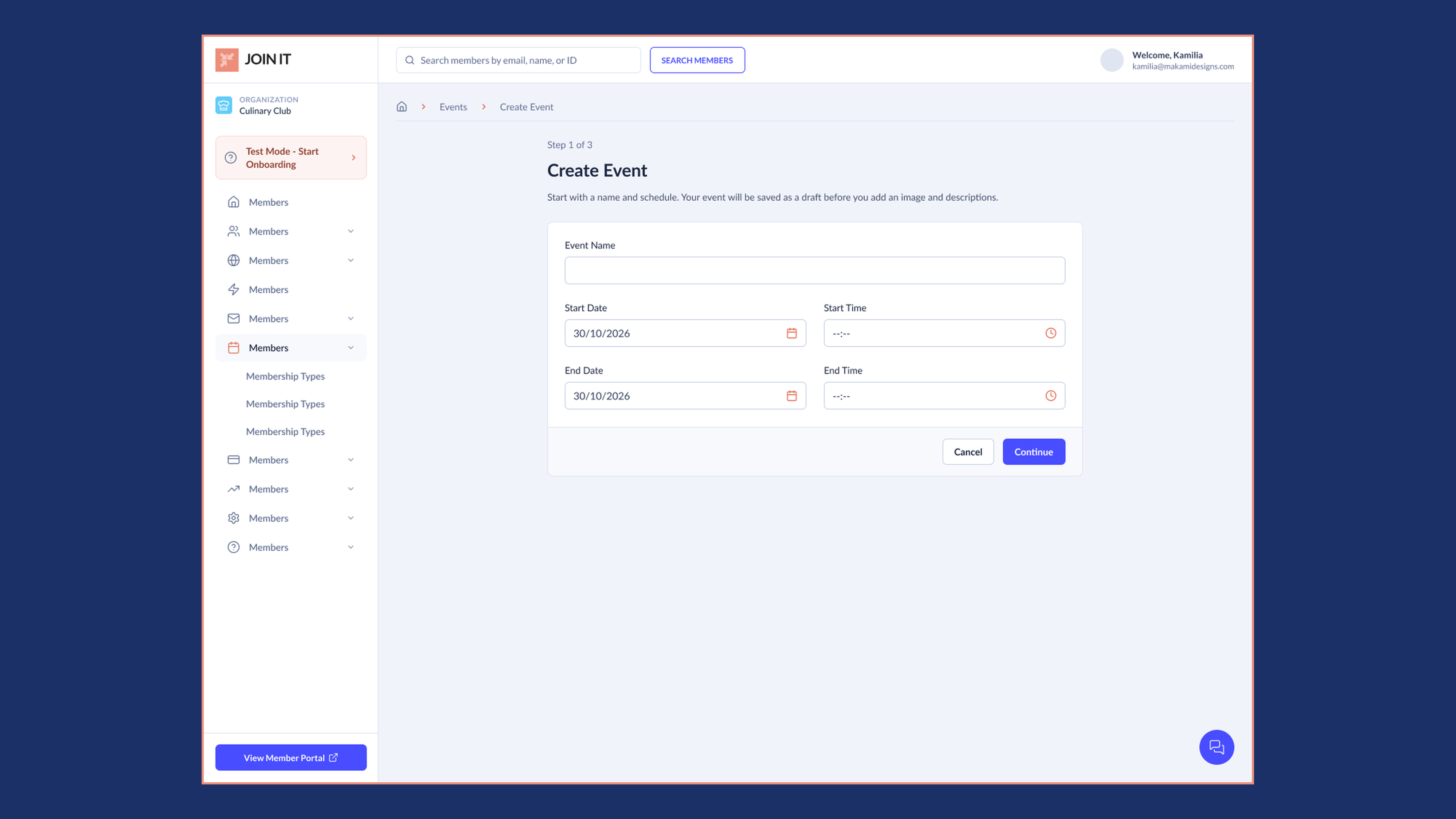
Join It’s member event registration lets organizers create free or paid registration types and apply access or pricing rules using membership type and status. For a chapter team comparing membership software for professional associations, a useful test is whether a current member can book the correct rate without asking a volunteer for a code. If your team already uses Eventbrite, Join It’s Eventbrite integration for member events offers a separate route for member access and early ticket codes.
For a conference with reserved seating or separate headcounts for concurrent workshops, test those exact requirements with your ticketing provider before choosing a setup. Bring a sample booking that includes a member, a guest and a session change.
How will you know whether the policy worked?
Pick a measure that reflects the reason you chose the format. For a member workshop, count eligible members who attended and those still waiting for a seat. For an open house, count first-time visitors who attended and how many took the next step you offered. For a priority booking window, record how many seats members claimed before public release and whether anyone was turned away afterward.
Review those figures alongside one question for attendees: “What, if anything, made it difficult to take part?” An empty seat might reflect an awkward start time, a late cancellation or an unclear invitation. Use the answers to choose one change for the next event. Join It’s guide to measuring member event success can help you plan that review.
Frequently asked questions
Should every event be members only?
Reserve the events where membership changes what people can do together. An association can keep its peer advisory sessions private while opening a speaker evening to prospective members. Publish both on the calendar and identify who can book each one.
Can a members-only event allow guests?
Yes, if the policy explicitly allows a guest. Call it a “member and guest event,” specify the guest limit and say whether the member must attend. For a private peer discussion, explain any guest exception to participants before they register.
Should members attend for free?
Free entry makes sense when dues already cover the activity and capacity allows it. When each additional attendee adds a cost, such as a meal or materials, a member ticket can cover that expense. Tell members what their dues cover and what the ticket buys.
Choose the rule for your next event
Finish this sentence before you open registration: “We’re holding these seats for ___ because ___.” Put that reason, the price and the booking deadline in the invitation. If your team wants to connect event eligibility to its membership records, start a free Join It trial and test the registration path for your next event.

Guides from the Experts
Through our work with 4,000+ organizations - we’ve put together helpful guides to assist; regardless of where you are on your journey.


A Complete Guide to Membership Organizations
Everything you need to know to manage and grow your membership business

Maximize Membership Retention: 10 Proven Strategies
Tried and true strategies that not only win membership, but keep them

Build a Membership Website: A Step-by-Step Guide
Your one-stop resource for knowing all the features your modern membership website needs
Ready to start your free trial?
Our membership software is intuitive to use and even easier to test for yourself.