15 Proven Tactics for Starting a Membership Community


Most membership communities don't fail because the idea was bad.
They fail on the first Tuesday after launch. When nobody posts anything. When the founder refreshes the page waiting for activity that never comes. When early members quietly drift away before the community ever finds its footing.
According to CMX's Community Industry Trends report, 88% of community professionals say community is critical to their company's mission. Yet most new communities still struggle to survive the first 90 days.
The problem is not the idea. It is the launch.
This article gives you 15 proven tactics to build a membership community that starts strong, attracts real founding members, and creates engagement that genuinely lasts. Whether you are growing an association, a nonprofit, a club, a creator business, or a niche group, these strategies apply to every membership organization ready to build something meaningful.
Let's start.
What Is a Membership Community?
A membership community is a structured group of people connected by a shared purpose, interest, or identity. Members have access, participate in discussions, attend events, and maintain an ongoing relationship with the group.
The "membership" part matters. It means members are known, organized, and managed in some way. Think profiles, renewals, dues, events, and communication. This is different from an open online forum or a casual Facebook group that anyone can join without structure or accountability.
Common membership community examples:
- Professional association communities
- Nonprofit supporter and volunteer communities
- Alumni groups and club communities
- Paid creator and educator communities
- Niche peer-to-peer learning groups
Why Membership Communities Matter in 2026
Here is a number worth saving.
According to Circle's 2025 Community Trends Survey, one engaged community member is worth 234 social media followers. And research from Bettermode shows that nearly 50% of online community members are actively engaged, compared to just 0.05–5% on social channels.
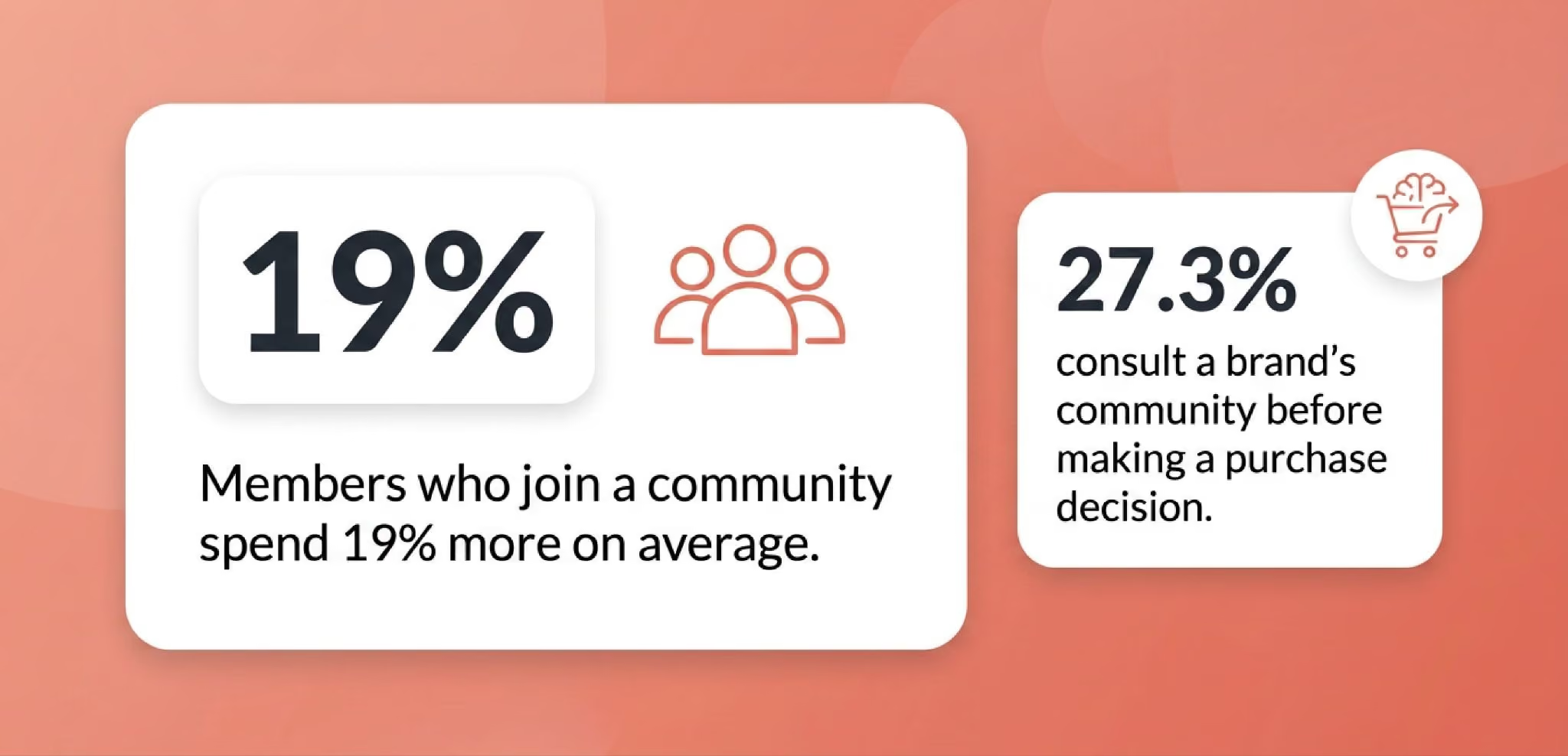
Members who join a community also spend 19% more on average. And 27.3% of people consult a brand's community before making a purchase decision.
The case for starting a membership community has never been stronger. The challenge is building it the right way from day one.
Quick Answer: How Do You Start a Membership Community?
- Define a specific, narrow purpose
- Validate the idea with real potential members
- Recruit a founding group of 10–25 people
- Choose a simple platform your members already use
- Seed early discussions before launch day
- Onboard every new member with a clear first action
- Create a repeat engagement rhythm using prompts, events, and recognition
The 15 tactics below show you exactly how to execute each step.
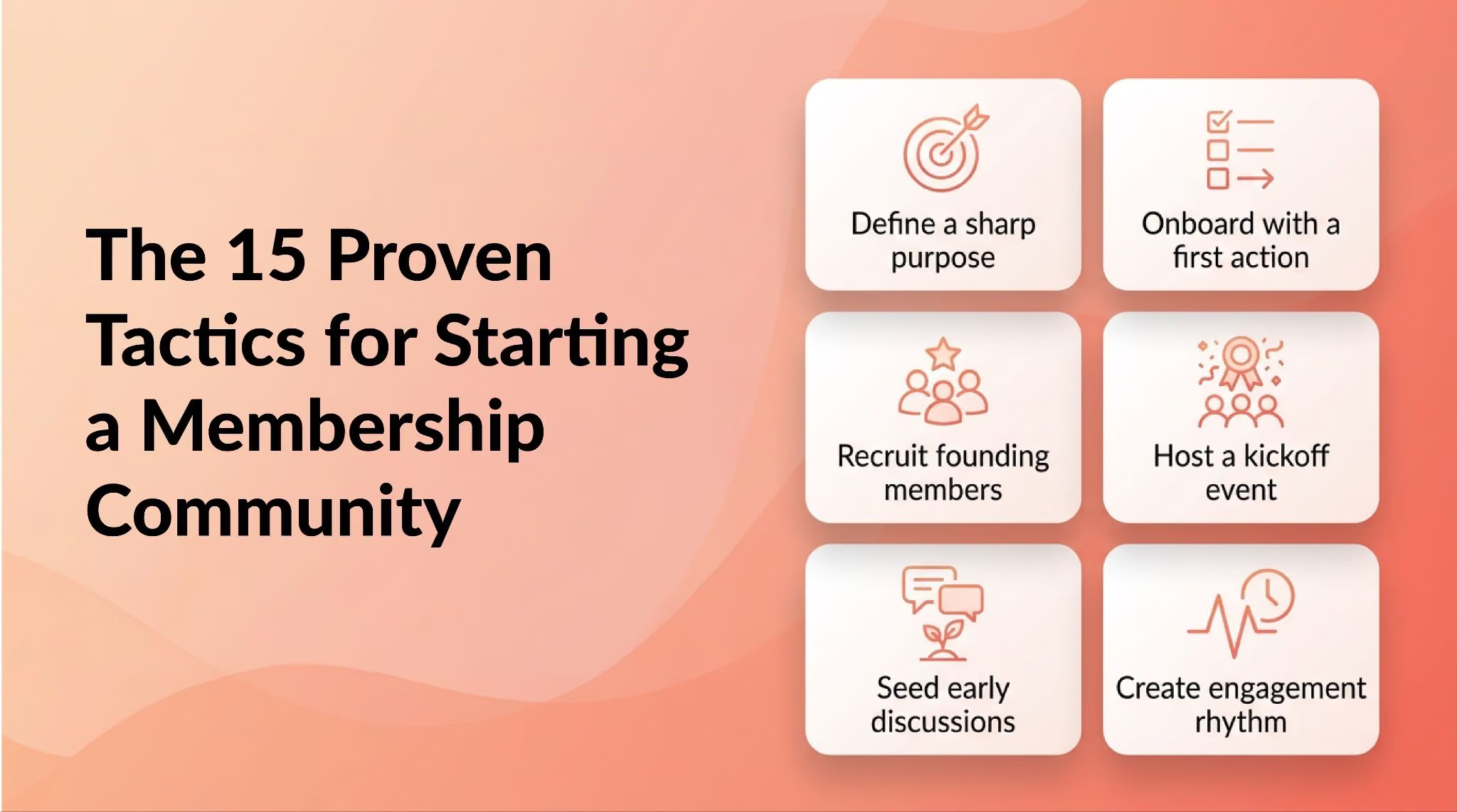
The 15 Proven Tactics for Starting a Membership Community
Each tactic below solves one specific launch problem: unclear purpose, no early members, weak engagement, poor onboarding, lack of trust, or silent churn.
Here they are.
Tactic 1: Define a Sharp Community Purpose Before You Invite Anyone
Before you build anything, get clear on why this community exists.
A focused community purpose answers four questions. Who is this for? What problem does it solve? What do members gain from participating? And what does not belong here?
Use this formula:
"This community helps [specific audience] achieve [specific outcome] through [shared activity, support, content, or connection]."
This one statement shapes everything downstream: onboarding emails, discussion prompts, event topics, and moderation decisions. It is your membership community strategy in a single sentence.
Avoid this trap: "A community for everyone interested in X" is a category, not a purpose. Narrow it until the right person reads it and thinks "this was built for me."
Tactic 2: Validate the Idea Before Building the Platform
Validation means proving that real people want this community enough to join, reply, attend, or pay.
Simple validation methods:
- Interview 10 potential members one-on-one
- Run a quick poll inside a relevant group
- Post a waitlist landing page and track signups
- Host a free workshop to test interest before anything is built
- Run a beta group of 10–15 people and study what they engage with
The strongest validation signals are replies, signups, and follow-up questions. Likes are weak signals. Payment is the strongest signal of all.
If you are building a paid membership community, validation matters even more. Members need to see real value before the community fully exists. A vague promise of "networking" will not convert.
Tactic 3: Choose One First-Member Persona
Early community participation depends on relevance.
When members feel the space was built specifically for someone like them, they engage. When it feels generic, they lurk. Or leave.
Your first version of the community should serve one specific type of person. Know their main goal, their biggest frustration, their preferred platform, and what type of interaction they enjoy most.
This persona shapes every decision: discussion prompts, event formats, welcome messages, and content style. Without it, your community feels like a waiting room that nobody asked to be in.
Tactic 4: Recruit Founding Members With Personal Outreach
The first members do not come from ads. They come from direct, personal conversations.
As one community builder observed in a r/sweatystartup discussion: "In the beginning, the community is you." You recruit by personally reaching out to people who already trust you.
First 10 members: Clients, colleagues, newsletter subscribers, or past event attendees. Anyone already asking questions related to your community topic.
First 50 members: Add founder-led direct messages, partner communities, small webinars, and LinkedIn conversations.
First 100 members: Layer in waitlists, public content, referral asks, and a dedicated founding member campaign.
A practical invite script:
"I am building a small community for [audience] who want to [goal]. I am looking for a few founding members to help shape the first version. Would you be open to joining and starting a few early conversations?"
That last line matters. Asking people to "help create this" outperforms asking them to simply "join."
Tactic 5: Create a Seed Group Before the Public Launch
A seed group is a small, handpicked group of early members who create the first posts, conversations, and energy before anyone else arrives.
This is how you solve the empty room problem.
When new members arrive and see nothing happening, they leave. When they arrive and see active conversations, welcoming replies, and genuine energy, they stay and contribute.
Who belongs in a seed group: Active community advocates, loyal customers, volunteers, frequent event attendees, or people who already care deeply about the topic.
What they should do: Post introductions, reply to early threads, join the kickoff event, give honest feedback, and welcome incoming members.
Aim for 10–50 people depending on your niche. A small active group beats a large silent list every single time.
Tactic 6: Start Small With Fewer Channels and Topics
New communities look abandoned when they launch with too many empty channels.
Resist the urge to create twelve categories on day one. Launch with 3–5 core spaces only: introductions, questions, resources, events, and announcements.
When you build a membership website, the structure you choose on launch day sends an immediate signal. Too many empty spaces signal a ghost town. A few well-populated spaces signal momentum and activity.
Add new channels only when the community genuinely outgrows the existing ones.
Tactic 7: Seed Early Discussions Before Members Arrive
Seed content gives new members something to react to. It removes the pressure of being the first to post.
Post 1–2 prompts per day during week one. After that, reduce to 3–4 strong prompts per week as members begin contributing naturally.
Best opening community discussion prompts:
- "What made you join this community?"
- "What problem are you trying to solve this month?"
- "What is one resource you would recommend to another member?"
- "What would make this community genuinely useful for you?"
For a deeper library of conversation starters, explore these member engagement ideas built for communities across every niche and size.
Tactic 8: Build a Structured New Member Onboarding Journey
Member onboarding is the first-week experience that turns a signup into an active participant.
A solid onboarding flow includes a welcome email, login instructions, a profile setup prompt, an intro thread invitation, community guidelines, top resources, and an upcoming event invite.
A simple 30-day community onboarding sequence:
For associations and nonprofits, these new member onboarding tips go deeper into building a welcome sequence that actually converts lurkers into active contributors.
A member portal gives every new member a central place to complete their profile, access key resources, and register for events without emailing the organizer for every small thing.
Tactic 9: Host a Live Kickoff Event to Create Immediate Participation
A kickoff event gives members a specific reason to show up at the same time. It creates shared energy, shared context, and early social proof that the community is real and worth being part of.
According to Bevy's 2024 event research, 74% of event attendees feel more connected to a brand or organization after attending an in-person or hybrid event.
Best kickoff formats: Workshop, AMA, founder Q&A, orientation call, expert panel, or member networking session.
After the event: post a recap inside the community, turn questions into new discussion threads, tag attendees by name, and invite people who missed it to comment on the recap.
Set up event registration early so RSVPs connect directly to your member records. Use reliable member communication tools to make sure your event reminders actually get opened.
Tactic 10: Build Trust With Clear Community Guidelines
Trust does not happen automatically. Members need to know what behavior is welcome, what is not allowed, and how the community stays safe and constructive.
Bettermode's community research is direct on this: clear, written guidelines "build trust through predictable standards." Publish yours before members need them, not after the first conflict erupts.
Cover these areas in your guidelines: Respect, privacy, spam, self-promotion, harassment, off-topic posts, and conflict resolution expectations.
Moderate consistently but gently. Redirect off-topic posts, use private messages for warnings, and make the rules easy to find from day one.
Tactic 11: Decide Whether Your Community Should Be Free, Paid, or Freemium
There is no universal right answer here. The model depends on your goals, your audience, and your current stage of growth.
Free communities reduce friction and attract early members faster. Best for early validation, nonprofit awareness, volunteer groups, and community-led marketing.
Paid membership communities attract more committed members, but the value must be visible before anyone pays. According to Circle's 2025 survey, 54% of community builders now offer paid memberships, with 41% using subscription models.
Freemium communities offer free general access plus paid premium benefits: private channels, expert sessions, advanced content, or exclusive events.
If you charge, offer founding member pricing: early-bird rates, charter membership status, a lifetime discount, or a special recognition badge. This rewards early adopters and lowers the psychological barrier to the first paid signup.
Tactic 12: Use Member Recognition to Build a Sense of Belonging
Recognition tells members which behaviors actually matter. It turns occasional participation into identity.
People return when they feel seen, useful, and genuinely connected. Kannect's community flywheel model shows that recognized members invite others, defend the community culture, and stay far longer than those who go unacknowledged.
Recognition ideas that work:
- Member spotlights in your newsletter or weekly thread
- Badges for first post, tenth reply, or top contributor of the month
- Ambassador or welcome buddy roles for highly engaged members
- Public shout-outs for especially helpful questions or answers
- A monthly "Contributor of the Month" thread with a short feature
Explore these community engagement strategies to see how associations, clubs, and creator communities run recognition programs that genuinely improve retention.
Avoid this: Only recognizing the loudest members. Recognize thoughtful questions, quiet welcomers, referrals, and behind-the-scenes support too.
Tactic 13: Create a Repeatable Engagement Calendar
A membership community needs rhythm, not random posting.
Recurring rituals teach members when to come back. According to the HigherLogic 2025 Benchmark Report, communities using automated engagement and gamified recognition see over 2x the logins compared to communities without a structured rhythm.
Weekly rituals worth building:
- Monday: goal-setting or weekly focus thread
- Wednesday: AMA or Ask the Expert session
- Friday: wins, highlights, and member shout-outs
- Monthly: member spotlight, community recap, and feedback request
Simple 4-week launch calendar:
- Week 1: Welcome and goal-setting thread
- Week 2: Expert Q&A or community AMA
- Week 3: Member spotlight and open discussion prompt
- Week 4: Feedback survey and community recap
Digital membership cards add a small but meaningful moment of belonging at every event check-in. That moment reinforces community identity in a tangible, memorable way.
Tactic 14: Track Engagement and Re-Engage Inactive Members
Silent churn is the real threat to most communities.
Members don't always cancel. They just stop showing up. As practitioners in r/CommunityManager have noted repeatedly: "Most paid communities don't fail from cancellations. They fail from people quietly losing interest."
Community metrics worth tracking: Logins, posts, replies per thread, event attendance, intro completion rate, email open rates, and inactive member counts.
How to re-engage quiet members:
- A personal check-in message from the founder
- A friendly "we miss you" email with one simple ask
- A small group invite to a low-pressure upcoming event
- An unanswered thread that genuinely needs their specific perspective
A membership CRM helps you segment members by activity level and target re-engagement outreach to the right people at the right time. Pair it with solid membership retention strategies to build a system that catches quiet members before they disappear entirely.
Tactic 15: Connect Your Community to Membership Management From Day One
Great community conversations and organized membership management are not the same thing. But they need to work together.
For associations, nonprofits, clubs, and member-based organizations, a thriving community also requires organized member records, payments, renewals, event tracking, and communication. Without that infrastructure, even the most engaged community becomes operationally chaotic as it grows.
What membership management should support: Member records, segmentation, automated renewals, email reminders, event registration, self-service access, and reporting.
A clean member database keeps every member record searchable and connected to their activity history. Paired with dedicated membership management software, it means your team spends less time on admin and more time building the kind of participation that retains members for years.
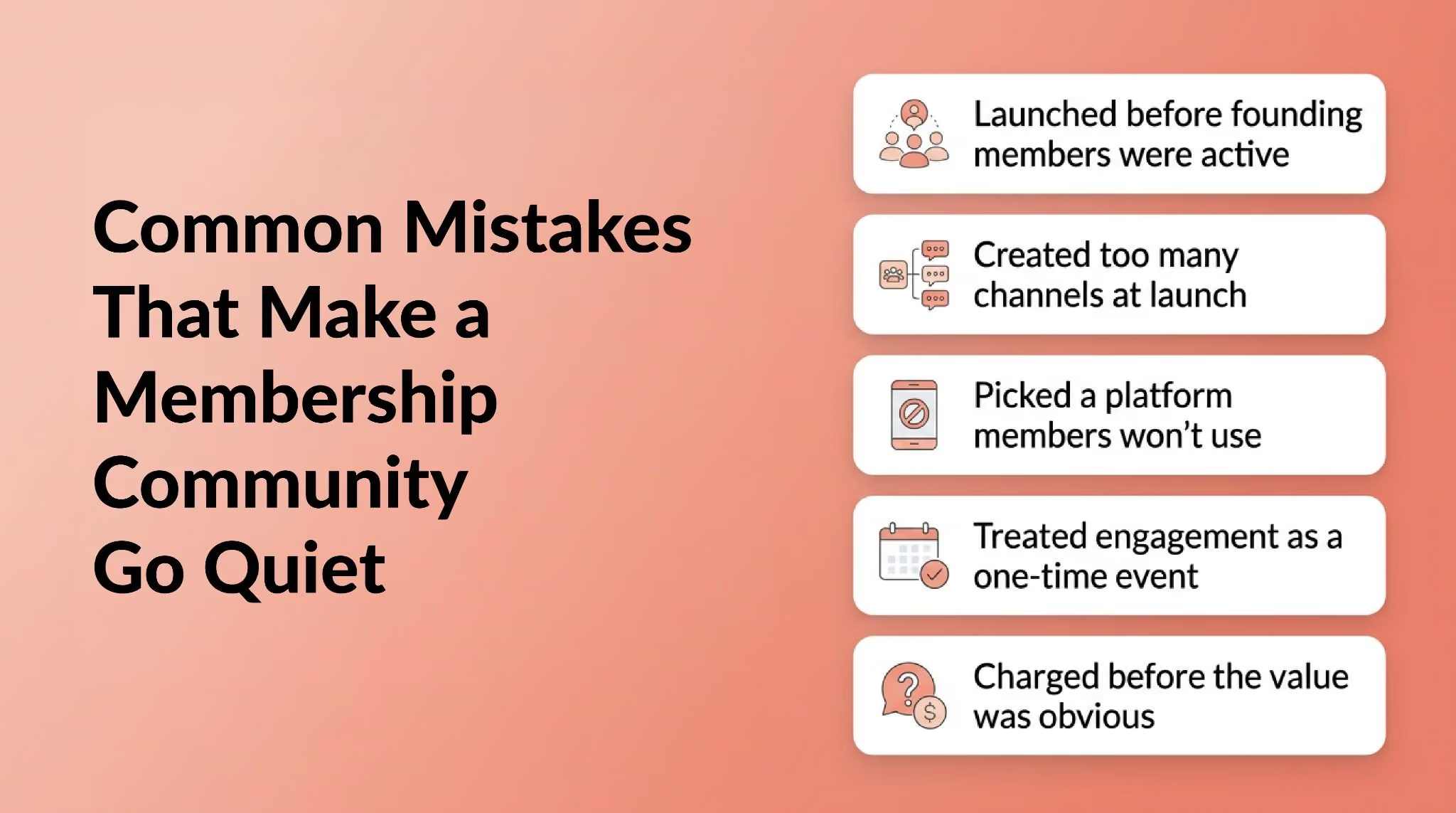
Common Mistakes That Make a Membership Community Go Quiet
🚫 Launching before founding members are active: People hesitate to engage in an empty space. Seed your community first.
🚫 Creating too many channels at launch: Empty categories signal inactivity. Start with five spaces or fewer.
🚫 Picking a platform before understanding member habits: The best platform is the one your members will actually open.
🚫 Treating engagement as a one-time launch event: Communities need repeated prompts, events, and consistent founder presence week after week.
🚫 Charging before the value is obvious: Paid communities need visible, concrete proof of value before the first transaction happens.
FAQ: Starting a Membership Community
What is a membership community? A membership community is a structured group connected by a shared purpose, where members have access, participate actively in discussions, and maintain an ongoing relationship with each other and the group.
How do you get the first members for a community? Start with personal outreach to people who already trust you: clients, colleagues, newsletter subscribers, or past event attendees. Recruit 10–25 founding members before opening the community to the public.
Should a membership community be free or paid? It depends on your goals and stage. Free communities grow faster and validate ideas more easily. Paid communities attract more committed members but require a clear value proposition upfront. Freemium models combine both.
How do you keep a membership community active? Use recurring weekly rituals, regular discussion prompts, live events, member recognition, and a structured onboarding flow. Track engagement metrics and personally re-engage quiet members before they disengage permanently.
How do you avoid launching an empty community? Build and activate a seed group before launch. Post seed content in advance. Host a live kickoff event. Make sure founding members are posting and welcoming others before the doors open publicly.
How do you measure community engagement? Track logins, posts, replies per thread, event attendance, intro completion rate, email open rates, membership renewals, and the size of your inactive member segment.
How do you build trust in an online community? Publish clear guidelines before conflicts arise, moderate consistently, recognize members publicly, and show up as a founder in early conversations. Trust is built by consistent, visible behavior over time.
How do you re-engage inactive members? Send a personal check-in message, offer a specific reason to return such as an upcoming event, create a thread that genuinely needs their input, or run a short re-engagement email campaign with one simple ask.
Conclusion: Build the People Before You Build the Platform
A strong membership community starts with a clear purpose, real founding members, honest trust-building, and a consistent rhythm of participation.
Platforms and tools matter. But only after the community promise is clear and the right people are already in the room.
If you are also managing dues, renewals, member records, digital cards, and events alongside your community, Join It organizes the operational side so your team can focus entirely on building meaningful participation. Start your free trial to see how it works, or Book a Call with the team to find the right setup for your organization.

Guides from the Experts
Through our work with 4,000+ organizations - we’ve put together helpful guides to assist; regardless of where you are on your journey.
.webp)

A Complete Guide to Membership Organizations
Everything you need to know to manage and grow your membership business
.webp)
Maximize Membership Retention: 10 Proven Strategies
Tried and true strategies that not only win membership, but keep them

Build a Membership Website: A Step-by-Step Guide
Your one-stop resource for knowing all the features your modern membership website needs
Ready to start your free trial?
Our membership software is intuitive to use and even easier to test for yourself.