Membership Program Examples: How Nonprofits, Communities, and Clubs Structure Membership



Membership Program Examples: How Nonprofits, Communities, and Clubs Structure Membership
A membership program is the structure you use to offer membership, including your tiers, benefits, pricing, and how people join and renew. Membership program examples look different across organizations: a nonprofit often uses donation-based supporter tiers, a community group a single recurring plan, and a club individual and household options. This guide walks through real-world style examples by organization type, plus the common models you can mix and match.
Key takeaways
- A membership program defines your tiers, benefits, pricing, and how members join and renew.
- Nonprofits often use donation-based or supporter tiers tied to their mission.
- Community groups and clubs tend to use simple recurring plans, with household or family options.
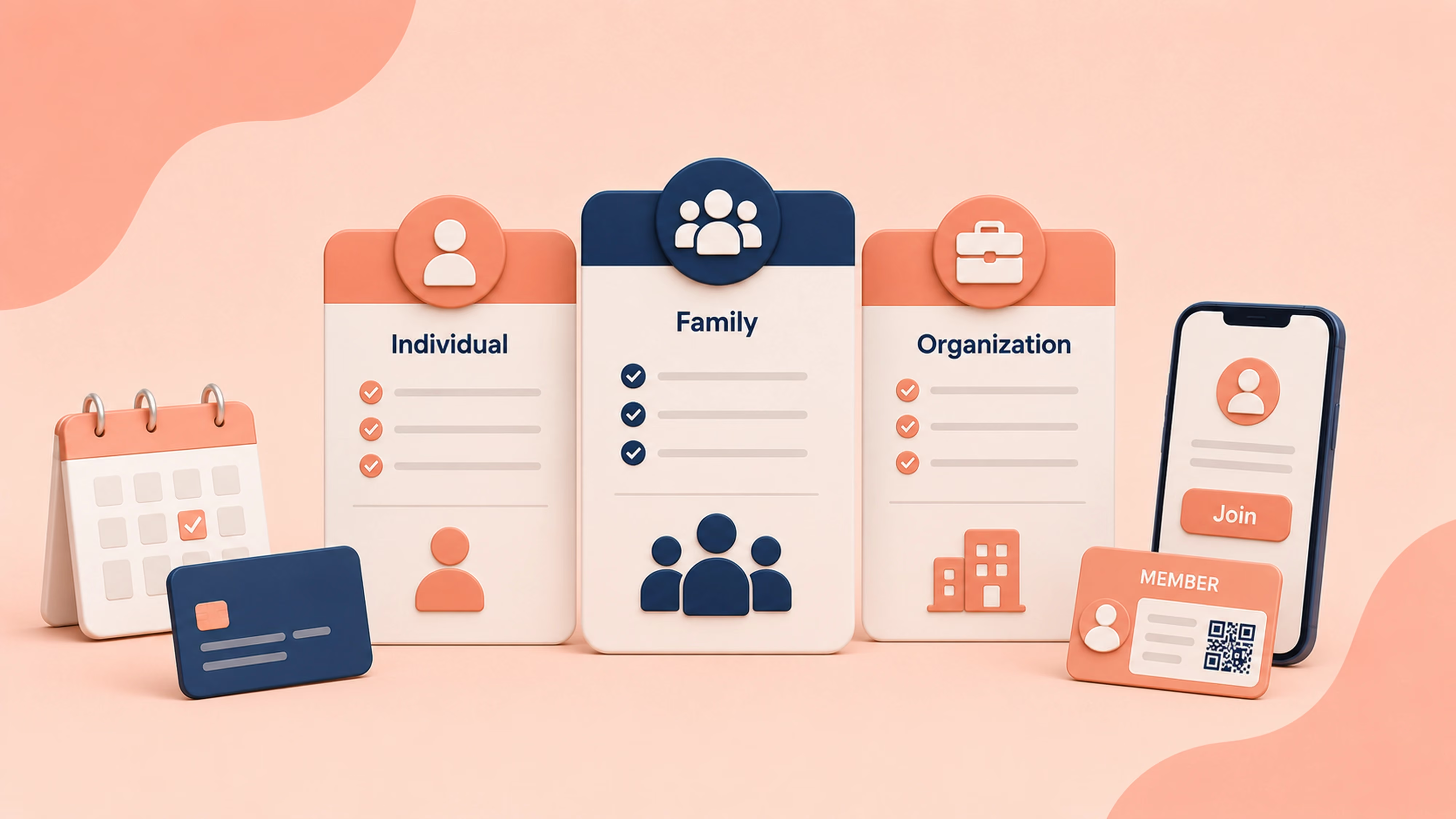
- Professional associations usually use role-based tiers like student, professional, and organization.
- The best structure is usually the simplest one that still fits your members.
What is a membership program?
A membership program is how your organization packages membership, from the tiers and benefits you offer to the way members pay and renew. It is the plan behind your membership, not the website itself. Your website is the front door, and your membership program is what people are actually joining.
A clear program answers a few questions for every member: what do I get, what does it cost, and how do I stay a member. When those answers are simple, more people join and more people renew. The examples below show how different organizations shape those answers around their own goals.
What are the most common membership program models?
Most membership programs use one of a handful of models, and many blend two. Here are the common ones and who tends to use them.
You do not have to pick just one. A club might combine a tiered structure with household options, and a nonprofit might pair supporter tiers with a one-time donation option.
Membership program examples by organization type
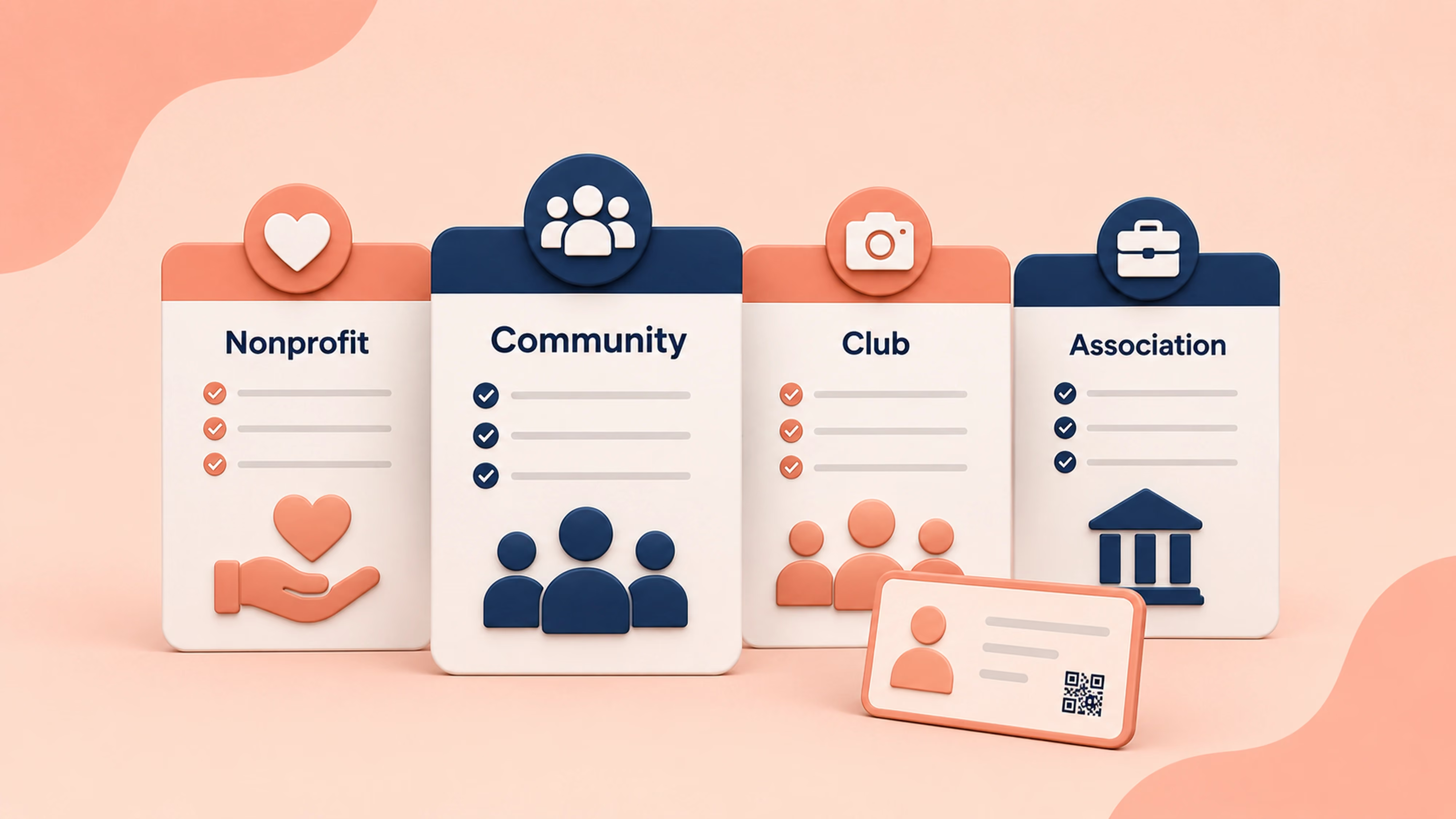
The best structure depends on your mission and your members. Here is how four common organization types tend to build their programs, with example tiers you can adapt.
Nonprofit membership program example
A nonprofit often builds its program around supporting the mission rather than around perks. Members give because they believe in the cause, so benefits stay light and meaningful.
For example, a local conservation nonprofit might offer three supporter tiers: Friend at $5 a month, Supporter at $15 a month, and Champion at $40 a month. Each tier includes recognition in the annual report and early access to events, and the whole thing runs on recurring donations. Groups like charities and nonprofits often keep the structure simple so more of each gift goes to the work.
Community group membership program example
A community group usually keeps things simple with a single recurring plan, since the value is in belonging and taking part.
For example, a community garden might charge $60 a year, which covers a plot, access to member workdays, shared tools, and the seasonal plant swap. One clear tier is easy to explain and easy to run, which suits a volunteer-led group with limited time for admin. If the group grows, it can add a household option later so families can join together.
Hobby or social club membership program example
A hobby or social club often uses individual and household options so people can join on their own or bring family along.
For example, a local photography club might offer Individual membership at $75 a year and Household at $120 a year, both including monthly meetups, member-only workshops, and a members' gallery. On event nights, digital membership cards make check-in quick, since members can show a card on their phone. Many hobby and social clubs run this way, with a light structure and a strong sense of community.
Professional association membership program example
A professional association usually uses role-based tiers that match where someone is in their career, so the price and benefits feel fair at every stage.
For example, an association might offer Student at $30 a year, Professional at $120 a year, and Organization at $500 a year, with the organization tier covering several named members. Benefits scale up from job listings to conference discounts to a listing in the member directory. This structure lets professional associations welcome newcomers while still offering real value to established members and employers.
What does a membership program look like on a WordPress site?
You can run a membership program on a WordPress site by using membership software as the engine behind your website. Your WordPress site stays the public front door, while the software handles sign-ups, payments, renewals, and member records in the background.
With Join It, you can add membership sign-up to your WordPress site through integrations, so members join right on your site and their details flow straight into your member database. That keeps your website looking exactly how you want while your member data stays organized in one place.
How do you choose the right structure for your program?
Start with your mission and your members, then pick the simplest model that fits. A few practical guidelines help most organizations get it right:
- Choose the model before you choose the price, since the structure shapes everything else.
- Two or three tiers is usually plenty. More options can make the choice harder for members.
- Offer both monthly and annual billing where you can, since annual helps steady your cash flow.
- Keep benefits meaningful rather than long, so each tier is easy to understand.
- Add household or group options if your members tend to join together.
If you want to go deeper, our guide to membership pricing strategy covers models and tiers in detail, and our post on how many membership tiers to offer helps you settle on the right number. For fresh angles, 20 membership program ideas is a good place to look.
How Join It helps you run any membership program
Join It is membership management software that gives you the flexibility to build the program that fits your organization. You can set up membership types for weekly, monthly, annual, or lifetime cycles, and shape tiers, benefits, and pricing around your members. Every membership connects to a member record, so payments, events, and communication stay linked to the right person.
Members manage their own details through a self-service member portal, while recurring payments and renewal reminders keep dues on track without much chasing. Nonprofits can collect recurring donations, clubs can issue digital membership cards, and associations can publish a member directory.
Join It is a good fit for nonprofits, community groups, clubs, and associations that want a simple, flexible way to run membership. Plans start under $29 a month, and every plan includes a free trial with no credit card required. For very large or highly specialized programs, a heavier enterprise platform may suit better, and that is worth weighing against how much complexity your team actually needs.
Frequently asked questions
What is a membership program example?A membership program example is a real or model version of how an organization structures membership, including its tiers, benefits, and pricing. For instance, a nonprofit might use three supporter tiers funded by recurring donations, while a club might offer individual and household plans.
What are the most common membership program models?The most common models are single flat rate, tiered, recurring subscription, donation-based, household or family, group or corporate, and lifetime. Many organizations combine two, such as tiered pricing with a household option.
What membership tiers do nonprofits use?Nonprofits often use supporter-style tiers such as Friend, Supporter, and Champion, funded by recurring donations. Benefits usually stay light, like event access or recognition, so more of each gift supports the mission.
How many membership tiers should I offer?Two or three tiers works for most organizations, since more options can make the choice harder. Our post on how many membership tiers to offer walks through how to decide.
Can I run a membership program on a WordPress site?Yes. You can keep your WordPress site as your public front door and use membership software behind it. With Join It, integrations let members sign up on your site while their details flow into your member database.
Do I need software to run a membership program?You can start with a spreadsheet, though most organizations move to membership software as they grow, since it automates renewals, payments, and member records. That saves time and gives members a smoother experience.
The bottom line
There is no single right way to structure a membership program, only the way that fits your mission and your members. Nonprofits tend to lean on supporter tiers and donations, community groups on simple recurring plans, clubs on individual and household options, and associations on role-based tiers. Pick the simplest model that gives members a clear reason to join and stay.
Ready to build yours? See how flexible membership types and a self-service member portal work in Join It, and start a free trial when the time feels right.
.avif)
Guides from the Experts
Through our work with 4,000+ organizations - we’ve put together helpful guides to assist; regardless of where you are on your journey.
.webp)

A Complete Guide to Membership Organizations
Everything you need to know to manage and grow your membership business
.webp)
Maximize Membership Retention: 10 Proven Strategies
Tried and true strategies that not only win membership, but keep them

Build a Membership Website: A Step-by-Step Guide
Your one-stop resource for knowing all the features your modern membership website needs
Ready to start your free trial?
Our membership software is intuitive to use and even easier to test for yourself.