Event Planning Checklist for Membership Organizations


Events are one of the most powerful tools membership organizations have to strengthen community, drive engagement, and attract new members.
But many organizations still manage events through spreadsheets, scattered email threads, and manual payment tracking. As events grow in size and frequency, that approach quickly becomes difficult to manage.
This guide outlines a simple, repeatable checklist membership organizations can use to plan events effectively while keeping member data, registrations, and payments organized through a membership platform like Join It.
Key Takeaways
Why events matter for membership organizations
For associations, clubs, and nonprofits, events are more than just one-off activities. They help organizations:
- Increase member engagement
- Strengthen community connections
- Attract prospective members
- Generate additional revenue
- Encourage renewals and long-term participation
When events are structured properly, they become an ongoing driver of retention and growth rather than just a logistical exercise.
Many organizations streamline event operations by using membership software features that connects registrations, payments, and member records in one place.
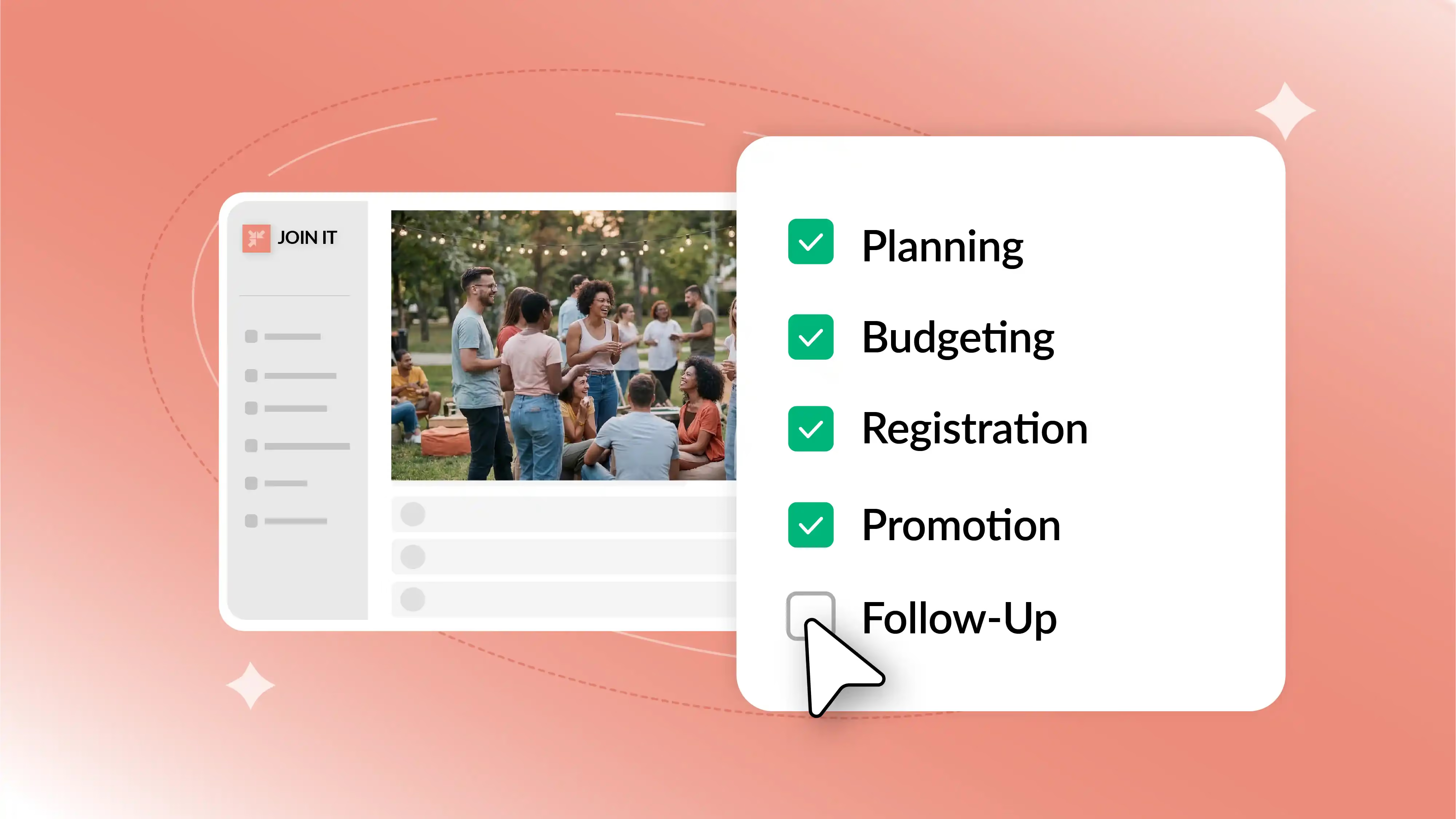
Event Planning Checklist
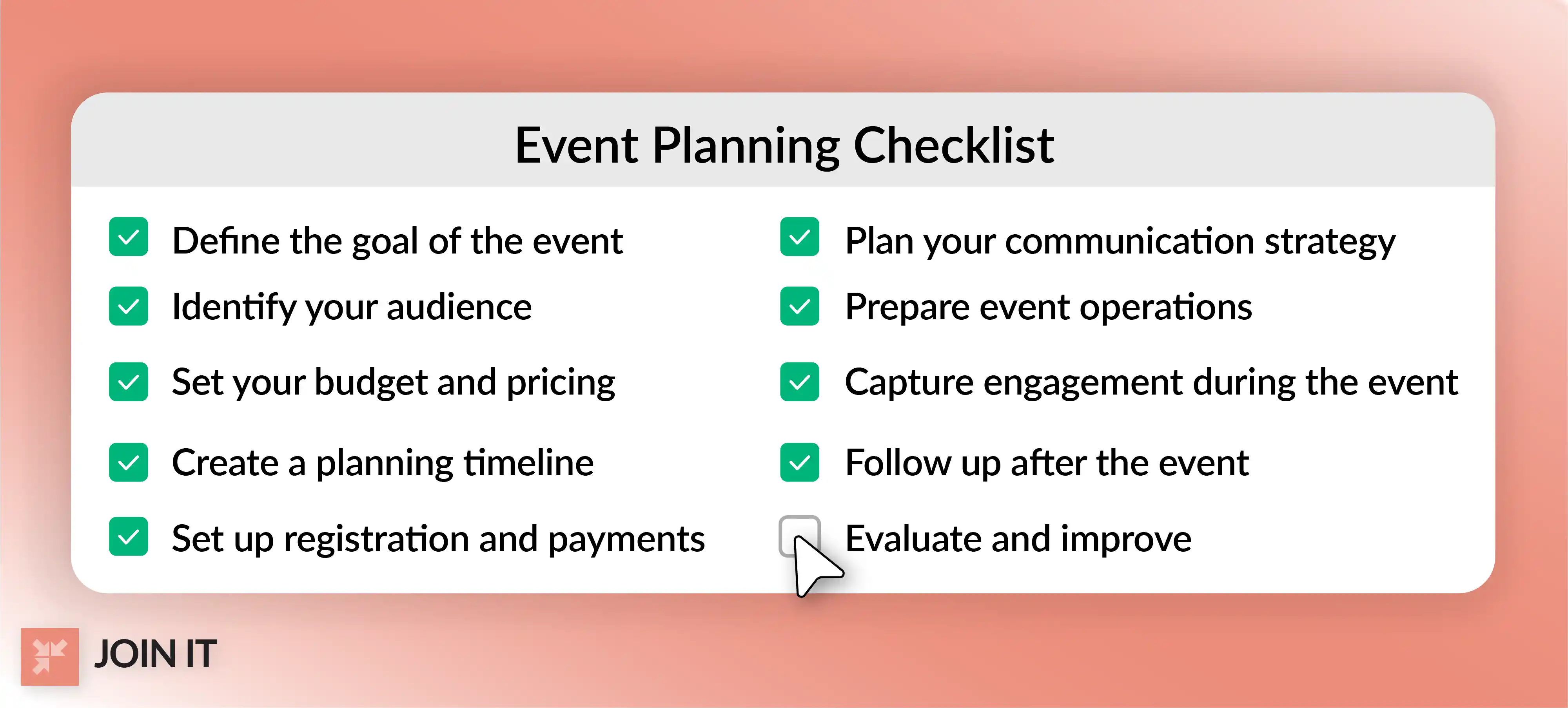
1. Define the goal of the event
Before planning logistics, determine what success looks like.
Common goals include:
- Member engagement
- Community outreach
- Fundraising
- Professional development
- Recruiting new members
Establishing clear objectives helps shape every other decision including pricing, marketing, and programming. If you still need inspiration for the actual format, our event ideas to engage members guide can help you choose concepts that match those goals.
2. Identify your audience
Decide who the event is designed for:
- Members only
- Prospective members
- Industry professionals
- Volunteers or community partners
Understanding your audience allows you to tailor messaging and pricing effectively.
3. Set your budget and pricing
A simple event budget should include:
Fixed costs:
- Venue
- Catering
- AV equipment
- Speaker fees
Variable costs:
- Printed materials
- Staff time
- Marketing
Revenue may come from:
- Ticket sales
- Sponsorships
- Donations
Using event registration tools integrated with membership platforms helps organizations track revenue and attendance more efficiently.
4. Create a planning timeline
Working backward from the event date helps ensure every step happens on time.
Typical timeline:
6–8 weeks before
- Confirm venue
- Finalize speakers
- Publish event page
4 weeks before
- Launch registration
- Promote the event
2 weeks before
- Send reminders
- Confirm logistics
1–2 days before
- Finalize attendee list
- Confirm staff roles
5. Set up registration and payments
Registration should be simple and fast. If you are still comparing tools before building that workflow, this guide to event registration software breaks down the main options and what each one handles best.
Recommended best practices:
- Keep forms short
- Offer member and non-member pricing
- Provide clear refund policies
- Send automated confirmation emails
Many organizations connect event registration with their membership platform so attendee information is automatically linked to member records
6. Plan your communication strategy
Effective communication helps maximize attendance.
Typical communication sequence:
- Initial invitation
- Mid-campaign reminder
- Final reminder
- Day-before logistics email
Segmenting messages between members and non-members can improve response rates.
Membership platforms allow organizations to manage these communications directly within their member database.
7. Prepare event operations
A clear “run of show” document helps the event run smoothly.
Include:
- Session schedule
- Speaker transitions
- AV cues
- Staff responsibilities
- Contingency plans
8. Capture engagement during the event
Events provide valuable opportunities to gather insights.
Examples include:
- Feedback surveys
- Member interviews
- Photos and content for future promotion
- Attendance tracking
These insights can guide future programming.
9. Follow up after the event
Post-event follow-up is one of the most important steps.
Within 24–48 hours:
- Send thank-you emails
- Share recordings or resources
- Request feedback
Within one week:
- Share highlights publicly
- Invite attendees to future events
- Encourage non-members to join
10. Evaluate and improve
After the event, review key metrics such as:
- Registration numbers
- Attendance rate
- Member vs non-member participation
- Revenue
- Feedback scores
Tracking these metrics helps organizations refine their event strategy over time.
Conclusion
A strong event does not come together through last-minute coordination. It comes from a clear plan, simple registration, organized communication, and a reliable follow-up process.
This event planning checklist gives membership organizations a repeatable way to run smoother events while keeping registrations, payments, and member data organized. Whether you are planning a member meetup, fundraiser, workshop, or annual gathering, the right workflow can save time for your team and create a better experience for attendees.
If you want help setting up a more efficient event process for your organization, book a call to see how Join It can support your event registration and member workflows.
And if you are ready to test it for yourself, start a free trial and see how Join It can help you manage registrations, payments, and member engagement in one place.
FAQs
What software helps membership organizations manage events?
Membership platforms like Join It help organizations manage event registrations, payments, and communications in one place.
How do events improve membership retention?
Events create opportunities for members to connect with the organization and each other, which increases engagement and the likelihood of renewal.

Guides from the Experts
Through our work with 4,000+ organizations - we’ve put together helpful guides to assist; regardless of where you are on your journey.
.webp)

A Complete Guide to Membership Organizations
Everything you need to know to manage and grow your membership business
.webp)
Maximize Membership Retention: 10 Proven Strategies
Tried and true strategies that not only win membership, but keep them

Build a Membership Website: A Step-by-Step Guide
Your one-stop resource for knowing all the features your modern membership website needs
Ready to start your free trial?
Our membership software is intuitive to use and even easier to test for yourself.