QR Code Check-In Systems: How to Choose the Right Setup



The right QR code check-in system should verify what matters at your entrance: an active membership, a valid event ticket, or an approved guest. Start with that decision, then compare how each system handles repeat scans, missing cards, staff permissions, reporting, and connectivity. For clubs, associations, and nonprofits, a useful test is whether your team can manage everyday arrivals and exceptions confidently.
A welcoming check-in starts before someone reaches the desk. Members need to know what to bring, volunteers need clear instructions, and your records need to show what happened.
This guide helps you choose and test a setup around those needs.
What is a QR code check-in system?
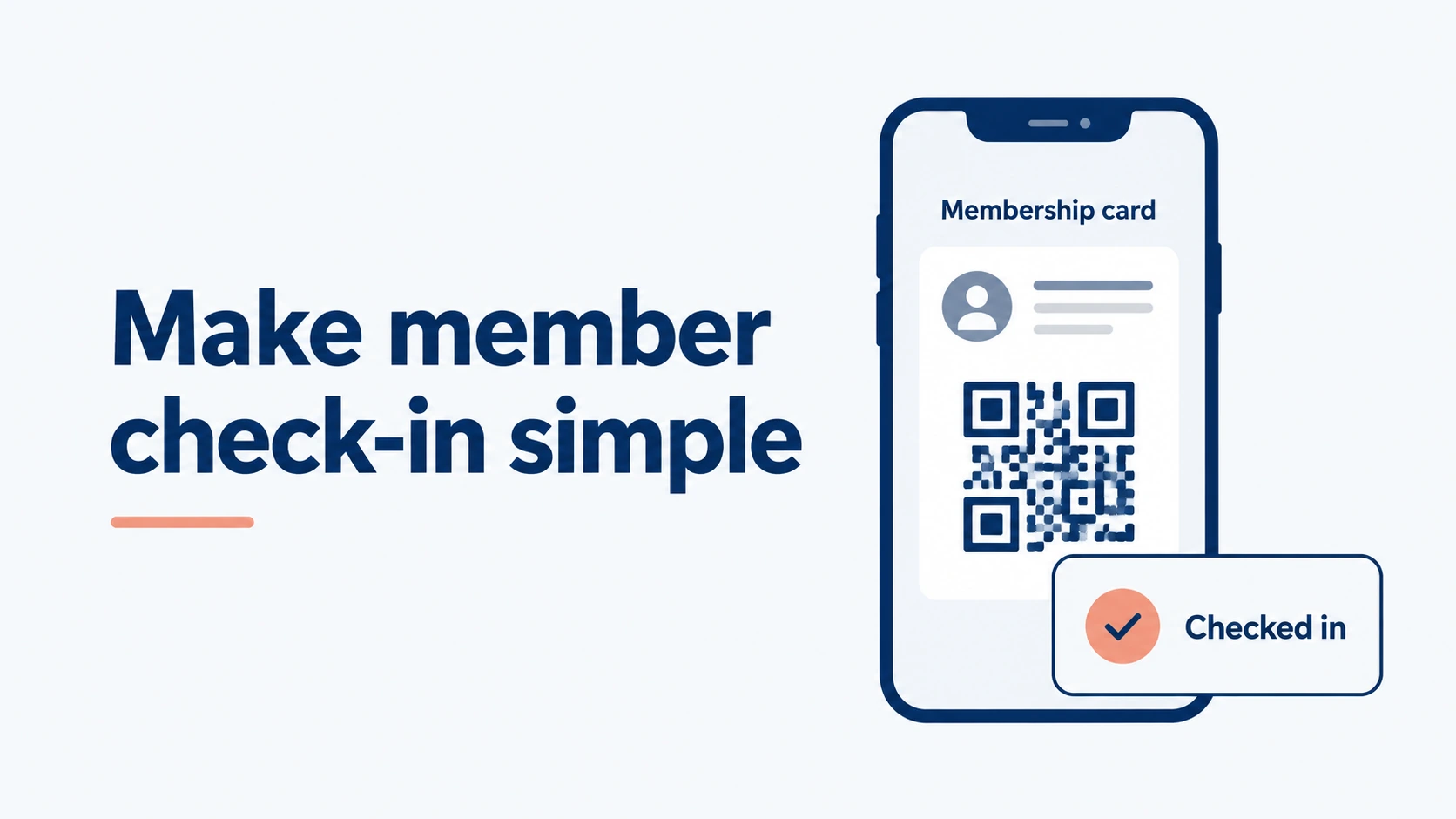
A QR code check-in system uses a scannable code to identify a record and support an arrival process. Depending on the software, that record might belong to a member, ticket holder, or invited guest. The system can then display relevant details or record attendance.
A QR code generator alone does not provide this complete process. The useful part is the software behind the code: what it looks up, what it checks, and what it records.
Do you need to check membership status or an event ticket?
Membership status and event admission answer different questions. An active member may still need a ticket for a paid workshop. Someone with a valid public ticket may have no membership at all.
Decide which rules apply before comparing software.
For example, a club could allow active members into its monthly meeting but require separate registration for a limited-capacity class. Scanning a membership card should not be treated as proof that a class place was booked.
If your event welcomes different audiences, our guide to member, non-member, and group registration helps you work through the booking rules before you design check-in.
Which type of QR code check-in software fits your organization?
Choose a shortlist based on the job your team needs to complete. The options below illustrate different approaches; they are not a ranked list or a hands-on performance test. Join It publishes this guide.
Join It: member check-in alongside membership administration
Join It is worth considering when check-in is part of an ongoing membership relationship. Its member check-in tools support attendance tracking, while its digital membership cards give members a code to present.
Staff can check members in from a membership record or scan their card with a phone or compatible scanner. Join It’s check-in setup guide documents these methods and identifies check-in as a Total or Extra plan feature.
For a regular arrival desk, Join It also provides self-service kiosk check-in. The documented setup uses a configured standalone scanner with the kiosk check-in page open.
This is a relevant starting point for hobby and social clubs where welcoming returning members is a recurring task. If your main requirement is ticket validation, reserved seating, or a complex conference admission process, compare dedicated event tools and ask to see your complete workflow.
Eventbrite Organizer: an event-ticket starting point
Eventbrite’s Organizer check-in guidance describes using its app to check attendees into an event.
That makes it a relevant option to investigate when your attendance list starts with Eventbrite registrations. If you also maintain memberships elsewhere, ask how the ticket record and membership record relate. Establish whether you need to check membership at booking, at arrival, or both.
zkipster: a guest-list starting point
zkipster’s guest check-in documentation describes QR and barcode scanning through its iOS and Android apps. It also documents guest check-in timestamps and synchronization between connected devices.
This makes it a useful option to assess for guest-list-led events. Ask the provider to demonstrate your invitation and guest-allocation rules, especially where a named guest brings additional people.
What should you compare before choosing a system?
Check the membership connection
If admission depends on membership, identify the record your team should trust. A separate spreadsheet or an earlier export may not reflect a renewal completed that morning.
With any proposed integration, ask:
- Which system holds the authoritative membership record?
- Which fields are transferred, and when?
- What happens after a renewal, cancellation, or changed email address?
- Does the scan display current eligibility, record attendance, or do both?
- Who resolves a mismatch between the membership and event records?
A connected membership database gives your team a place to manage the underlying records. Test how those records appear in the actual check-in process.
Test setup with the people and devices you will use
A successful demonstration should resemble your entrance desk.
Use the phone, tablet, or scanner your volunteers will have. Try the venue’s lighting and network. Ask a team member who did not configure the system to complete a check-in using your instructions.
Include card delivery in the test. A clear scanner workflow is only useful if members can find the code when they arrive. Our practical guide to digital membership cards covers the member side of that preparation.
Review permissions before sharing access
Give each person the access needed for their role. A volunteer welcoming attendees may need to find a record and check someone in, while a membership administrator handles corrections or payments.
Ask the provider to demonstrate the proposed volunteer account. Check what it can view, change, and export. Also decide who can approve an exception and how temporary access will be removed afterward.
Ask to see the report you will actually use
Before buying, write down the question the attendance data needs to answer.
You might want to know who attended a meeting, how often members visited during a month, or which registrants did not arrive. Each question needs the right records and a clear definition.
Ask for a sample report or export showing the fields you need, such as attendee identity, check-in time, event or location, and any correction history. Check how repeat scans and check-outs affect totals.
Attendance is useful evidence of participation. To calculate an event no-show rate, you also need a matching list of expected attendees.
Compare the full cost of your setup
Ask each provider to quote the same scenario: your member or attendee count, number of events, staffing needs, and required devices.
Include subscription or event-license costs, platform and payment-processing fees where applicable, scanners, extra staff access, integrations, onboarding, and support.
Check which plan includes the features you tested. For Join It, review the current plans and inclusions alongside your member check-in requirements. Confirm applicable service fees and payment-processing charges separately.
What should happen when a scan fails or repeats?
Agree on a simple response for common exceptions before the first busy arrival period.
Keep complicated queries at a separate help point where space and staffing allow. That gives the person who needs assistance time to explain the issue while other arrivals continue.
A membership card may be intended for repeated visits. An event ticket may allow only one admission. Test the relevant rule rather than assuming every repeated scan should be blocked.
Does QR code check-in work offline?
Offline support depends on the software, device, and preparation. Ask what must be downloaded in advance, what can be checked without a connection, and how records are reconciled afterward.
zkipster’s documentation explains that offline devices can record check-ins and timestamps, but they do not synchronize until connectivity returns. Your plan should account for that gap if several entrances are operating at once.
For any platform, test two devices losing their connection. Ask what happens if the same code is presented at both entrances, or if a ticket or membership changes while devices are offline.
Agree who reconciles records when service returns. Keep fallback records limited to the information staff need and handle them through your organization’s normal data procedures.
What should you test during a trial or demonstration?
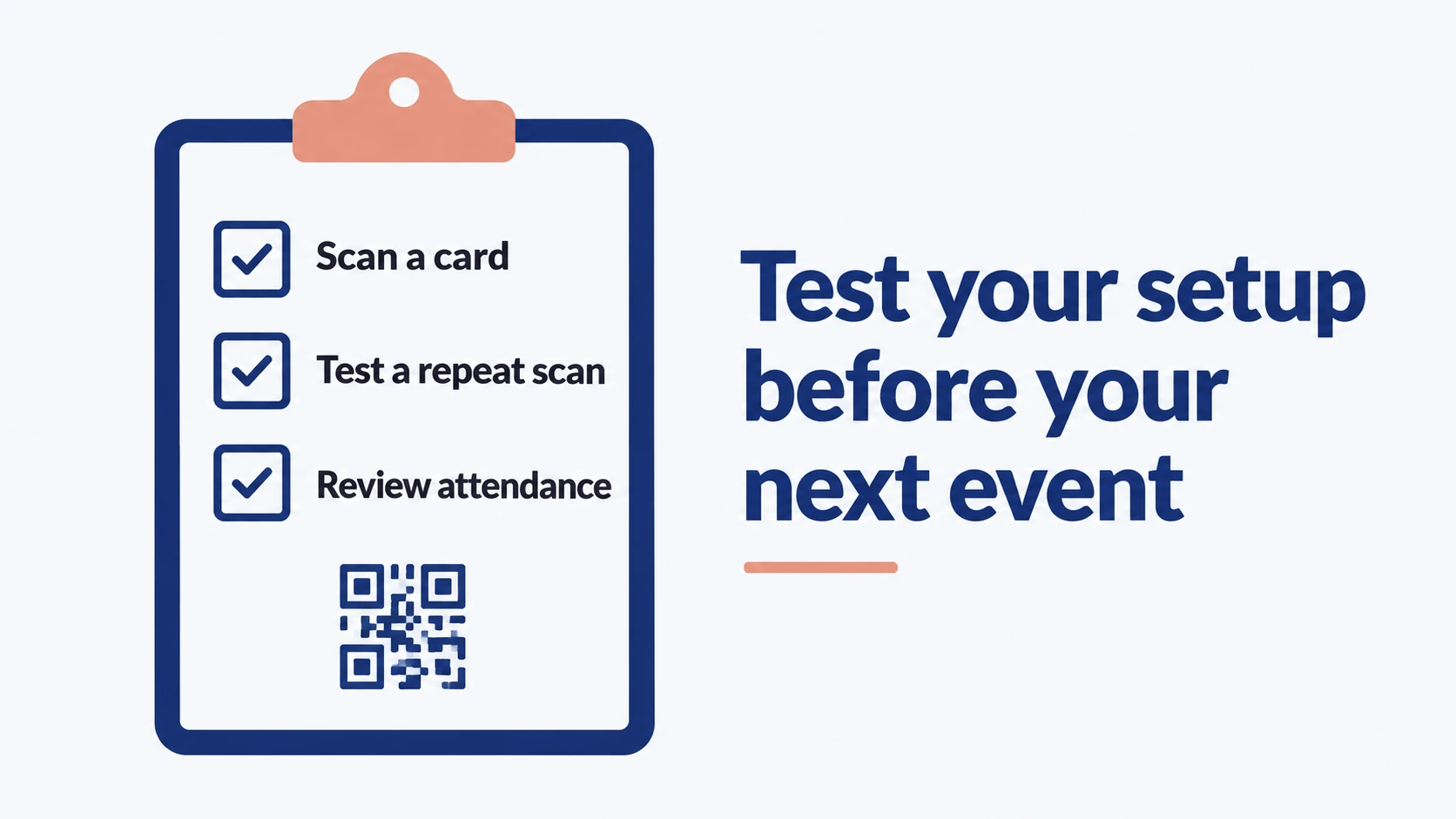
Use fictional records and agree on the expected outcome before each test. This turns the demonstration into a practical comparison your team can use.
- Check in an eligible member or registered attendee.
- Find someone who cannot locate their card or ticket.
- Review a recently renewed member and an inactive membership.
- Scan the same code twice, including on a second device.
- Present a ticket for a different event.
- Check in members of a group who arrive separately.
- Complete the process with a volunteer’s proposed permissions.
- Follow the agreed procedure when connectivity drops.
- Correct an accidental check-in and review the resulting record.
- Produce the attendance report your team needs.
Mark each relevant test as works as required, needs configuration, or requires manual handling. Mark irrelevant tests as not applicable and explain why.
A small amount of manual handling may be reasonable for a monthly club meeting. An event with several busy entrances may need more automation. Choose according to the work your team can reliably support.
Frequently asked questions
Can a QR code confirm that a membership is active?
It can when the scanning process retrieves and displays the relevant membership information. The code itself does not establish current eligibility. Ask the provider to demonstrate a renewed and an expired membership so you can see what staff receive.
Is member check-in the same as event registration?
Member check-in records a member’s arrival or activity. Event registration creates a booking for an event. Your organization may need both, particularly when an active member must reserve or pay for a place.
Do members need a smartphone?
That depends on the system and card format. Provide an alternative for people who cannot present a digital card. Join It supports manual check-in from the membership record, so staff can assist a member without requiring the card.
Can one QR code check in a whole family or team?
Some systems support group arrival workflows, but the meaning of a group varies. Ask whether one scan records the purchaser, every attendee, or selected people. Test separate arrival times if individual attendance matters.
Does scanning a QR code prevent ticket or card sharing?
A scan alone does not prove who is presenting the code. Ask how the system handles previous use and what staff should check under your admission policy. Choose identity checks proportionate to your event and audience.
What is the best QR code check-in system for a membership organization?
Choose the system that supports your membership rules, arrival process, and reporting needs with a manageable level of administration. Join It is a relevant option when attendance sits alongside membership management. Dedicated event software may suit more specialized ticket or guest workflows.
Choose a check-in process your team can run confidently
Start with the decision staff need to make at the door. Then test the everyday arrival, the common exceptions, and the report you need afterward.
If your priority is bringing member records and attendance together, explore Join It’s member check-in feature. When you are ready, start a free trial and use the checklist above to test your own arrival process.

Guides from the Experts
Through our work with 4,000+ organizations - we’ve put together helpful guides to assist; regardless of where you are on your journey.


A Complete Guide to Membership Organizations
Everything you need to know to manage and grow your membership business

Maximize Membership Retention: 10 Proven Strategies
Tried and true strategies that not only win membership, but keep them

Build a Membership Website: A Step-by-Step Guide
Your one-stop resource for knowing all the features your modern membership website needs
Ready to start your free trial?
Our membership software is intuitive to use and even easier to test for yourself.