Best Practices to Improve Alumni Engagement
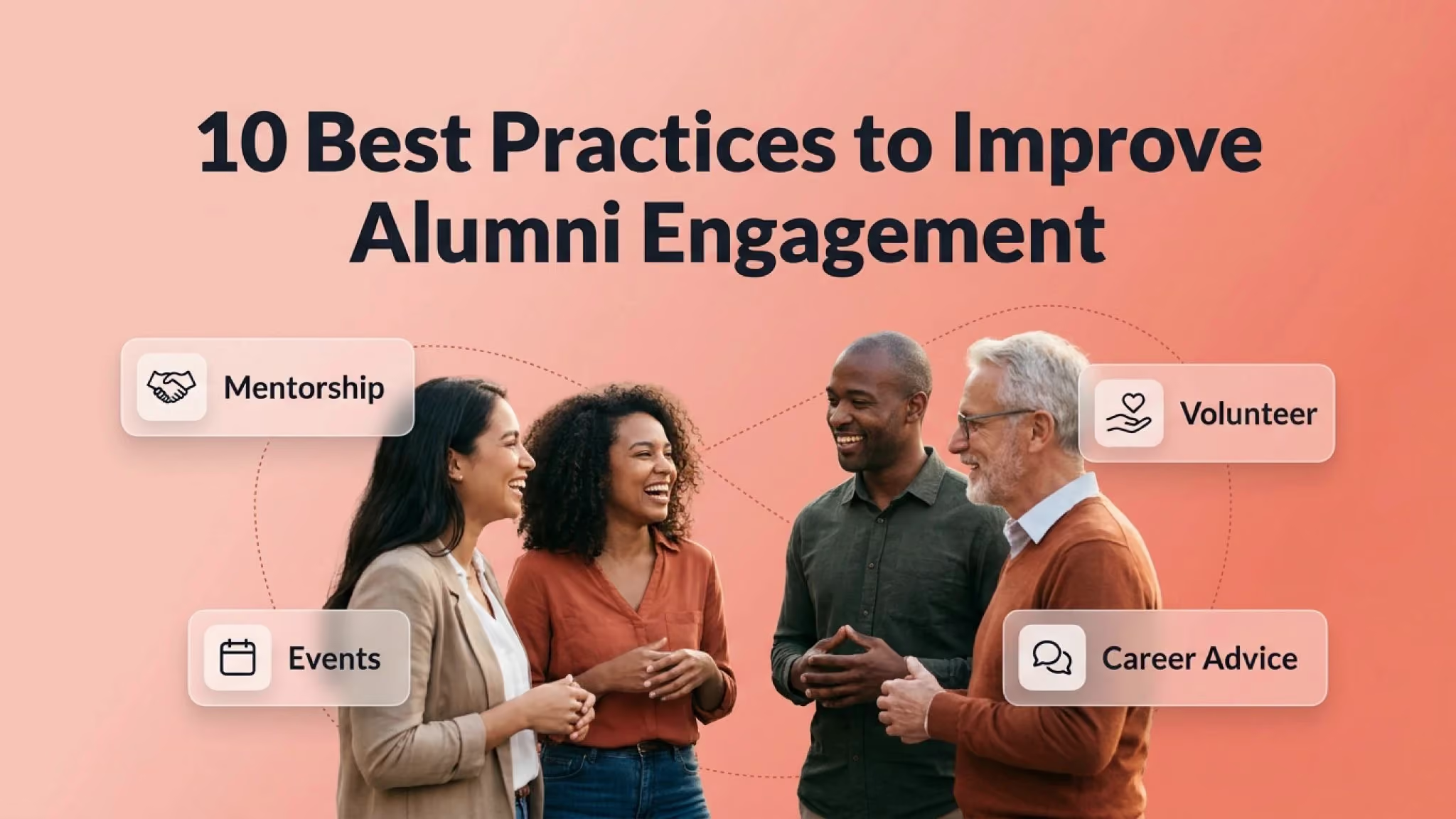


Most alumni don't ignore their school because they stopped caring. They go quiet because their institution stopped offering anything worth responding to.
That's the real alumni engagement problem. And it's more fixable than most advancement teams realize.
Alumni engagement is the ongoing process of keeping graduates connected, active, and invested through communication, mentorship, events, volunteering, and giving. It's a relationship system, not a fundraising tactic. And the distinction matters enormously, because the data shows exactly what happens when institutions get this right.
This article breaks down 10 proven alumni engagement best practices, grounded in benchmark research and real-world outcomes. Whether you lead a university advancement office, run a school alumni association, or manage a membership-based alumni network, the principles here apply directly to what you're trying to build.
What Is Alumni Engagement?
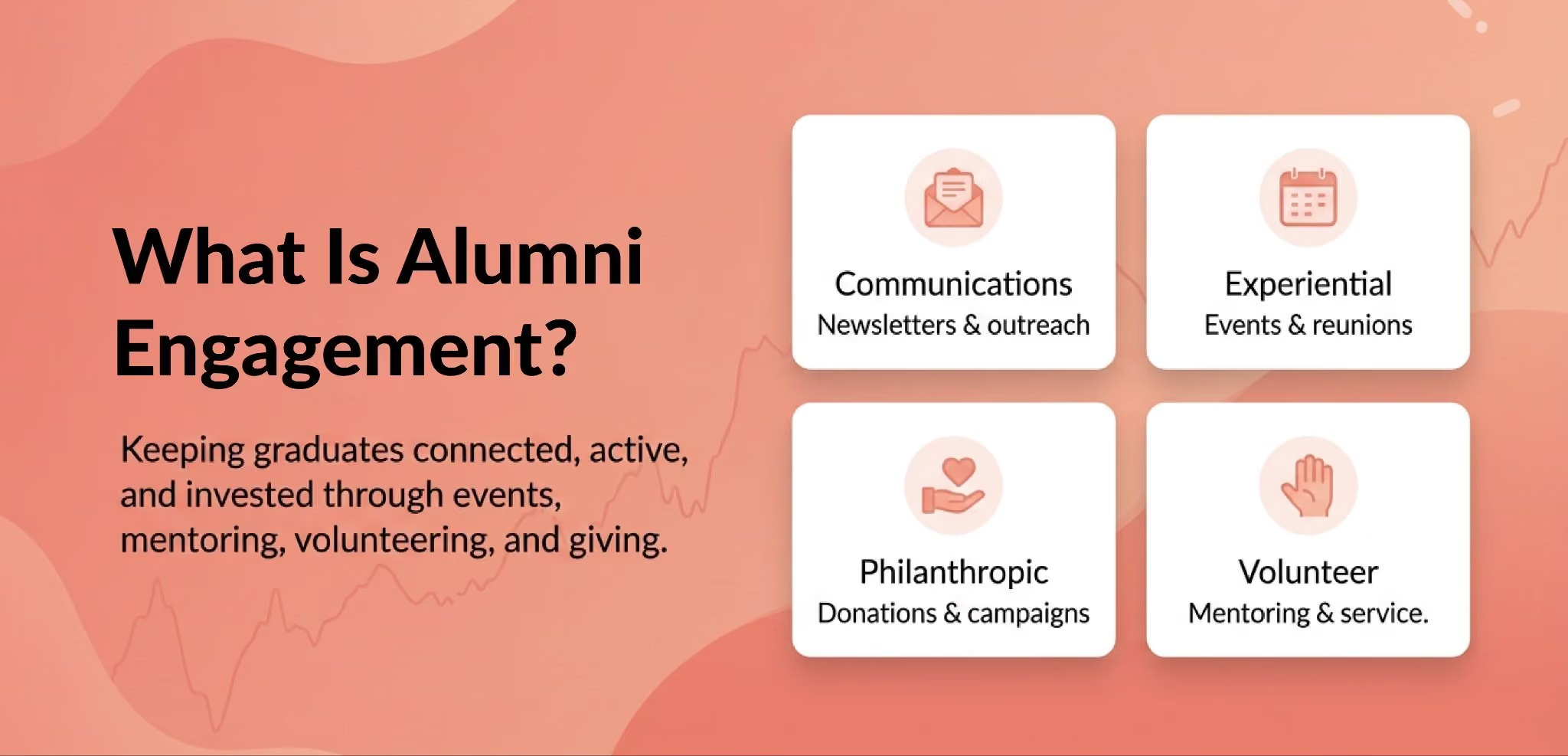
Alumni engagement includes every meaningful interaction a graduate has with their institution after leaving. That covers reading a newsletter, attending a reunion, mentoring a student, serving on an advisory council, volunteering for a campaign, or making a donation.
CASE, the largest benchmarking organization in advancement, organizes alumni engagement into four categories:
- Communications engagement (responding to outreach, newsletters, emails)
- Experiential engagement (attending events, reunions, campus programs)
- Philanthropic engagement (making donations, participating in giving campaigns)
- Volunteer engagement (mentoring, advising, leading chapters)
Most institutions focus almost entirely on philanthropy. That's exactly where the strategy breaks down.
Understanding what alumni networks do at their best reveals a consistent truth: giving is the outcome of engagement, not the entry point. Build the relationship first. The donations follow.
Why Alumni Engagement Matters
Here's the number that should reshape how every alumni relations team thinks about their work.
According to the RNL 2024 National Alumni Survey, alumni who feel genuinely connected to their institution are 23 times more likely to donate than those who feel alienated. Not 23% more likely. Twenty-three times.
That gap doesn't come from better fundraising copy. It comes from years of consistent, genuine relationship-building.
Strong alumni engagement also drives:
- Higher event attendance and year-round community activity
- More mentorship opportunities for current students
- Greater volunteer support for understaffed advancement teams
- A stronger institutional reputation that attracts prospective students
- Long-term donor relationships that compound over decades
And there's a second data point worth locking in. The same RNL research found that 74% of major donors who gave between $10,000 and $250,000 also volunteered. Volunteering and giving aren't separate behaviors. Volunteering is often what creates a major donor.
The Biggest Alumni Engagement Challenges
Before the best practices, it helps to name what you're actually working against.
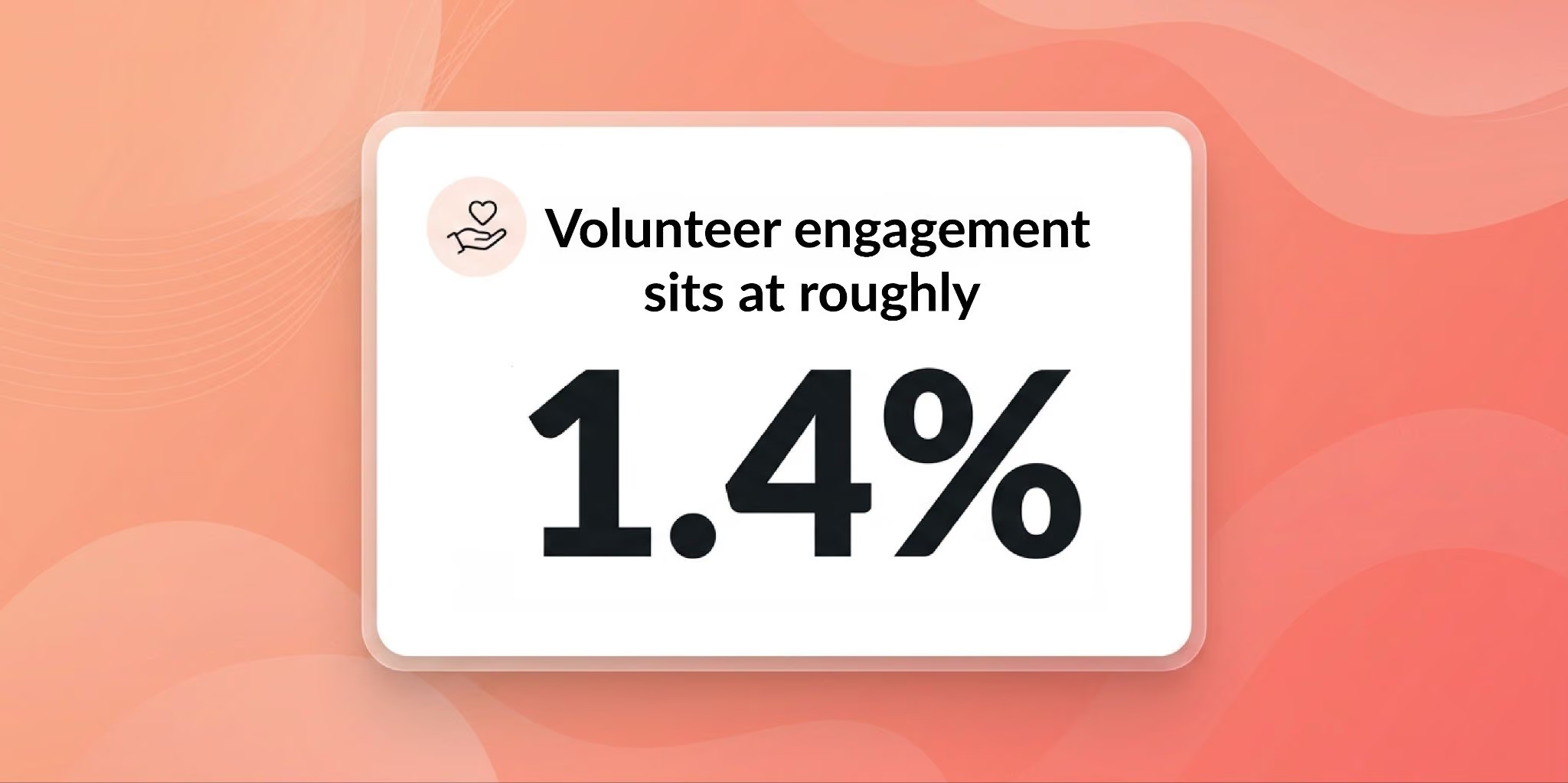
Low participation is the baseline. CASE's multi-institution benchmark data shows that only about one in five contactable alumni participates in any engagement mode at all. Volunteer engagement sits at roughly 1.4%. That means the overwhelming majority of your graduates are completely passive right now.
Outdated contact data quietly kills everything. You can have the best alumni engagement program in the country. If your email list is full of old addresses and incorrect records, your message never arrives. Alumni data decays at roughly 3 to 5% per year, which adds up fast.
Young alumni disconnect early. Recent graduates carry student debt, career uncertainty, and zero patience for donation appeals. One frustrated alumnus on Reddit's r/personalfinance was direct about it: he wasn't giving anything to his school until his student loans were gone. That's not unusual. It's the default for a generation that graduated into financial stress.
Donation fatigue is louder than most offices admit. Alumni on r/CollegeRant describe their alumni offices as "constant begging for money" with phone calls before graduation, relentless email campaigns, and zero sense that the institution has anything to offer in return. Aggressive fundraising doesn't just fail. It actively damages the relationship for years.
The best alumni engagement strategies solve these problems one at a time. Here's how.
10 Best Practices to Improve Alumni Engagement
1. Segment and Personalize Alumni Communication
Sending the same email to a 23-year-old recent graduate and a 68-year-old retired professor isn't a communication strategy. It's noise.
Personalized alumni communication starts with segmenting your database by graduation year, career stage, giving history, event attendance, location, and interest. From there, your messaging can match what each group actually needs, rather than what's convenient to send.
CASE's benchmark data shows communication engagement among alumni in their first five years sits at 23.9%. That drops sharply without intentional re-engagement efforts tailored to where alumni are in their lives. A 30-year alum doesn't need the same content as a first-year-out graduate.
The practical guide to segmenting members and sending emails that drive real response is one of the most overlooked tools in alumni relations. Most teams know segmentation matters. Few build the systems to actually do it consistently.
Do this: Match your content to life stage. Career tips and networking for new graduates. Mentoring invitations and leadership opportunities for mid-career alumni. Legacy giving and stewardship stories for long-term supporters.
Avoid this: Blasting one donation email to every segment and measuring success by open rate alone.
2. Keep Alumni Data Clean and Updated
Every alumni engagement strategy on this list depends on one thing: being able to actually reach your graduates.
Alumni database management isn't glamorous, but it's foundational. A simple member database that gives your team a clean, centralized view of who is contactable, current, and engaged makes everything downstream more effective.
For teams managing large alumni populations with outdated records, member data migration tools exist specifically to help update and consolidate records at scale without rebuilding your system from scratch.
Run a dedicated alumni data update campaign at least once a year. Frame it as a value exchange, not an administrative request. "Update your profile and we'll connect you with alumni in your field" works far better than "please confirm your contact information."
What to prioritize updating: Email addresses, employer and job title, location, graduation details, and communication preferences.
Metric to watch: Email bounce rate, percentage of alumni with complete and current profiles, and the number of previously unreachable alumni you recover.
3. Build an Alumni Mentorship and Career Networking Program
If you want to know what alumni actually want, the research makes it clear.
The RNL 2024 National Alumni Survey found that 54% of recent graduates said networking and professional development opportunities would make them more likely to engage. That number climbs even higher among alumni of color and first-generation graduates.
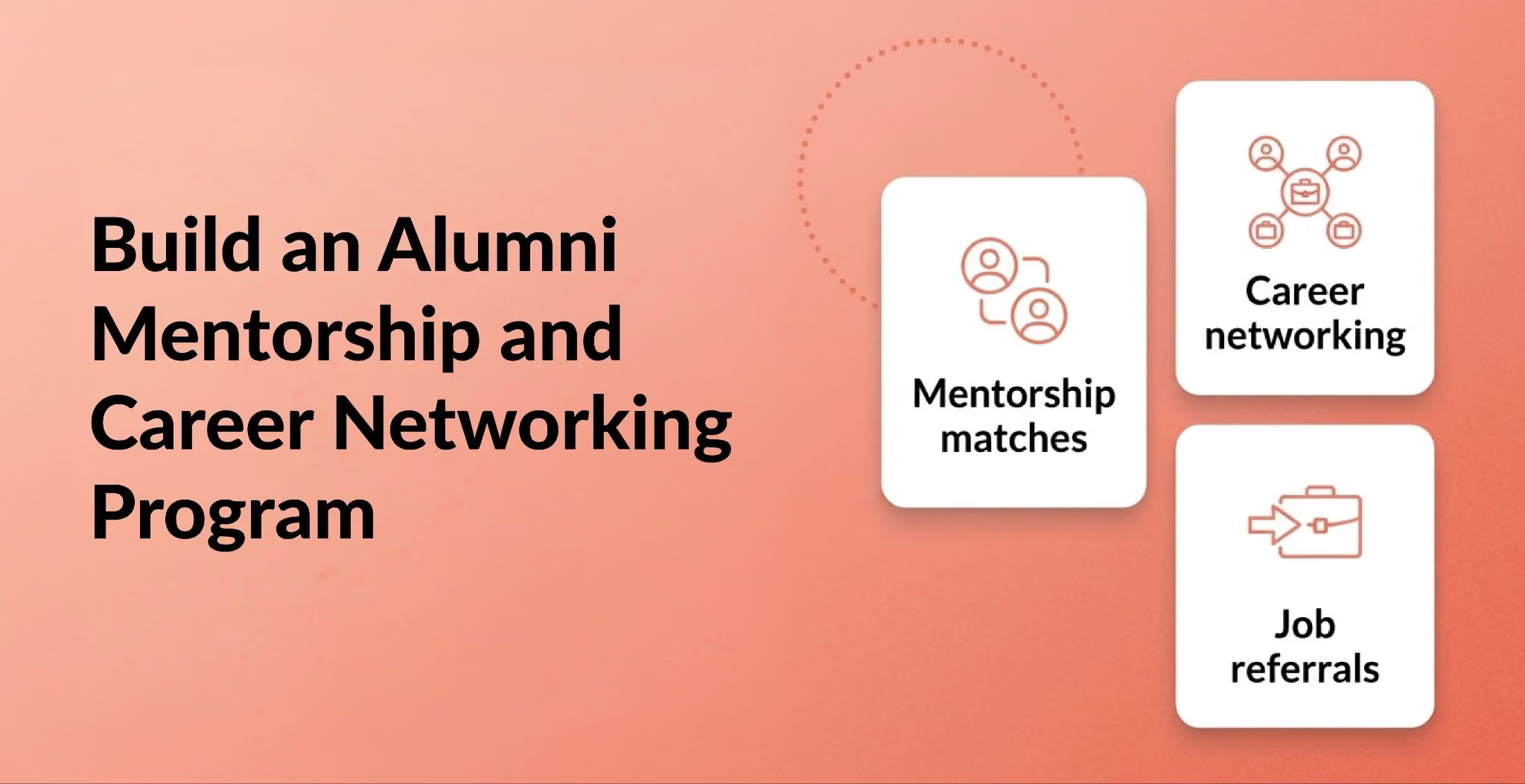
An alumni mentorship program doesn't require a large team or a complex platform. A structured match between a current student and an experienced graduate, clear expectations on both sides, and a simple monthly check-in cadence is enough to create genuine connection. ASU's Edson College runs exactly this model: alumni matched with students by major, light administrative overhead, and public recognition for mentors. The result is high satisfaction on both sides and strong repeat participation.
Career networking for alumni doesn't stop at mentorship. Alumni job boards, industry roundtables, LinkedIn-based cohort groups, and founder circles all create the kind of value that brings people back by choice, not obligation.
Do this: Start with a pilot cohort in one department or graduation year. Measure match completion rates and satisfaction scores before scaling.
Avoid this: One-off career webinars with no follow-up structure. Single events don't build lasting relationships.
4. Create Meaningful Alumni Volunteer Opportunities
Most alumni won't write a check on their first re-engagement. But many of them will give an hour.
That's the strategic value of micro-volunteering. A 45-minute resume review. A single coffee chat with a current student. One guest appearance on a career panel. These small commitments create connection without asking too much from professionals who are already stretched thin.
The RNL data on major donors is a compelling case for this approach: 74% of alumni who gave significant gifts also volunteered. Volunteering is often what transforms a disconnected graduate into someone who eventually becomes a long-term supporter.
Think about what your alumni are genuinely good at. Lawyers can advise student startups. Engineers can judge competitions. Founders can share their origin stories. Skill-based volunteer roles feel meaningful because they are, and they're far more likely to attract repeat participation than serving on a committee with no clear purpose.
Designing events for members that incorporate volunteer components, such as alumni-led workshops or student mentoring sessions, consistently outperform passive attendance events in both satisfaction and long-term engagement.
Do this: List specific roles with concrete time commitments. "Review three student resumes" is infinitely more appealing than "join our volunteer network."
Avoid this: Vague asks with no structure. Busy alumni need clarity, not open-ended projects.
5. Build Alumni Affinity Groups and Regional Chapters
Not every alumnus connects to the same story. But almost every alumnus connects to something.
Alumni affinity groups give graduates a way to bond around shared identity, profession, geography, or experience. A regional chapter in a city with a large alumni population. An entrepreneurship circle for founders. An international alumni group for graduates based abroad. A young alumni cohort for recent graduates who want peer connection before they feel ready for institutional involvement.
Multi-chapter membership management tools make it practical to run several active groups simultaneously without creating an administrative burden that your team can't sustain.
Case Western Reserve University runs five distinct alumni affinity networks, each providing professional networking, advocacy events, and leadership development opportunities. The result is year-round engagement that doesn't require a major reunion to activate.
Do this: Give chapter leaders toolkits, event templates, branded resources, and a modest budget. Give them ownership, not just a title.
Avoid this: Launching groups without sustained support. An inactive affinity group signals abandonment more loudly than having no group at all.
6. Engage Young Alumni with Digital-First Programs
Young alumni don't need a formal gala. They need proof that their school still has something useful to offer them right now.
CASE's alumni research found that 64% of Gen Z alumni prefer technology-driven tools for engagement. That means mobile-first communications, social media outreach, virtual programming, and digital community spaces. Not printed newsletters and phone campaigns.
More importantly, young alumni engagement requires patience. Career support, networking, and peer community come first. Donation appeals come much later, after trust is established and value has been delivered consistently.
The Reddit evidence here is instructive: one alumnus described receiving donation requests before he had even received his diploma. That kind of outreach doesn't just fail to convert. It creates active resentment that can last for years.
Recent graduate engagement works when it starts with genuine value. A first-year-out alumni event. A LinkedIn group for specific graduating cohorts. A mobile-friendly newsletter with real career content. These aren't luxury programs. They are the foundation of a 30-year donor relationship.
Do this: Survey recent graduates about what they actually want before building programs for them. Their answers will surprise you.
Avoid this: Any direct donation appeal in the first two years after graduation.
7. Use Hybrid Events and Digital Alumni Communities
The pandemic taught alumni relations teams something important: geography is no longer a reason for low engagement. It's just an excuse.
Hybrid alumni events and virtual programming bring your community to graduates who can't travel, live internationally, or simply can't take a long weekend for a reunion. Recorded webinars, live-streamed campus updates, and alumni-only online communities create touchpoints that exist between reunions rather than only at them.
Punahou School built an always-on digital alumni platform and saw 70% of their alumni become active on it within one year, with thousands of messages exchanged monthly. That's not a coincidence. That's what happens when you create a space alumni actually want to spend time in.
A searchable member directory is one of the most underused tools in alumni engagement. When graduates can find and directly connect with each other, the institution becomes a platform for community rather than just a sender of emails. That shift in dynamic matters.
Do this: Keep virtual and hybrid options permanently available, even when in-person attendance returns strongly. Accessibility drives participation across every segment.
Avoid this: Abandoning virtual formats because your team prefers in-person events. Your alumni's preferences should drive the format, not your internal comfort.
8. Tell Alumni Stories and Show Donation Impact
Alumni are far more likely to give when they understand exactly where their contribution goes and whose life it changes.
The RNL 2024 survey found that 77% of alumni donate because they care about a specific cause, not because of a general institutional appeal. That means "support the annual fund" will always underperform "fund a first-generation scholarship that changes someone's entire trajectory."
Alumni storytelling bridges the gap between a donation request and a genuine reason to give. Share stories from scholarship recipients. Highlight alumni who returned to mentor students and what resulted from those relationships. Show the lab or program that donor support built. Make the impact visible, specific, and human.
Tracking donations at a campaign level, rather than just as aggregate annual totals, helps your team understand which stories and causes are actually driving alumni giving participation versus which appeals are falling flat.
After Merchant Taylors' School invested in mentorship programs and alumni advisory groups before making major donation asks, their annual giving tripled compared to the previous baseline. That's the relationship-first model working exactly as intended.
Do this: Report back on every campaign. Tell donors specifically what their gifts accomplished. Close the loop consistently and publicly.
Avoid this: Generic "area of greatest need" appeals with no context, no accountability, and no follow-up on outcomes.
9. Create Alumni Ambassador Programs and Advisory Councils
Your alumni relations team cannot be everywhere at once. Your alumni can.
An alumni ambassador program extends your institutional reach into communities, industries, and cities you could never cover with staff alone. Ambassadors welcome new graduates into the network, promote events, host local meetups, and serve as living proof that your institution produces engaged, accomplished people worth connecting with.
The difference between a great ambassador program and a token one comes down entirely to structure. Ambassadors need clear roles, practical resources, regular communication, and genuine recognition. "Share this email" is not a role. "Host a coffee chat for local graduates in your industry this quarter" is.
Advisory councils serve a different but equally important function. When alumni have a formal voice in shaping programs, they feel ownership over those programs. And people reliably support what they helped build.
Strong member communications infrastructure keeps ambassador activity visible to your team without requiring ambassadors to manually file reports or update spreadsheets.
Do this: Recruit ambassadors by geography, industry, and graduation cohort. Diversity in your ambassador network creates diversity in your engagement reach.
Avoid this: Honorary titles with no real responsibilities. Ambassadors who aren't activated quickly become disengaged alumni again, and they'll tell others about the experience.
10. Measure Alumni Engagement Metrics and Improve Over Time
You can't improve what you don't measure. That's especially true in alumni relations, where teams often report on dollars raised and ignore every other signal that matters.
Alumni engagement metrics should reflect all four engagement modes: communications, experiential, volunteer, and philanthropic. An engagement score that combines email open rate, event attendance, volunteer participation, mentorship activity, and giving history gives a far more accurate picture of community health than fundraising totals alone.
CASE defines an alumni engagement rate as the percentage of contactable alumni who participate in at least one engagement mode. That baseline is a powerful starting point. From there, you can track progress by segment, by program type, and year over year.
For teams working to consolidate their data, alumni management software that integrates communication, event, and giving records into a single view makes reporting significantly more practical and actionable.
The membership retention guide framework also applies directly to alumni relations: understanding which engagement patterns predict long-term loyalty, and which ones signal that someone is about to go permanently silent, is exactly the kind of insight that separates proactive teams from reactive ones.
Do this: Review your engagement data quarterly. Set specific improvement targets by segment, not just total community-wide averages.
Avoid this: Treating annual fundraising totals as a proxy for overall alumni engagement health.
Alumni Engagement Examples That Prove It Works
The data is compelling on its own. But real outcomes make the principles concrete.
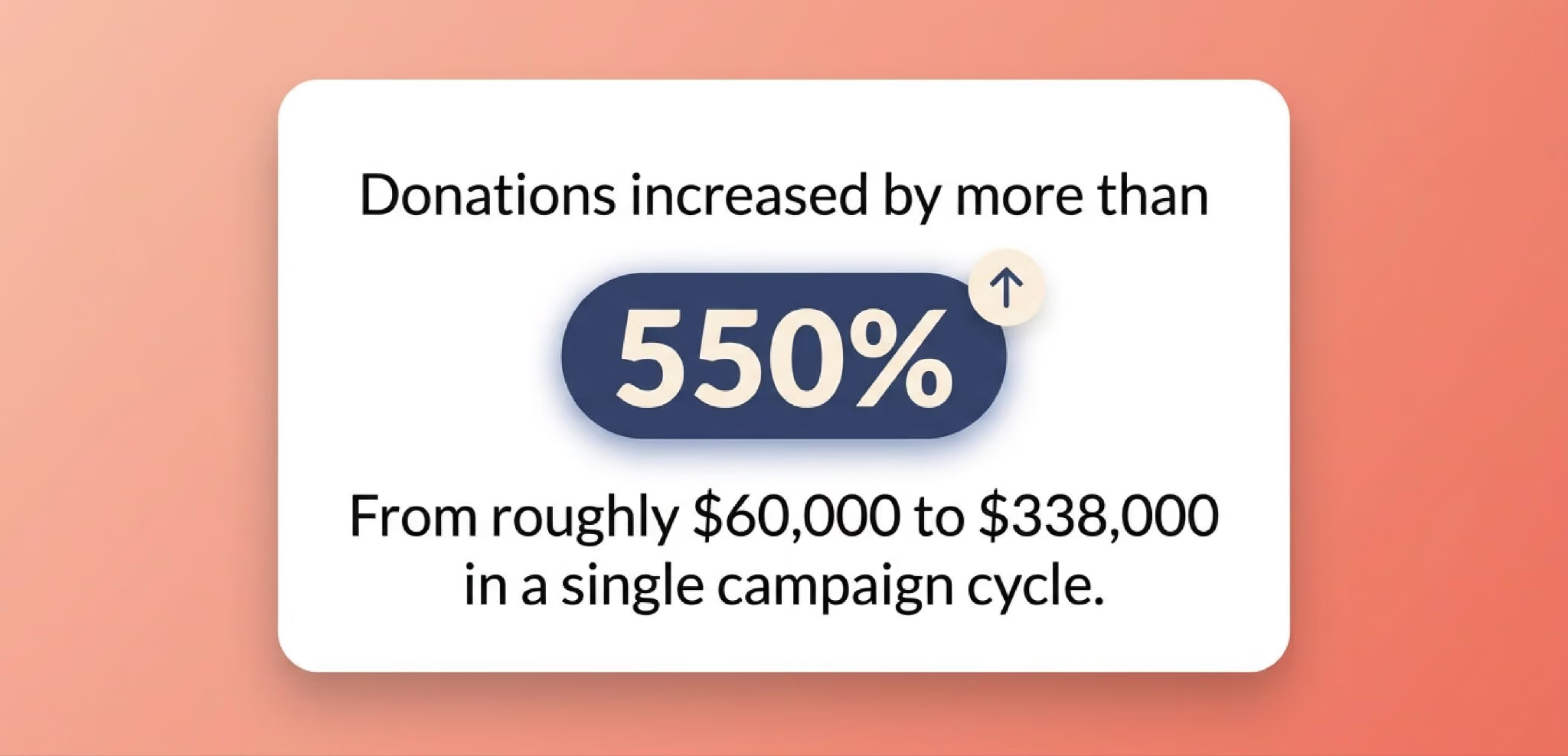
Archbishop Riordan High School redesigned their giving day with mobile-friendly tools and class-based competitions. According to their published campaign results, donations increased by more than 550%, from roughly $60,000 to $338,000 in a single campaign cycle.
Merchant Taylors' School built mentorship programs and alumni advisory groups before making significant donation asks. The outcome: annual giving tripled compared to their previous baseline. The relationship-first approach didn't delay fundraising success. It multiplied it.
Punahou School built a digital alumni community platform centered on peer connection and ongoing engagement. Within one year, 70% of their alumni were active on the platform, with thousands of messages exchanged monthly. Before the platform: occasional reunion attendance. After: sustained daily engagement.
The pattern is consistent across all three. Lead with value. Build the relationship. Then invite participation. The membership software for alumni associations infrastructure matters, but it's always strategy that drives the outcome.
Common Alumni Engagement Mistakes to Avoid
Even well-resourced alumni programs make these errors more often than they realize.
Asking for donations too early. This is the fastest way to lose a young alumnus for a decade and sometimes permanently.
Sending generic newsletters to every segment. If your message is for everyone, it resonates with no one. Segmentation is not optional anymore.
Measuring only donation totals. Communication engagement, volunteer participation, mentorship activity, and event attendance all signal long-term relationship health. Ignoring them creates blind spots.
Letting alumni data decay without intervention. Outdated contact information doesn't just hurt your open rates. It makes your entire strategy invisible to the people it was designed to reach.
Hosting events without a clear value proposition. Nostalgia is not a program. Alumni need a concrete, immediate reason to show up, not just an invitation to remember the past.
How to Create an Alumni Engagement Plan
A strong alumni engagement plan doesn't require complexity. It requires intention.
Step 1: Define your goals clearly. Increase event attendance? Reconnect lost alumni? Grow young alumni participation by a specific percentage? Pick two or three measurable targets and write them down.
Step 2: Audit your alumni database. Clean, current data is the foundation of every other strategy on this list. Start here before building anything else.
Step 3: Segment your alumni population. Recent graduates, mid-career professionals, retirees, local alumni, and international alumni all need different engagement offers. Build segments before building campaigns.
Step 4: Match each segment with the right engagement offer. Career support for recent graduates. Networking and mentoring for mid-career alumni. Stewardship, recognition, and legacy conversations for long-term supporters.
Step 5: Review results quarterly and adjust. Track engagement by segment, by program, and over time. The data will show you what's working and what your alumni are telling you with their behavior.
If you want to explore how Join It supports membership-based alumni organizations through exactly this kind of structured approach, you can book a call with Join It to see how it fits your organization, or start a free trial and explore the platform directly.
Alumni Engagement Metrics Checklist
Frequently Asked Questions About Alumni Engagement
What is alumni engagement?
Alumni engagement is the ongoing process of keeping graduates connected, active, and invested in their institution through communication, events, mentorship, volunteering, and philanthropic participation. It is a long-term relationship, not a recurring donation campaign.
Why is alumni engagement important?
Engaged alumni are significantly more likely to donate, volunteer, mentor students, attend events, and advocate for their school. According to RNL's national research, connected alumni are 23 times more likely to give than those who feel no institutional connection.
How do you improve alumni engagement?
Start with clean data, personalized alumni communication strategy, and genuine value delivered before any donation ask. Build mentorship programs, affinity groups, and career networking opportunities that give alumni a concrete reason to stay involved.
How do you measure alumni engagement?
Track participation across all four engagement modes: communication, experiential, volunteer, and philanthropic. An engagement score that combines these indicators gives a far more complete picture of community health than fundraising totals alone.
How can universities engage young alumni?
Lead with career support, peer networking, and community connection. Avoid donation appeals for at least the first two years after graduation. Meet young alumni on mobile platforms and social channels. Build the relationship before asking for anything in return.
How can alumni associations reconnect with lost alumni?
Run a dedicated alumni data update campaign using a value exchange model. Use email verification tools to clean bounce-heavy lists. Reach out through peer networks and LinkedIn. Make updating contact information frictionless and reward alumni who do.
Final Takeaway: Alumni Engagement Works Best When Alumni Receive Value First
Alumni engagement works best when graduates receive something meaningful before they're ever asked for anything in return.
That sounds obvious. But most institutions still approach their alumni primarily as a revenue source rather than a community worth genuinely investing in. And the data, consistently and across multiple studies, tells a different story.
When you segment thoughtfully, keep your data current, build real career and mentorship value, and lead with connection well before you ever bring up giving, the relationship changes. Alumni stop ignoring your outreach. They start attending events. They mentor students. They volunteer. And eventually, they give, not because you asked persistently, but because they actually want to.
The 10 alumni engagement strategies in this article aren't theoretical. They're grounded in CASE benchmark data, RNL survey findings, and real outcomes from institutions that committed to doing this work the right way.
Start with one practice. Measure the result honestly. Build from there.
That's how you turn 80% passive into a community that actually shows up.

Guides from the Experts
Through our work with 4,000+ organizations - we’ve put together helpful guides to assist; regardless of where you are on your journey.
.webp)

A Complete Guide to Membership Organizations
Everything you need to know to manage and grow your membership business
.webp)
Maximize Membership Retention: 10 Proven Strategies
Tried and true strategies that not only win membership, but keep them

Build a Membership Website: A Step-by-Step Guide
Your one-stop resource for knowing all the features your modern membership website needs
Ready to start your free trial?
Our membership software is intuitive to use and even easier to test for yourself.